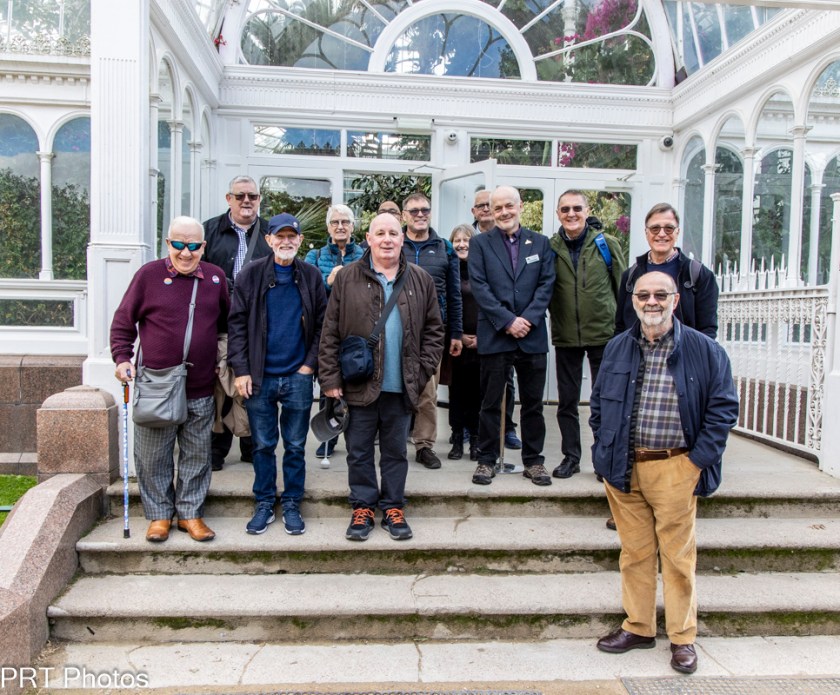
Palm House, Sefton Park, Liverpool
When Sefton Park opened its gates in 1872 it was missing a centrepiece. A generous donation of £10,000 by local benefactor, Henry Yates Thompson, led the Parks Committee to abandon plans for a band pavilion and set their sights on a spectacular Palm House.
Construction of the Palm House commenced and by 1896, its elegant glass structure stood proudly as a symbol of Victorian horticultural ambition. The Palm House became a beloved landmark, housing exotic plants from around the world and providing a tranquil retreat for generations of Liverpudlians. The great glass domes provided the ideal conditions for plants from South East Asia, Australasia, the Americas, Africa, Europe and the Mediterranean to thrive.
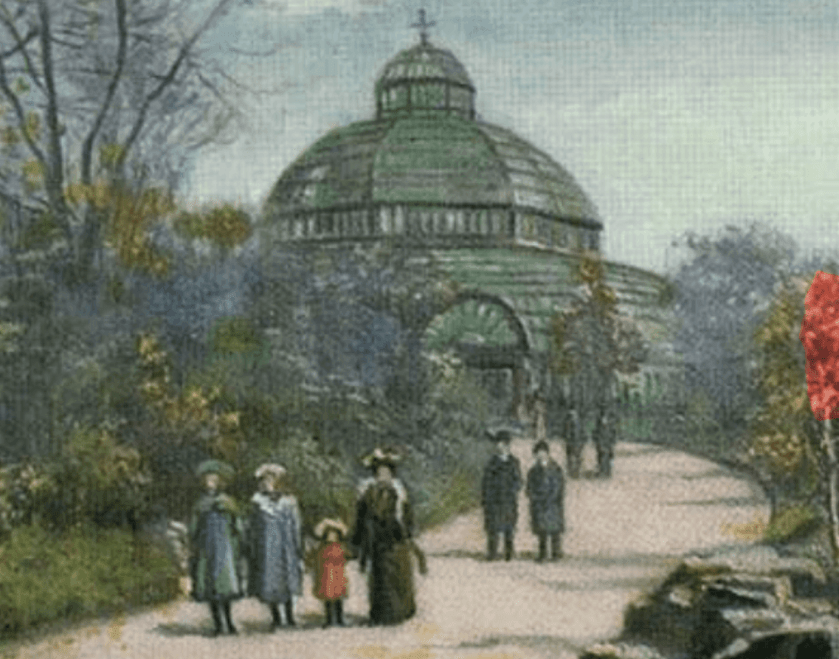
Throughout the years, the Palm House faced its share of challenges, including bomb damage during the Second World War and periods of neglect. However, thanks to community efforts and restoration projects, it has been beautifully restored to its former glory.
The bronze Peter Pan statue, relocated in the grounds of the Palm House following restoration in the 1990s, is a full-size cast of the original, commissioned by author J M Barrie, and erected in Kensington Gardens in London in 1912. Sefton Park’s replica statue was erected on 16 June 1928 and continues to be a firm favourite with visitors of all ages.
Today, the Palm House is not only a botanical haven but also a vibrant venue for events, concerts and celebrations, continuing to enrich the cultural life of Liverpool.
More photos can be seen here.

National Coming Out Day
National Coming Out Day was first celebrated in 1988. Thirty seven years later, it’s still in our calendars – but why do we need it?

National Coming Out Day is an annual celebration which takes place on 11 October every year. It was first celebrated on the one-year anniversary of the 1987 National March on Washington for Lesbian and Gay Rights – a date chosen to honour the bravery of LGBT+ individuals who decide to come out and live openly. Although it started off as an American awareness day, the meaning of National Coming Out Day is still highly relevant to LGBT+ communities across the world today.
Coming out is a unique experience for each LGBT+ person. It’s not a one-time event; many LGBT+ individuals who come out to their closest friends and family may later come out at work, to their extended family, or to casual acquaintances.
For some, coming out is no longer a big deal – it can be a simple matter of correcting someone’s assumptions about you, or introducing your partner. For others, coming out is still a huge challenge. The very real fear of facing discrimination, bullying or judgement can cause LGBT+ people to stay “in the closet”, struggling with anxiety while they strive to be themselves.
Talking about coming out and sharing our stories can help to strengthen our community and support one another with this experience. While coming out can be daunting and scary, it can also be the first time that LGBT+ individuals are able to be truly open with the people closest to them.
Over the last few decades since National Coming Out Day was first recognised, we’ve seen huge progress for the LGBT+ community, with legislation on same-sex marriage, discrimination laws and educational reforms all helping to protect and support LGBT+ people.
However, these legal developments don’t mean that the fight for LGBT+ rights is over. In the UK, we continue to see LGBT+ people suffer from attacks, hate and abuse. Across the world, LGBT+ people are still campaigning for laws and attitudes to change. For many, coming out can be dangerous – or simply not an option.
National Coming Out Day isn’t a day to force LGBT+ people to come out, or to shame people who haven’t done so. It’s a day to celebrate the beauty of being true to yourself, for having the courage to share an important part of your life with others, and for celebrating those who may come out to you. Rather than being perceived as exposing yourself or confessing something, we should see coming out as a marker of coming into your identity and allowing others to share in that knowledge. National Coming Out Day should also be a day to acknowledge the difficulties of coming out, and to remember that it’s still not something all LGBT+ people can safely do.
Today, some would argue that coming out (and having a day to celebrate it) is unnecessary. It’s true that no one should have to come out, and that not coming out doesn’t mean that you’re “hiding” or “lying”. In an ideal world, being straight and/or cis wouldn’t be perceived as default, and no one would make any assumptions about anyone’s sexual orientation or gender identity.
But for so many in our communities, that day is still a long way off. Coming out has always been an important part of LGBT+ history.
For those who are questioning their identities or living in an unwelcoming environment, seeing someone come out can offer a feeling of hope, solidarity and reassurance.
Race, ethnicity, language, religion, culture, gender expression, sexual orientation and gender identity should never be barriers to us living our full lives.
Coming out is a personal choice and is a significant part of living in our identity publicly. We all deserve the right to live our lives genuinely, completely and honestly.
Hello, sailor!
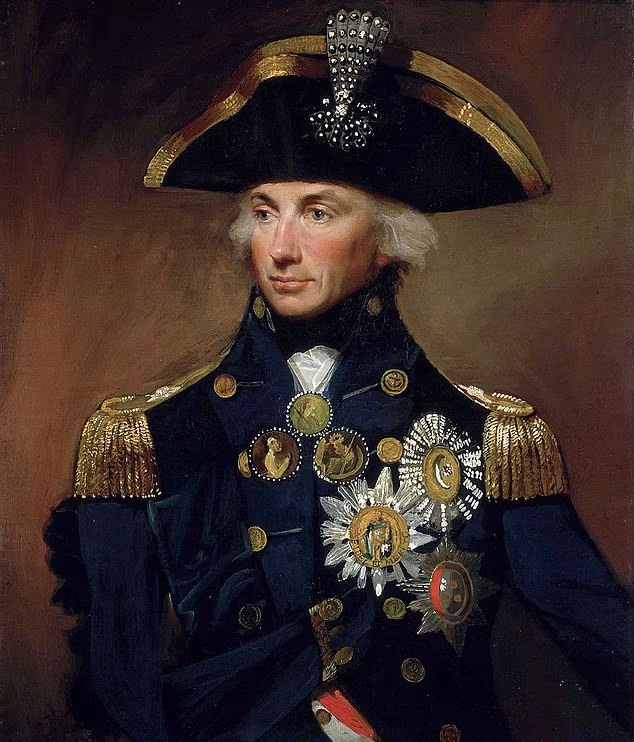
Lord Nelson was “queer”, a prestigious gallery has suggested.
The British naval hero was fatally shot during the Battle of Trafalgar, in which the Royal Navy triumphed over the combined forces of France and Spain in 1805.
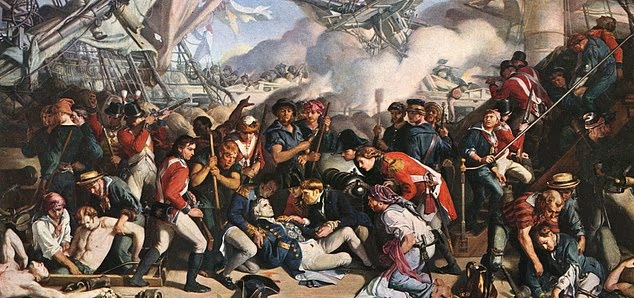
His final moments aboard HMS Victory are depicted in two paintings at the Walker Art Gallery in Liverpool.
It is generally believed that Nelson’s last words on his deathbed after being shot were ‘kiss me Hardy’, which he uttered to his flag captain Vice-Admiral Sir Thomas Hardy.
According to the contested account, Hardy then kissed Nelson on his hands and forehead.
That account has prompted curators at the Walker Art Gallery to put Nelson in the “Queer Relationships” collection.
Online information from the gallery, which is part of the National Museums Liverpool group, states: “Historians have speculated about the exact nature of the relationship between Hardy and Nelson. Regardless of the truth, for many, Nelson’s famous request is symbolic of the sometimes hidden queer history of life at sea.”
It adds: “Whether or not their relationship was sexual remains unknown, but their friendship is reflective of the close relationships formed between men at sea. Intimate relationships, both sexual and platonic, could develop between those on board.”
The paintings depicting Nelson are by Daniel Maclise and Benjamin West.
Maclise’s has been added to an article on the gallery’s website about the “history of LGBTQ+ love”.
The move follows efforts by museums, galleries and other groups to highlight “hidden” stories of LGBT people throughout history.
However, historians have not previously uncovered any evidence that Nelson was gay or bisexual. The fact is that he had a passionate relationship with his mistress Emma Hamilton and had been married for 18 years to his wife Frances Nisbet when he died. He also had a daughter, Horatia, with Lady Hamilton and sent passionate letters to her.
Was Nelson gay? The jury is still out.
 Out in the City