

Rewind My Selecta!
Alyson Malach has remixed our last blog. She has altered or contorted the articles from their original state by adding, removing, or changing pieces of the blog. For those old enough to recognise the analogy she has edited our 7 inch version to a new improved 12 inch extended remix. Thanks, Alyson!
Now Is the Time: Remembering, Resisting and Rising Together
Introduction: The Weight of Now
In 2025, we stand at a pivotal moment in the ongoing struggle for equality and dignity for all LGBTQ+ people. Around the world, rights once won are under threat, and in the UK, recent legal and political decisions are stirring urgent debate about identity, inclusion and the meaning of freedom.
This blog is a call to remembrance, reflection, and radical hope. Through powerful stories – from Holocaust Centre North to Gad Beck’s resistance, from Making Gay History to Pride in Trafford – we are reminded that queerness is not new. LGBTQ+ people have always existed, fought, survived, loved, and led.
But we also name today’s injustices. A recent UK Supreme Court ruling in April 2025 determined that “sex” in parts of the Equality Act 2010 should be interpreted only as biological sex – a judgment that, while legally limited in scope, is being misused in the public discourse to justify exclusion of trans people, especially trans women, from single-sex spaces. This ruling has emboldened anti-trans rhetoric in the press, schools, and even some public services.
Meanwhile, conversion practices remain legal in the UK, LGBTQ+ hate crimes are rising, and intersectional communities – especially LGBTQ+ people of colour, disabled queer people, and those of faith – are facing disproportionate levels of harm, poverty, and social exclusion.
In this climate, remembering queer history is not indulgent – it is resistance. Sharing inclusive stories is not optional – it is survival. And Pride is not a party – it is protest, joy, and radical self-affirmation.
Now Is the Time – A poem by Alyson Malach
Now is the time to lift the weight,
Of silence, judgement, fear and hate.
To speak the names we’ve pushed aside,
To hold a space, to turn the tide.
Now is the time to name what’s wrong,
To right the past, to make all strong.
To see each soul, each heart, each face,
And build a world of equal place.
Now is the time to change our speech,
To think, reflect, to learn, to teach.
To catch the slip, to shift the phrase,
And honour all in what we say.
Now is the time to share your truth,
To lead with hope, to teach the youth.
To pledge a way, to own your part,
And hold inclusion at the heart.
The Stories That Shape Us: Holocaust Centre North & Gad Beck
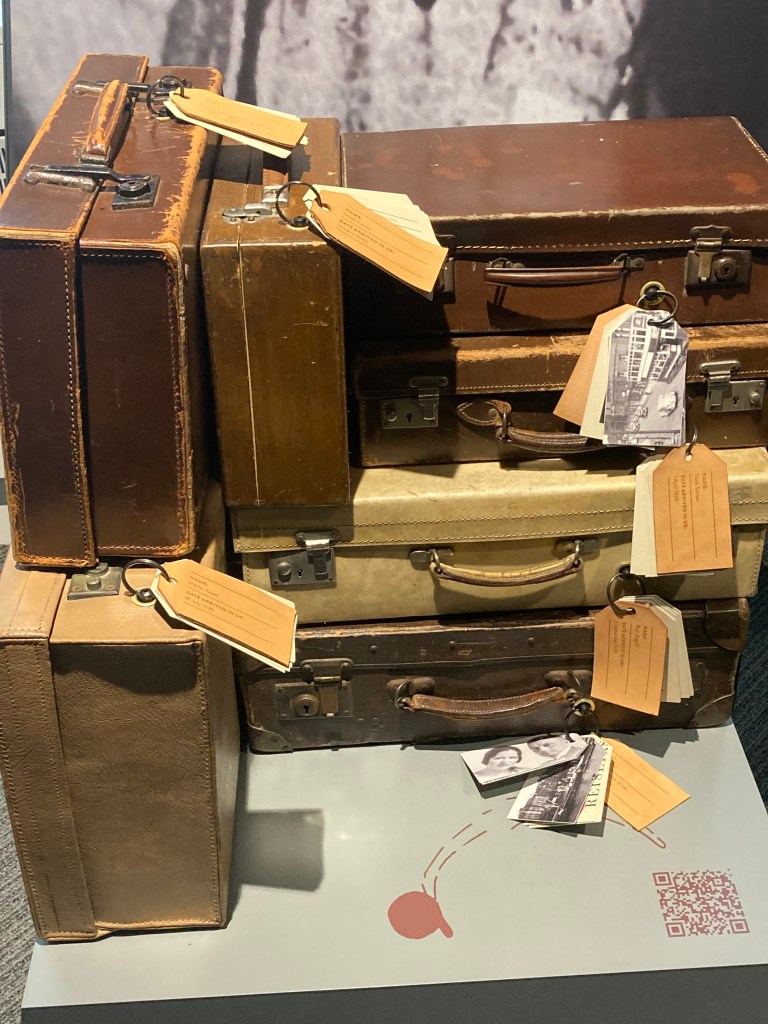
The Holocaust Centre North is home to the lived histories of Jewish survivors who rebuilt their lives in northern England. Their testimonies are vivid reminders of what happens when hatred is institutionalised, and people are dehumanised for being who they are.
Among those silenced by history are LGBTQ+ Holocaust victims – people like Gad Beck, a defiant gay teenager who led resistance efforts in Nazi Berlin and risked everything to rescue his Jewish lover. His courage was not only political, but it was also profoundly personal – a kind of love-led defiance we must still emulate today.
Making Gay History: Unearthing Queer Resistance
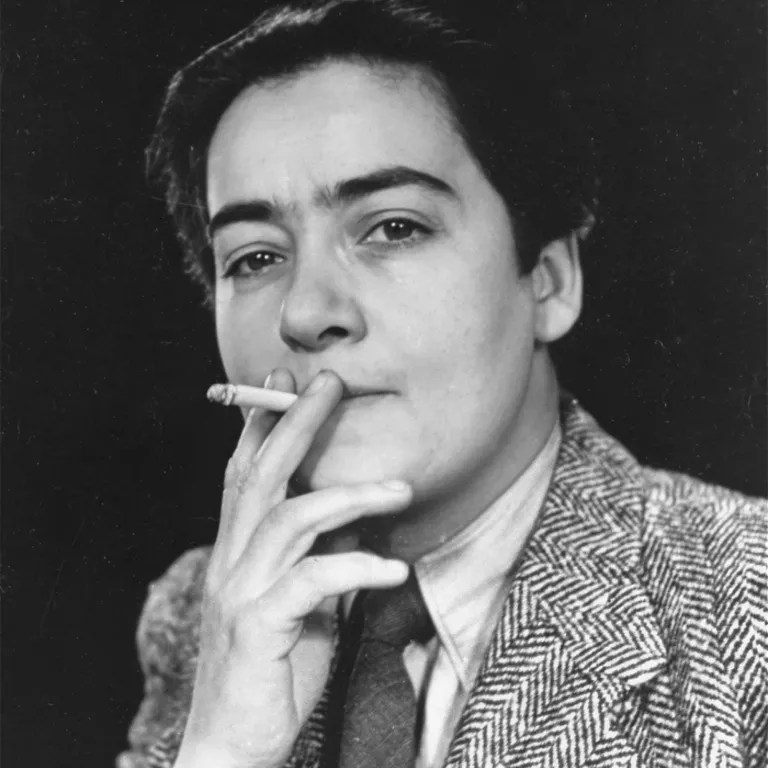
The podcast Making Gay History restores voices of LGBTQ+ individuals who resisted, survived, and saved others during the Nazi era. Trans woman Lucy Salani, lesbian resistance fighter Frieda Belinfante, and teenage lover Stefan Kosinski each remind us that queerness and resistance have always walked hand-in-hand.
These histories challenge the erasure of LGBTQ+ identities from narratives of war, bravery, and victimhood.
Pride in Trafford: Celebration as a Form of Resistance
The Pride in Trafford festival showcases the dynamism of queer arts and community. With cabaret, neurodiverse performers, drag workshops, and LGBTQ+ youth events, it carves out joyful, reflective, and creative spaces for everyone.
This matters, especially when young queer people are facing rising mental health needs, bullying, and cuts to LGBTQ+ youth services.
UK LGBTQ+ Issues in 2025: Progress Undermined
Supreme Court Ruling on Sex and Gender (April 2025):
While legally focused on specific exemptions in the Equality Act, this ruling has been weaponised to challenge trans inclusion in sport, education, and healthcare. Some schools have removed inclusive language policies or restricted trans students’ access to toilets and pronoun use.
Hate Crime and Fear:
LGBTQ+ hate crimes in England and Wales increased by over 150% between 2014 and 2023, with transphobic abuse seeing some of the sharpest rises. The absence of robust government strategy has left communities feeling unsafe and unsupported.
Conversion Practices Still Legal:
Despite years of campaigning, the UK still has not passed a full ban on conversion therapy. This disproportionately harms young queer people, particularly those from religious backgrounds or ethnically diverse families.
Media Hostility and Misinformation:
Public discourse has grown increasingly hostile, with trans people, especially trans women, being vilified in mainstream press. This drives isolation, anxiety, and policy regression.
Intersectionality: When LGBTQ+ Identity Meets Race, Religion, Disability and More
The impact of these issues is not equal.
Black and racially minoritised LGBTQ+ people often face racism within queer spaces and queerphobia in their racial communities.
Muslim and Christian LGBTQ+ individuals are frequently caught in cultural and theological tensions – their existence treated as a contradiction.
Disabled LGBTQ+ people face inaccessible events, support services, and often invisibility in LGBTQ+ representation.
LGBTQ+ asylum seekers are at risk of deportation to hostile countries, while facing dehumanising treatment in UK detention centres.
Key message: Queer liberation cannot be achieved without racial, religious, disability and migrant justice too.
Action: Use an intersectional lens in your EDI work, network events and Pride planning. Invite people with layered identities to speak and lead. Ensure accessibility, safety, and relevance for all.
Share and Amplify: How to Use This Blog
Share with your networks:
- Include in Pride Month or Holocaust Memorial Day communications
- Post in LGBTQ+ staff network groups and diversity newsletters
- Use in schools and universities as a learning resource
Use in practice:
- Pair Gad Beck’s story with a discussion on allyship and courage
- Use the full poem in team meetings, classrooms, or leadership forums
- Host a Making Gay History listening circle followed by a reflective session
Pledge your part:
In your workplace, classroom, community group – ask, what can we do differently so that everyone is included, seen, and safe?
Final Word: The Time is Now
We inherit the legacy of those who fought, danced, resisted and loved in the shadows. Today, we rise in their memory, with boldness, intersectionality, and joy.
Not tomorrow.
Not after another headline.
Not when it’s safe.
Now. Is. The. Time.

Gender policing does not ‘protect’ butch women and lesbians – it actively punishes them
Article by Sophie Perry
When the Supreme Court issued its 88-page long judgement that the legal definition of ‘sex’ is based on ‘biology’, gender critical lobbying group and controversially registered charity LGB Alliance declared it was a “landmark for lesbian rights in the UK”.
“This matters greatly to LGB people,” CEO Kate Barker said of the ruling. “It is especially important to lesbians, because the definition of lesbian is directly linked to the definition of woman.”
Barker – who once claimed a singular drag queen carrying the Olympic torch demonstrated the “erasure of woman in all spheres of public life” – went on to say the ruling “marks a watershed for women and, in particular, lesbians who have seen their rights and identities undermined over the last decade.”
Despite Supreme Court judge Lord Hodge specifically counselling against certain factions “reading this judgement as a triumph of one or more groups in our society at the expense of another,” gender critical activists view the outcome of the Supreme Court case as a decisive victory for all women over so-called ‘gender ideology’.
However, in the days and weeks that have followed the Supreme Court ruling, it has quickly become clear that many women who are not trans will likely be disadvantaged by the court’s decision because they do not fit into narrow, often white and western, definitions of what constitutes as ‘woman’.
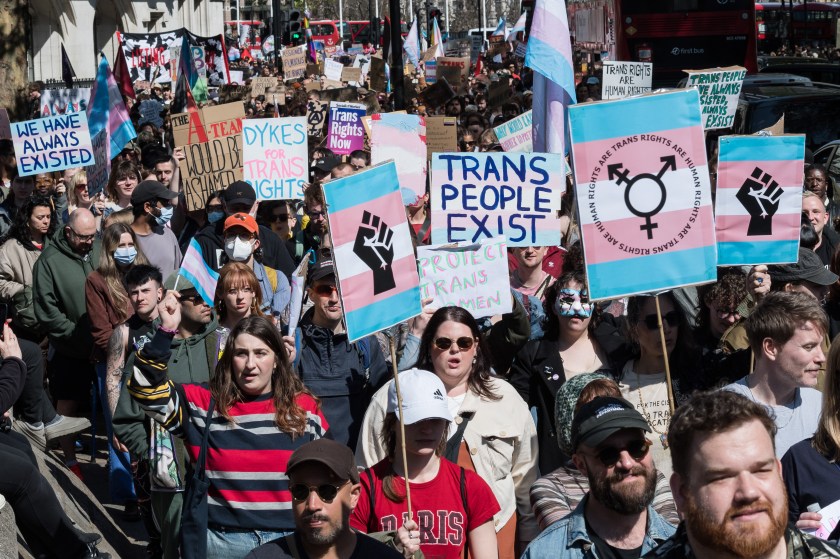
Sparked by a trans-inclusive definition of womanhood in Gender Representation on Public Boards (Scotland) Act 2018 – which sought to diversify the number of women on public boards in the devolved nation – the Supreme Court decision was the culmination of a years-long legal battle between gender critical Scottish group For Women Scotland (FWS) and the Scottish government about how the protected characteristic of ‘sex’ is defined and applied in the 2010 Equality Act.
After traversing many different appeal processes, the case finally ended at the UK’s highest court and concluded the definition does not include trans people.
“The unanimous decision of this court is that the terms woman and sex in the Equality Act 2010 refer to a biological woman and biological sex,” Lord Hodge said in his oral reading of the ruling.
The decision is expected to have wide-ranging implications for the trans community, as well as organisations, public bodies and services who may be forced to update their policies on single-sex spaces, inclusion and discrimination. Some, including the Football Association and the England and Wales Cricket Board, have already taken steps to bar trans women from taking part in female matches.
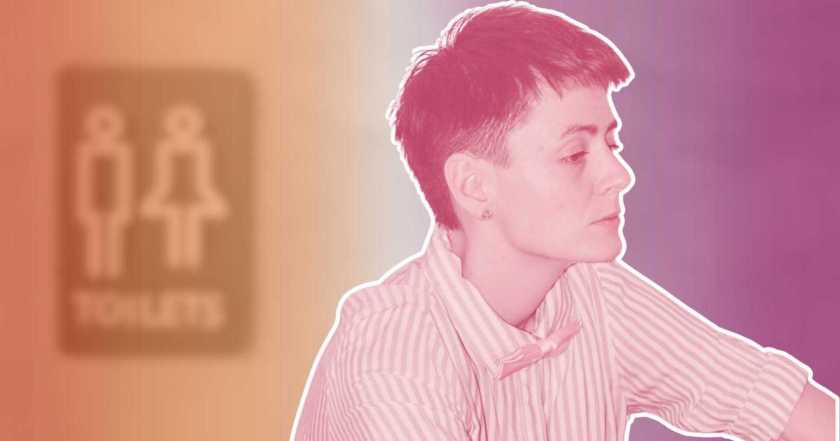
In the wake of the ruling, the Equality and Human Rights Commission (EHRC) – the UK’s equalities watchdog – issued interim guidance which said single-sex spaces must be based on biology whereby a trans woman must not be allowed to use a female toilet and a trans man not allowed to use a male one. However, the guidance also adds that, in “some circumstances,” trans women should also be banned from the men’s facilities and trans men from women’s facilities.
When asked to clarify this point by the BBC, the EHRC directed the broadcaster to a section of the Supreme Court ruling which states trans men could be excluded from women’s facilities “where reasonable objection is taken to their presence, for example because the gender reassignment process has given them a masculine appearance or attributes to which reasonable objection might be taken” in the context of a female-only space, such as a toilet.
In essence, when a trans man looks, well, too much like a man (because he is one) or when a trans woman looks, well, too much like a woman (because she is one), they can be totally excluded from gendered spaces and be forced to only use a unisex facility – assuming one is available.
If the circumstances which would see trans men – who are defined by the court ruling as ‘biologically female’ – banned from female toilets is all about ‘masculine appearance’, then where does this leave masculine, cis women?

Whilst the Supreme Court case is supposedly about ‘protecting’ the interests of all women, this exception – in itself – shows there is only interest in protecting certain kinds of women. Namely, women who ‘look’ like women: traditionally feminine women with long hair, hips and visible breasts, who dress and talk and walk in a way that is ‘expected’ of women and who have no trouble moving through the world as one.
By contrast, there are plenty of other women out there who constantly have their gender and presentation policed by strangers for not fitting into the narrow and misogynistic definitions of what a woman should be. Women who are tall, have short hair, broad shoulders and square jawlines. Women who wear clothes from the men’s section and have deep voices and body hair.
Such slim definitions of what is correct or incorrect womanhood rooted in patriarchal beauty standards are – ironically enough – what feminists have actually spent decades fighting against, so that women have the choice about whether or not they want to shave their legs, wear make-up or put on dresses or *gasp* trousers.
The Supreme Court ruling will, very likely, cause butch and masculine lesbians to face increased harassment in single-sex female spaces simply because of how they present themselves. This is not a fictitious, dystopian musing by one dyke about the rights of others in her community, this is something we have already seen – and are continuing to see – when it comes to women do not fit into the confines of traditional femininity and gender.
For Lesbian Visibility Week, which came a week after the Supreme Court’s decision, Labour MP Kate Osborne said she is “frequently misgendered” because of how she looks and expressed concern it will only get worse going forward.
“I note that Ministers said yesterday that there will be guidance regarding the Supreme Court verdict. That decision will have a huge impact on my life, on many other cis lesbians and, indeed, on heterosexual women,” Osborne told fellow MPs. “I suspect that I will get challenged even more now when accessing facilities. The impact on my life will be problematic, but the impact on my trans siblings’ lives will be significantly worse.”
Just this week in the United States, a number of headlines were dedicated to an incident involving lesbian woman Ansley Baker who was removed from a female toilet in a Boston hotel by a male security guard after being accused of being ‘a man’ by other women in the facility. The irony that it was a male security guard who banged on the cubicle door and removed her when her shorts were not fully done up has not been lost on most in the LGBT+ community, it must be noted.
Baker is certainly not the first, nor will she likely be the last, lesbian to face such treatment.
But, tight confines and strict parameters of what constitutes correct womanliness and the social punishments inflicted when broken are not solely restricted to masculine lesbians, straight women too are subject to such policing.
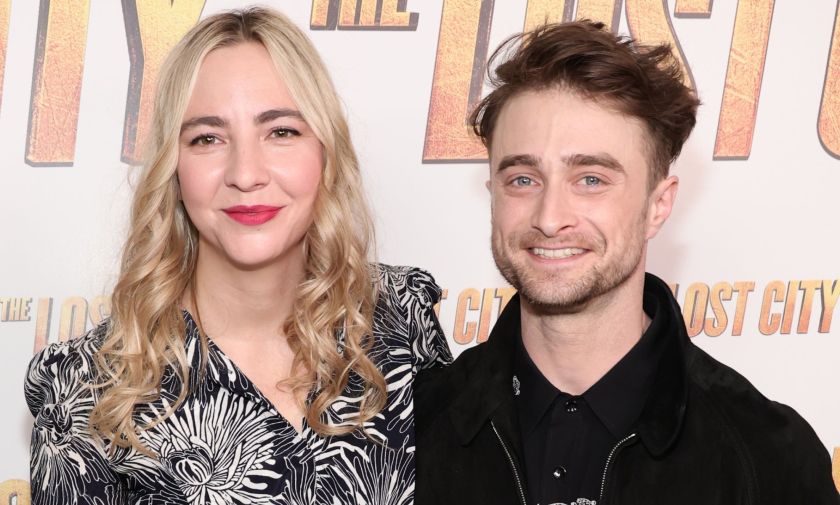
In 2023, the pregnant girlfriend of Harry Potter star Daniel Radcliffe, actor Erin Darke, was transvestigated by anti-trans pundits on social media because she happens to be taller than Radcliffe and have certain facial features. Transvesigation refers to conspiracy theories that falsely claim individuals, typically women, are transgender and are hiding their “true” gender identity, with Darke accused of ‘secretly being trans’. Transvesitigations are entirely rooted in warped, deeply misogynistic and racist views of femininity and gender.
Similarly, Olympic boxer Imane Khelif – who was thrust into the centre of a gender storm during the Paris Games – was accused of ‘being a man’ despite the fact she, and Olympic bosses, clarified she is not nor has ever identified as trans. In fact in Algeria, where Khelif hails from, gender-affirming care is banned and public gender non-conformity has the potential to be prosecuted as “indecent” under the 1966 penal code. However, the conspiracy persisted because, according to the wisdom of users on X / Twitter, Khelif has a strong nose, muscles, is tall and has hairs on her knuckles, so must be male.
Other cis women who are seemingly not woman enough according to transphobes include rugby icon Ilona Maher, tennis legend Serena Williams and former first lady Michelle Obama. Why? Again, because their bodies have dared to exist outside of patriarchal beauty standards, defined and controlled by the male gaze.
As organisations, public bodies and services across the UK look set to draw up fresh guidelines in response to the Supreme Court ruling we will all do well to remember that gender policing does far, far more harm than ever does any good. At best it can be an irritant for women who move through the world everyday in a more masculine presentation, at its worst it poses an inherent threat to the people such an ill-thought out ruling is supposed to protect; putting woman who do not conform at risk of harassment, abuse and vigilante justice.
At its heart gender policing just proves – just like their views on the beautiful diversity of gender are narrow – the views of bigots on womanhood are equally as restrictive.
IDAHOBIT 2025
The theme for the International Day Against Homophobia, Transphobia, and Biphobia (IDAHOBIT) 2025 will be “The power of communities”.
IDAHOBIT 2025, celebrated on 17 May, will bring together individuals, organisations, and institutions to amplify the voices of those who have been marginalised and to foster a culture of compassion and understanding.
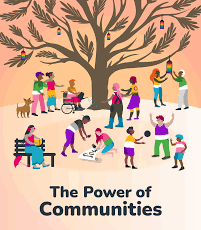
In the years since its inception in 2004, IDAHOBIT has grown into an international movement, with events taking place across more than 130 countries, including those where LGBTQIA+ rights are still criminalised or under threat.
IDAHOBIT 2025 will take place in a world where LGBTQIA+ rights remain a deeply polarising issue. While many countries have made significant strides in recognising same-sex marriages, enacting anti-discrimination laws, and providing protections for transgender individuals, others have moved in the opposite direction, enacting regressive policies that endanger and marginalise LGBTQIA+ people.
The day serves as a reminder of these disparities and the ongoing need for advocacy.
The day is a call to action for individuals, communities, and institutions to work together to create a world where everyone, regardless of their sexual orientation or gender identity, can live with dignity and freedom.
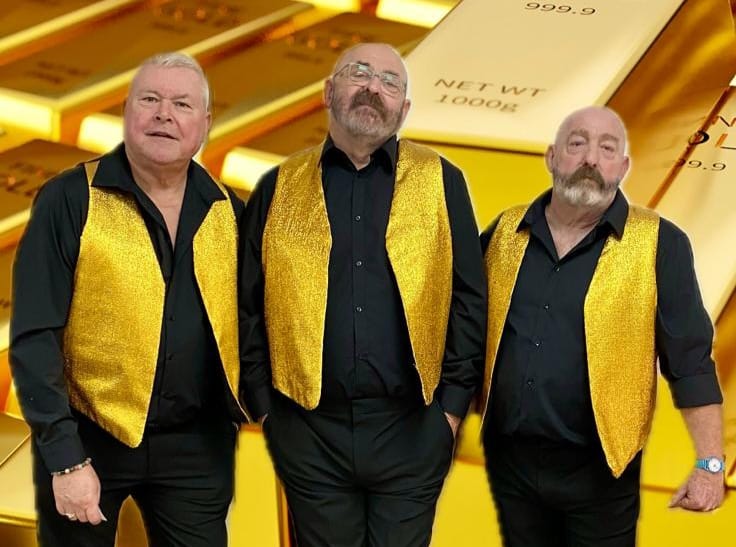
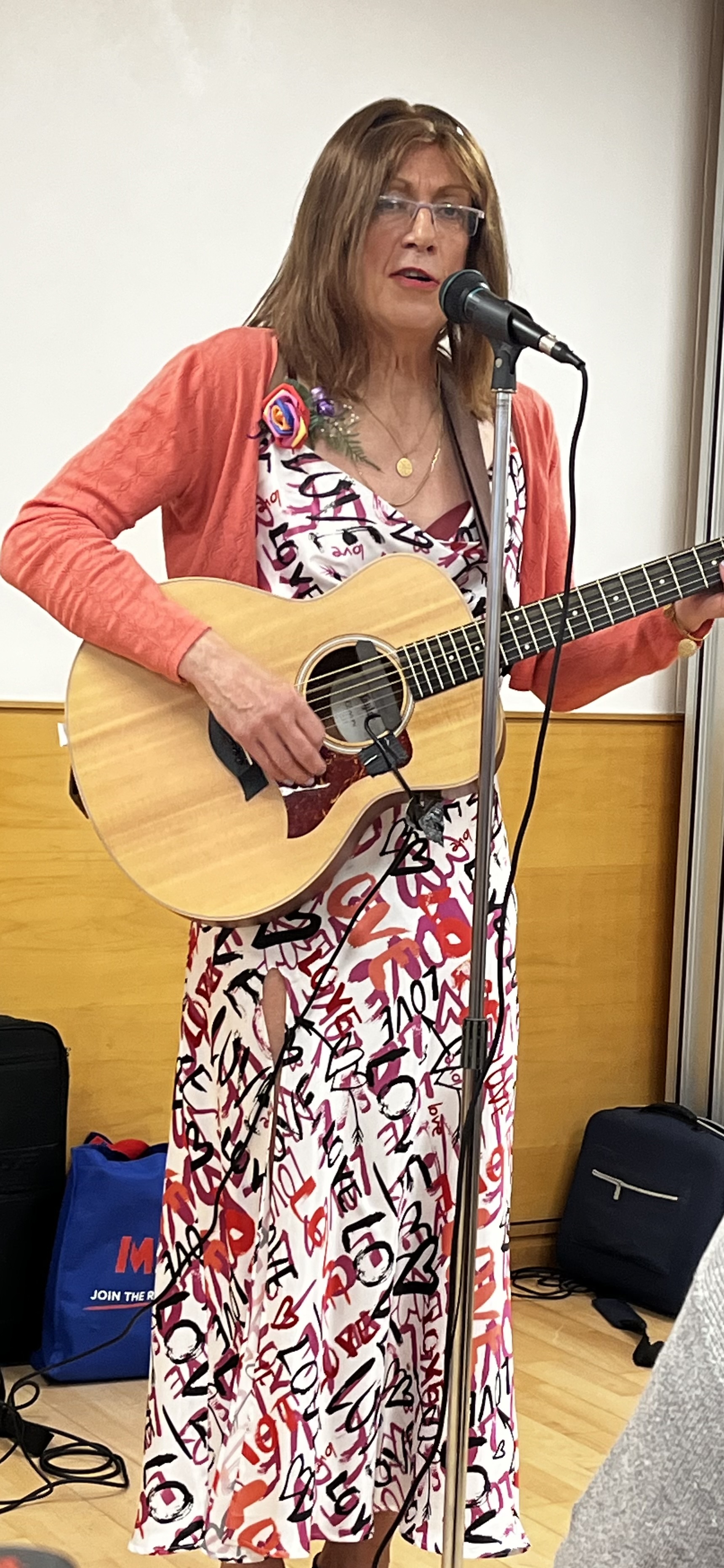

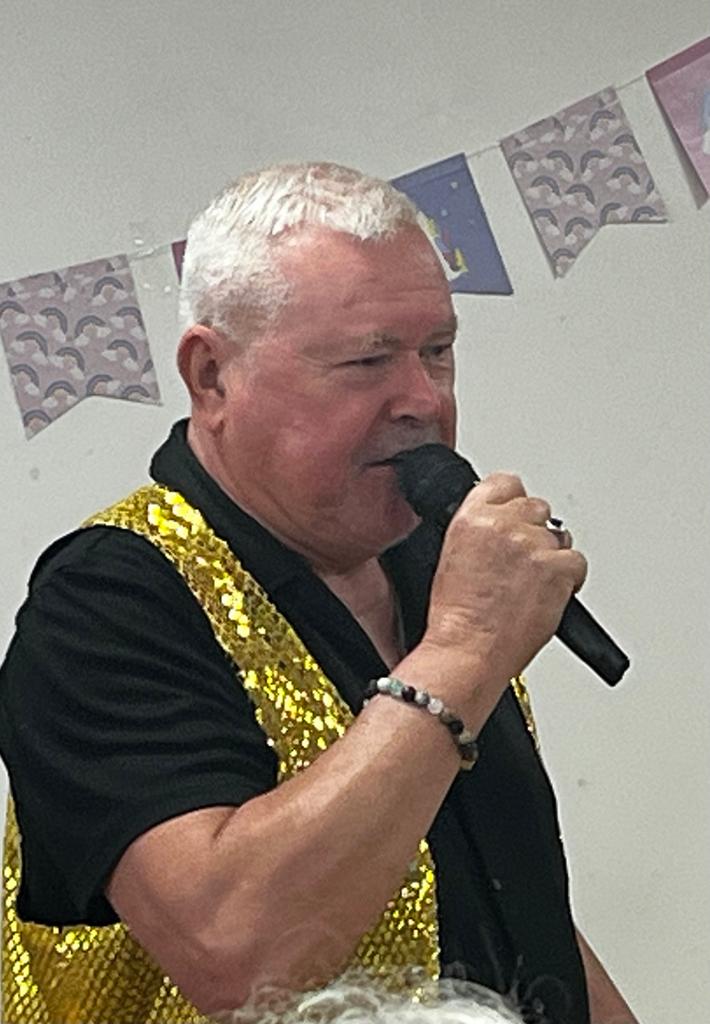
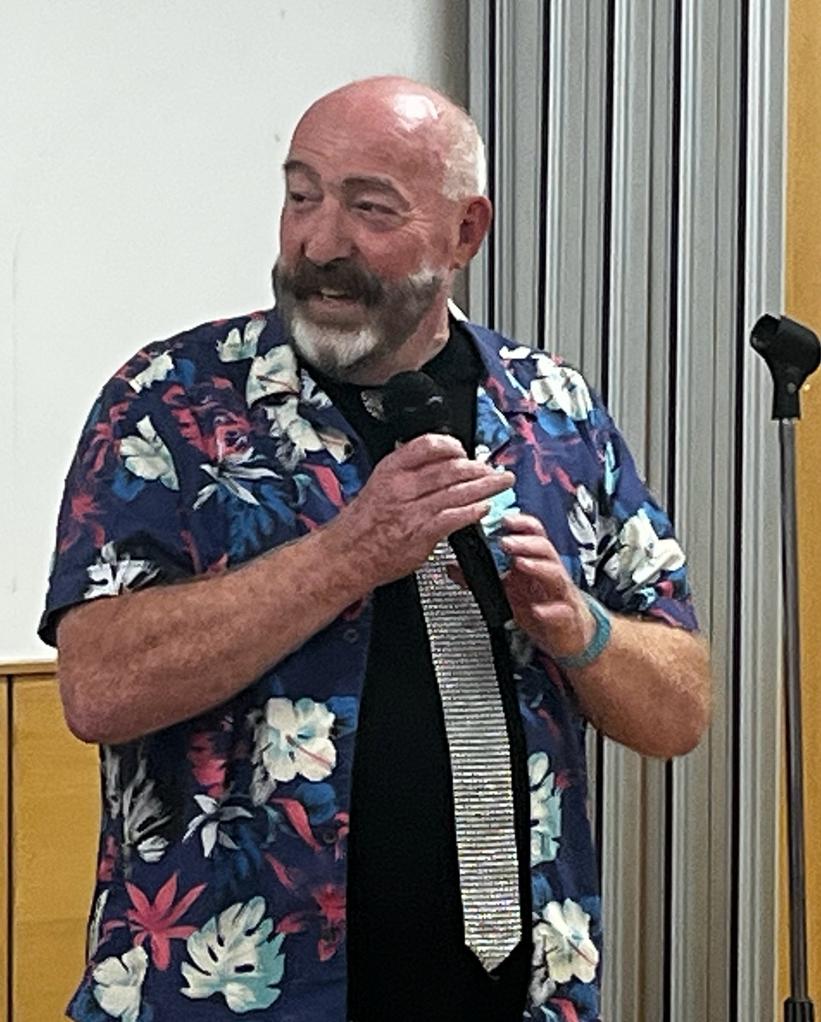
Out In The City is celebrating our 20th Anniversary with a Party on Thursday, 19 June from 2.00pm to 4.00pm at Cross Street Chapel, 29 Cross Street, Manchester M2 1NL.
We will Celebrate Ageing and Challenge Ageism with great entertainment from Jennifer, Mindy, Pauline and the boys from Wolf. Buffet and raffle.
RSVP for catering purposes. Please contact us here to confirm attendance or to send apologies.
Birthdays

 Out in the City