Queer Treasures at Manchester Central Library – 6
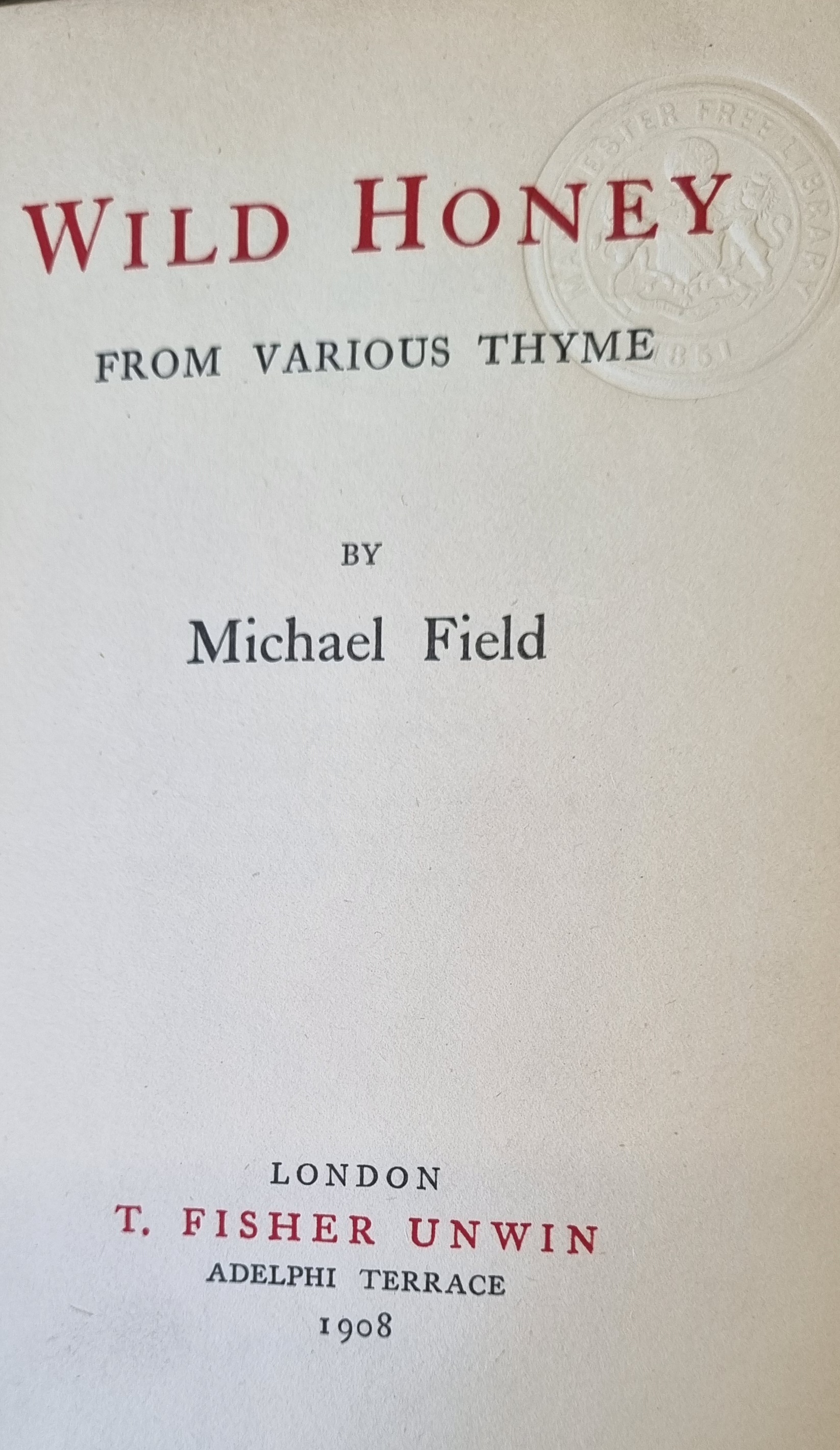
‘Wild Honey from Various Thyme’ (1908) by Michael Field (pseudonym)
(This is the sixth in a series of articles about queer treasures that are currently found in the Archives held at Manchester Central Library.)
Michael Field was the pseudonym adopted by the English lesbian couple Katherine Harris Bradley (1846 – 1914) and Edith Emma Cooper (1862 – 1913), who together under the name of Field wrote approximately 40 volumes of verse and prose writings. Their adopted nom de plume was intended to remain a secret, but was carelessly revealed to the public by their friend, the poet, Robert Browning.
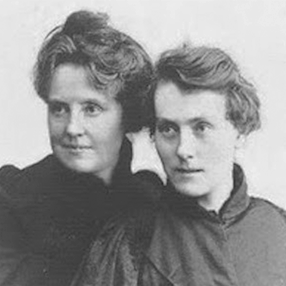
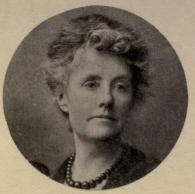
Edith was Katherine’s niece and became her ward when ill health prevented Edith’s mother from caring for her. By the mid-1880s however their relationship had developed into an intense love affair that lasted for over 30 years. In their letters they often addressed each other using the terms of ‘Sweet Wife’ and ‘my own husband’. Yet they also had infatuations with some men, with whom they formed close bonds of friendship. Their relationship with each other did not initially present problems to them, though others adversely commented on their apparent excessive closeness.
They were enthusiastic supporters of Aesthetic Movement ideas in Art and Literature and were friends with many other artists and writers, including the painters Charles Ricketts and Charles Shannon, and the writers Robert Browning and Oscar Wilde. Ricketts and Shannon lived openly together as a gay couple in Richmond and were very close to Edith and Katherine.
Much of the women’s early verse drew inspiration from the works of Ancient Greek Literature, in particular the poetry of Sappho, herself a celebrated Lesbian artist. ‘Wild Honey from Various Thyme’ appeared in 1908, and marks the transition in their poetry from being inspired by pagan classical themes to overtly Christian ones. True to their aesthetic disposition, the actual book itself is a work of art, with dark green silk on the outer boards bearing a gilt-embossed decoration of bees and honeycombs, designed by their friend, Charles Ricketts. On the spine there is a corresponding motif of bees and flower-bells.
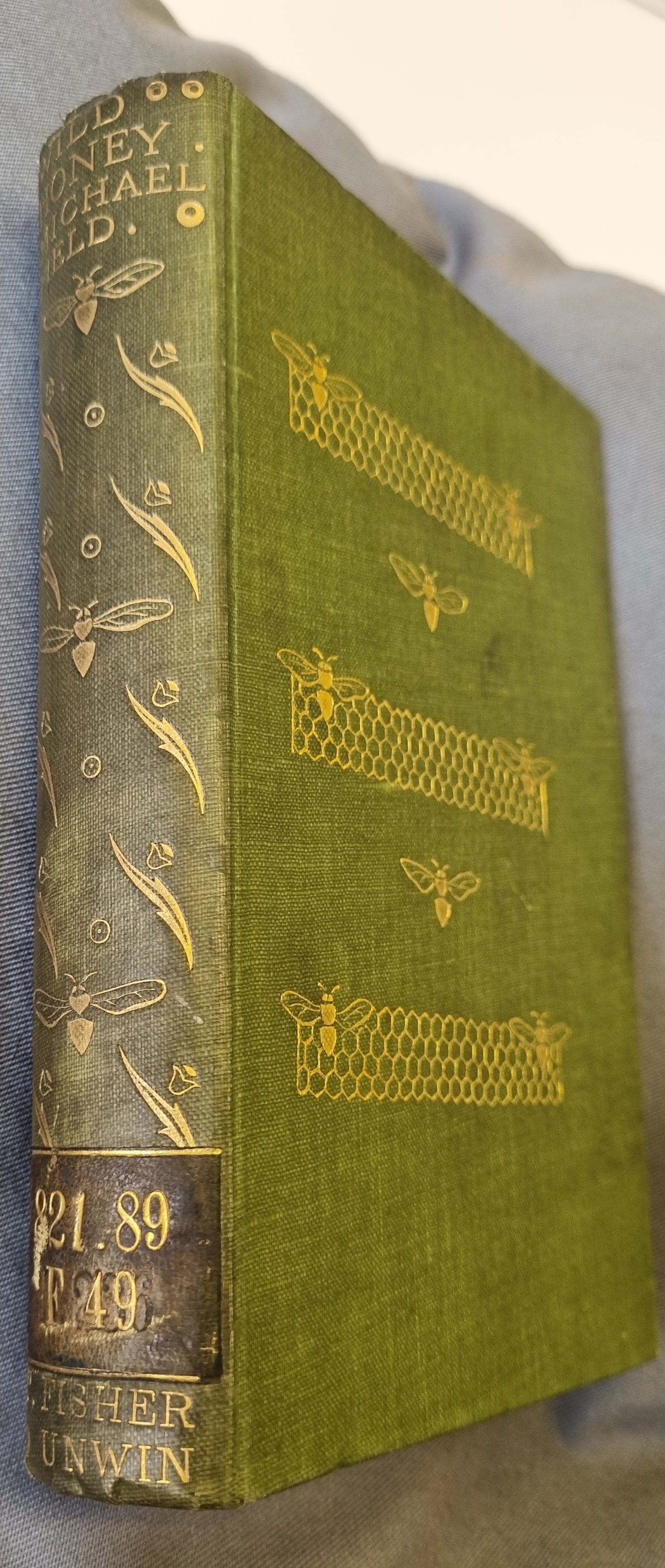
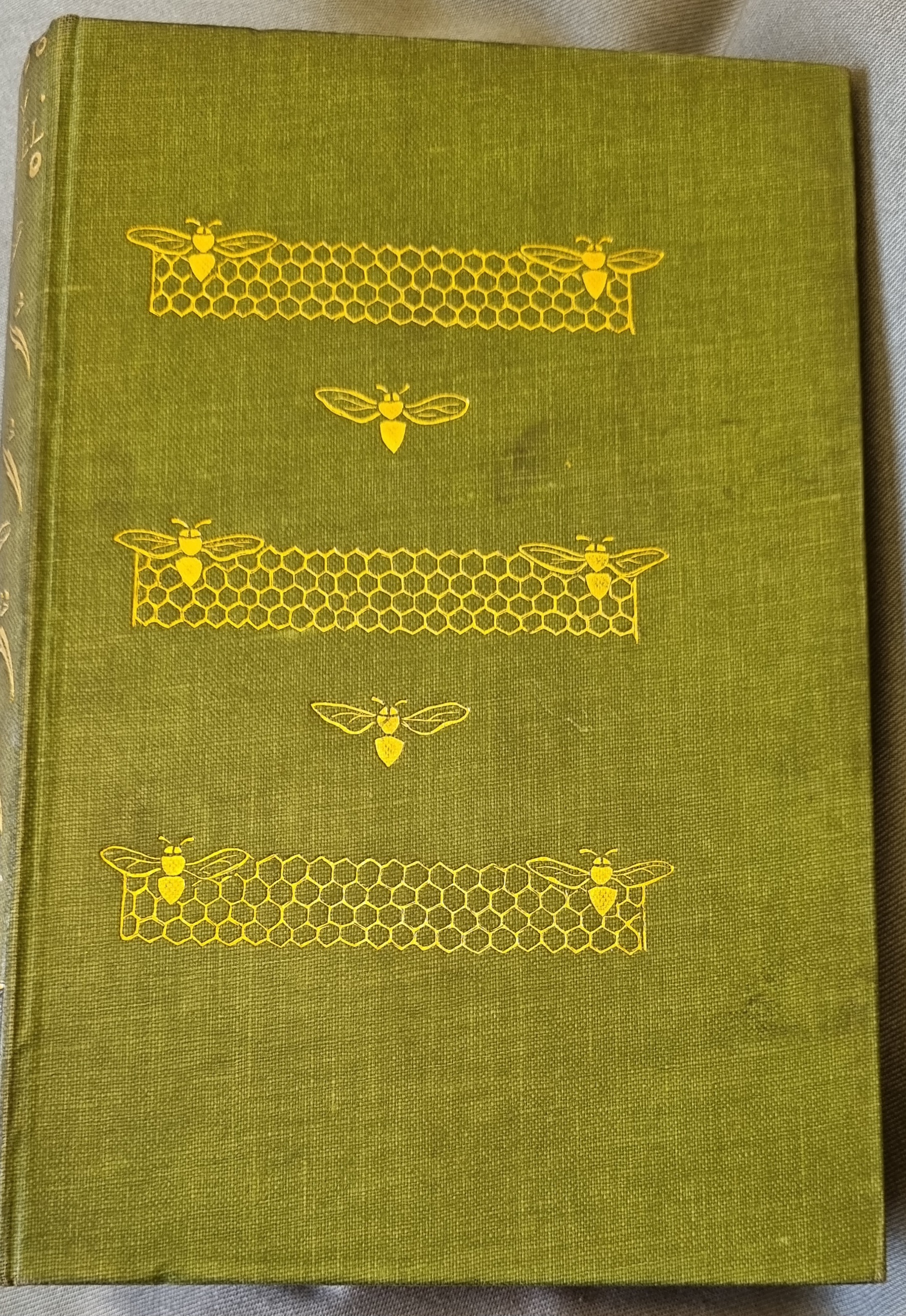
In Ancient Greek Literature, poets were often referred to as bees, as the sweetness of their verse was compared to honey: Sappho herself had the epithet of the ‘Pierian bee’.
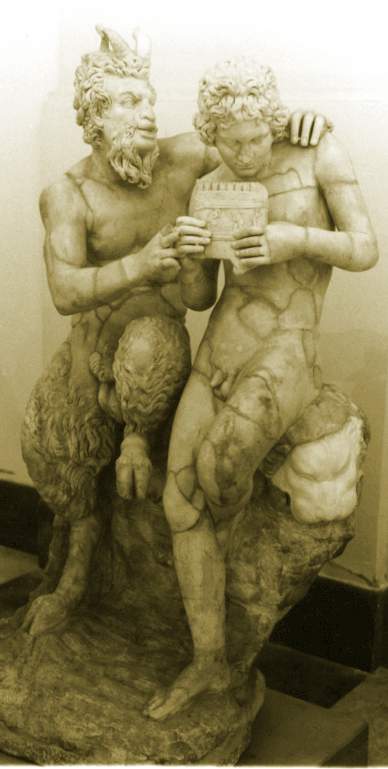
‘Wild Honey’ opens with a poem addressed to the Ancient Greek pagan deity, Pan –
And while he sleeps the bees are numbering …
And smear with honey his wide, smiling lip. (p1)
Of note here is the god Pan’s fin-de-siècle popularity as a symbol for queer sexualities, indicating a knowing playfulness in their verse. As Marion Thane* in her book on Field observes –
Bees seem to have a peculiarly Decadent and homosexual sexual significance … which is born out in other writings upon poetry in the nineteenth century. This association can be traced back to 1873, when Alfred Lord Tennyson condemned ‘Art with poisonous honey stolen from France’. Here, the influence of France, is, of course, decadence; France coming to signify all that is corrupt, morally, and particularly sexually. ‘Honey’ is used here as a conventional metaphor for poetry, but it is also clear that Tennyson’s talk of ‘poisonous honey’ created a potent image of a homosexual, Decadent aesthetic. (Thane 2009 p143)
Additional poems and verses praise Eros and Dionysus, but yet others hint at the writers’ later conversion to Roman Catholicism, before the work climaxes with the Christian-inspired poem of ‘Good Friday’ (p194).
Resolute in their love for one another when inspired by the pagan world, sadly towards the end of her life, under the influence of the poisonous honey of Catholicism, Edith worried about having to confess her ‘secret sins’. Nonetheless, certain poems, such as ‘Constancy’, seem directly to address the continuing strength of their love for each other –
I love her with the seasons, with the winds,
As the stars worship, as anemones
Shudder in secret for the sun, as bees
Buzz round an open flower: in all kinds
My love is perfect, and in each she finds
Herself the goal: (p173)
Edith died from cancer in December 1913; sadly, Katherine survived only a few months, before she too passed away the following September. As a testament to their love for each other, they were buried together in the cemetery of St Mary Magdalen Roman Catholic Church in Mortlake.
* Thain, M. ‘Michael Field’: Poetry, Aestheticism and the Fin-de-siècle. Cambridge University Press: 2009.
Arthur Martland © 2025

Queer Noise
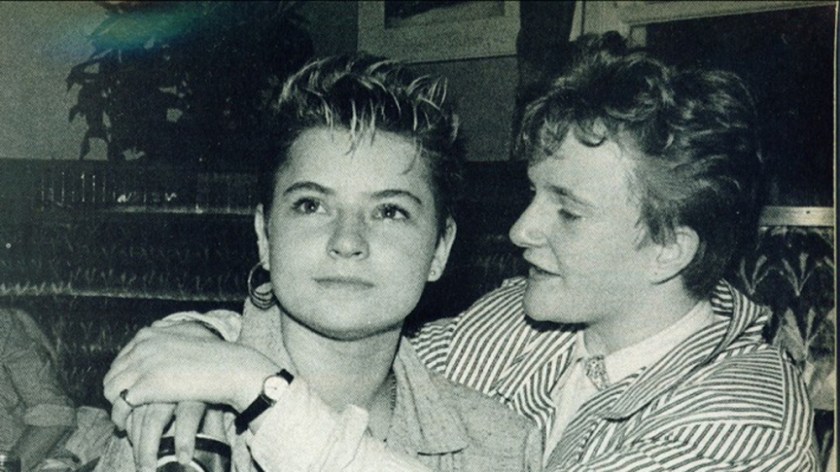
Enjoy having a scroll through the Manchester Digital Music Archive, an online archive celebrating Manchester’s music history. We particularly enjoyed this online exhibition about Manchester’s LGBT music history.
Introduction by: Jon Savage
Welcome to the Queer Noise exhibition: an online project that explores the hidden history of Manchester’s LGBT+ music culture and club life. The key word here is hidden. Despite the fact that there have now been dozens of books written about Manchester music and pop culture – relating to Factory, the Haçienda and Madchester in particular – LGBT+ people are rarely given space in the city’s ‘official’ histories.
Believing that this is a severe omission, Abigail Ward decided to set up an online project that would invite queer people from across the generations to share their memories, pictures, artefacts and stories – with the aim of constructing a fuller history of the city’s oft-forgotten queer scenes and their wider influence upon British pop and club culture.

The memories go back to the nineteen-fifties, when venues such as The Union Hotel (now the New Union), The Café Royal and the Gaumont Cinema bar provided safe spaces for gay men. In the 70s we see the launch of the Gaslight, one of the first lesbian clubs in the region, opened by Joyce Edwards.
Then there’s the early 80s peak where, despite the attentions of police Chief Constable James Anderton, venues like Hero’s, High Society and Napoleon’s flourished.
Manchester’s LGBT+ scene exploded in 1991 with the success of Paul Cons’ and Lucy Scher’s Flesh at the Haçienda (again an alternative story to the laddish ‘Madchester’ groups who dominate the histories of that club). This helped Manchester’s Gay Village to thrive, although there are many debates about the commercialisation of Canal Street and the dilution of the queer subculture.
In more recent times we have seen the emergence of a fascinating Queer Alternative scene with clubs like Bollox, Homo Electric and Club Brenda the helm. These club are all notably eclectic musically and trans-friendly, as are smaller nights such as Tranarchy and Drunk At Vogue.
But there are still many gaps, particularly from the trans scene, and we’d like your help to fill them. If you own artefacts that you think should be included in this exhibition, please upload them to the main Manchester Digital Music Archive website, or email them to info@mdmarchive.co.uk. Every contribution will be properly credited.
With your support, we hope to construct a proper people’s history and to reclaim Manchester’s vibrant LGBT+ music and club culture from the shadows.


New NHS Video launched
The Pride in Ageing Advisory Group at the LGBT Foundation have been working with the Health Innovation Accelerator project by NHS Health Innovation Manchester to improve the diagnosis and treatment of disease in the Greater Manchester population.
One of the results of the project is a video about accessing health services for older LGBTQ+ people, which you can access here.

As part of the continued public and community engagement work that is being undertaken as part of the Health Innovation Accelerator programme, Health Innovation Manchester invited members of the LGBT Foundation Pride in Ageing programme to share their thoughts and experiences of engaging with the healthcare system.
These conversations focussed on potential ways to increase engagement within the LGBTQ+ community in terms of access to NHS screening, and in raising awareness of health risks associated with prevalent diseases across Greater Manchester.
Through conversation and active listening with members, Health Innovation Manchester was able to better understand lived experiences within the LGBTQ+ community, including needs, and perspectives on how the health and care system can better engage with its diverse communities across the city-region.
 Out in the City