The 1853 Restaurant
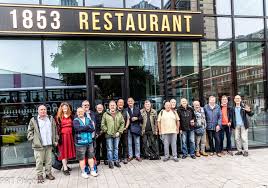
We enjoyed our meal at The 1853 Restaurant. It has become a favourite for the group as it is renowned for its exceptional cuisine, which seamlessly blends traditional British fare with modern culinary techniques. The menu is a carefully crafted selection of dishes that highlight seasonal ingredients and local produce, ensuring that each meal is a celebration of Manchester’s rich culinary heritage.
At the 1853 Restaurant, exceptional service is a cornerstone of the dining experience. The attentive staff go above and beyond to ensure that each guest feels welcomed and well cared for. The restaurant also hosts themed nights and seasonal events, offering something new and exciting for patrons to look forward to.

Abraham Lincoln had a male ‘roommate’ who he shared a bed with for years
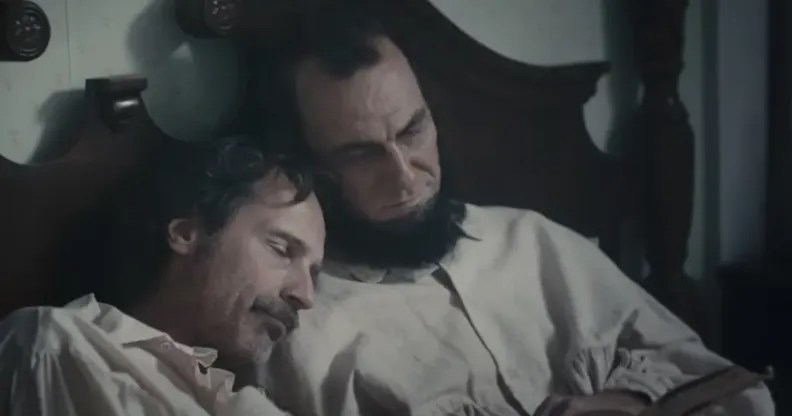
It’s a question that has plagued historians and journalists for decades. Now, the perpetual debate has reared its head once again: was US President Abraham Lincoln gay?
Several of Lincoln’s biographies have alluded to him having same-sex relationships. Publications from Vanity Fair to The Guardian have discussed it at length. The subject of Abe’s sexuality even has its own Wikipedia page.
It seems that everyone is desperate to know whether Lincoln – ironically, the first Republican president – was actually gay.
The discussion was reignited once again a couple of years ago when journalist Alex Abad-Santos shared a snippet of a The New York Times article, which made reference to Abraham Lincoln and his lifelong “friend” Joshua Speed.
“Abraham Lincoln and his friend Joshua Speed, a Springfield, Illinois., shopkeeper, had a rare intimacy,” the extract reads. “The two shared Speed’s bed for years in Springfield after Lincoln told Speed he couldn’t afford a mattress. Historians still debate the nature of this relationship.”
Abad-Santos shared the snippet along with the caption “Abraham Lincoln had a ‘roommate’”, making reference to the enduring meme where historians take evidently queer relationships and position them as simple friendships.
More recently, in 2024, a documentary was released that again suggested that ex-president had a secret, gay sex life, calling it an “important missing piece of American history.” The film, titled Lover of Men: The Untold History of Abraham Lincoln, explores the rumour that Lincoln was gay using historical recreations and never before seen photographs and letters.
It also features an expert stating: “Lincoln probably slept in the same bed with more men than he did with women.”
Lincoln’s relationship with Joshua Speed has been debated since the early 20th century.
In one Lincoln biography published in 1926, author Carl Sandburg wrote that the pair’s relationship had “a streak of lavender, and spots soft as May violets”. The phrase was later understood to imply homosexuality.
Speed isn’t the only special pal that Lincoln is rumoured to have spooned with. In his 20s, the former president spent time spooning his friend Billy Greene.
Greene seemed to be a fan of the arrangement, having allegedly said: “When one turned over the other had to do likewise … his thighs were as perfect as a human being could be.”
Other historians however have noted that it wasn’t ‘unusual’ for men to share a bed in the 1800s when no other option was available.
They also point to the fact that Lincoln had a wife and four children as evidence against his rumoured queerness, though most know this isn’t exactly a robust defence.
Despite Lincoln’s sexuality being explored intently over the past 100 years – including in a scientific paper – the debate rages on. It’s likely we’ll never know if the seminal US president really did share a bed and “rare intimacy” with his friends simply because he couldn’t afford a mattress, rather than because he was, you know, gay.
The Lavender Scare: The Case Against Homosexuals

House Un-American Activities Committee hearings, the Red Scare and homosexuals
The Red Scare – the threat of communists infiltrating American society at every level in the 1940s and 1950s – gave birth to the Lavender Scare: a belief that homosexual men and women were seen as “sexual perverts”, “deviants” and a national security threat. Wisconsin Republican Senator Joseph McCarthy spread rumours about communists in the US government decades ago.
Many of McCarthy’s fellow Republicans at that time – including President Dwight D Eisenhower – supported McCarthy’s dogged work to weed out communists in American society, but it was also a bipartisan effort with some Democrats supporting McCarthy as well. Democrats were also actively engaged in the homosexual purges that led to the Lavender Scare in which McCarthy claimed that homosexuals were more vulnerable to blackmail from the Soviets, and were therefore a national security risk and posed a significant threat to the country as the Cold War ratcheted up.
In 1947, the US Park Police started their “Sex Perversion Elimination Programme,” which targeted gay men for arrest and intimidation. In 1948, Congress passed an act “for the treatment of sexual psychopaths” in the nation’s capital. That law facilitated the arrest and punishment of people who acted on same-sex desire and also labelled them mentally ill.
The subversive aspects of both homosexuality and communism began to be linked. In 1950, even the Communist Party had issued a warning about the threat of homosexuality.
McCarthy’s efforts to eradicate communists and his focus on homosexuals in particular brought a significant number of closeted writers, actors and even politicians before his House Un-American Activities Committee (HUAC) hearings. Ironically, his main support for his work was his assistant, 26-year-old Roy Cohn, a closeted gay man who would later become Donald Trump’s attorney.
Executive Order 10450 fuels Lavender Scare
The direct connection between McCarthy and HUAC to Eisenhower’s Executive Order 10450, issued on 27 April 1953, which led to the expulsion of homosexuals from all levels of American government, remains unclear, but a link certainly existed. The policy was succinct and unforgiving: anyone suspected of being a lesbian or gay man was summarily dismissed from their positions, no matter what the placement.
The HUAC and Lavender Scare impact was extraordinary – and largely hidden. Around one million gay or lesbian individuals were prosecuted in the US from 1945 to 1960 and that by the end of the 1940s, Washington officials announced the “Sex Perversion Elimination Programme.”
Executive Order 10450 was not rescinded until 1995 and continued to bar gays from entering the military until the establishment of “Don’t Ask, Don’t Tell,” which in turn was not repealed until 2011.
The purge of homosexuals was ongoing
But this assault on homosexuals was not just about McCarthy, nor was it solely the purview of Republicans. The Subcommittee on Investigations was chaired by Democratic Senator Clyde R Hoey from 1949 to 1952 and investigated “the employment of homosexuals in the Federal workforce.” McCarthy embraced this theme in the HUAC hearings as The Hoey Report stated that all of the government’s intelligence agencies “are in complete agreement that sex perverts in Government constitute security risks.”
The head of the Washington DC Metropolitan Police Department vice squad, Lieutenant Roy Blick had testified that 5,000 homosexuals lived in Washington, DC, and that around 3,700 were federal employees. This lit a fuse to weed out these men and women from the government.
Examining the Lavender Scare
Eisenhower’s association with McCarthy highlights how he was far from a benign leader and was in fact one of the most dangerous for lesbians and gay men both at the time and historically. Renowned activist Harry Hay said “We lived in terror almost every day of our lives.”
One example is Madeleine Tress, 24, who worked as an economist for the US Department of Commerce when two investigators told her they had evidence of her lesbianism. She was asked to swear an oath. She asked for an attorney and was told she could not have one. Tress lost her job.
The incidental aspects of Executive Order 10450 – one young lesbian economist’s life being upended and virtually ruined – exemplifies what the confluence of McCarthy and Eisenhower did to gay men and lesbians with the Lavender Scare. But the impact went far beyond job losses. Some people died by suicide after being outed, as the repercussions were so devastating on multiple levels that they couldn’t bear the fallout. They were labelled as deviants and ostracised in their respective professions.
Activist response to the Lavender Scare
Frank Kameny was working for the United States Army Map Service as an astronomer when he was fired in 1957 for being homosexual. Kameny tried repeatedly but was unable to find another job in the federal government after that firing due to the Lavender Scare.
The impact that had on Kameny propelled him into becoming one of the most pivotal LGBT+ civil rights leaders, devoting his life to the gay-rights movement. Kameny was instrumental in creating the Mattachine Society of Washington in 1960. In 1965, four years before the Stonewall Riots, Kameny picketed the White House on the grounds of gay rights. That same year, Kameny led a picket line for gay rights at Independence Hall on 4 July, which included veteran Philadelphia lesbian activist Barbara Gittings.
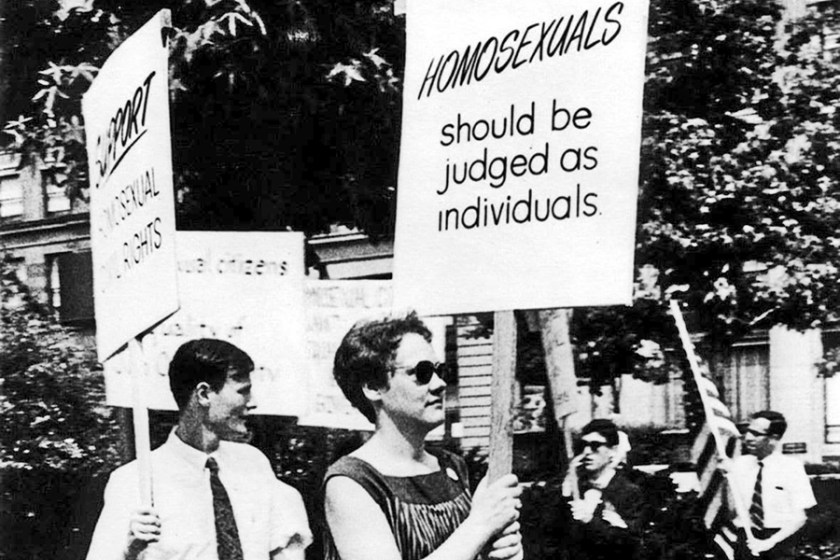
This history shows what a seemingly benign president and an ideologue of a senator can do to threaten, terrorise and even lead to the deaths of whole groups of marginalised people. It’s a lesson worth reviewing and a history that continues to impact LGBT+ history – past and present.
Manchester Trans Liberation Assembly

Sick of Labour Politicians claiming to respect trans people while attacking trans rights? Want them to take concrete steps to keep trans people safe? Make sure they know about it!
Manchester Trans Liberation Assembly is holding a workshop for you to write to decision makers.
🏳⚧✍🏳⚧✍🏳⚧✍🏳⚧
Where: Gorton Library, 27 Garratt Way, Manchester M18 8HE
When: Wednesday, 26 March, 6.30pm – 7.45pm
There are no staff onsite on Wednesdays, apart from at reception, but we’ll be at the door!
Not familiar with trans rights in the UK?
The session will start with a talk and Q&A, so everyone is up to date before they decide what they want to write.
Don’t think your MP will listen?
There are other groups we need to reach, including Unions and LGBTQIA groups within Labour. And even if you think your MP won’t change their mind, there is a good chance they will reply, which will help build up a picture of what positions MPs have taken on trans rights and guide future campaigns. Above all, you will not be the only person writing to your MP for trans rights! Your message might be a start, even if it isn’t enough on its own.

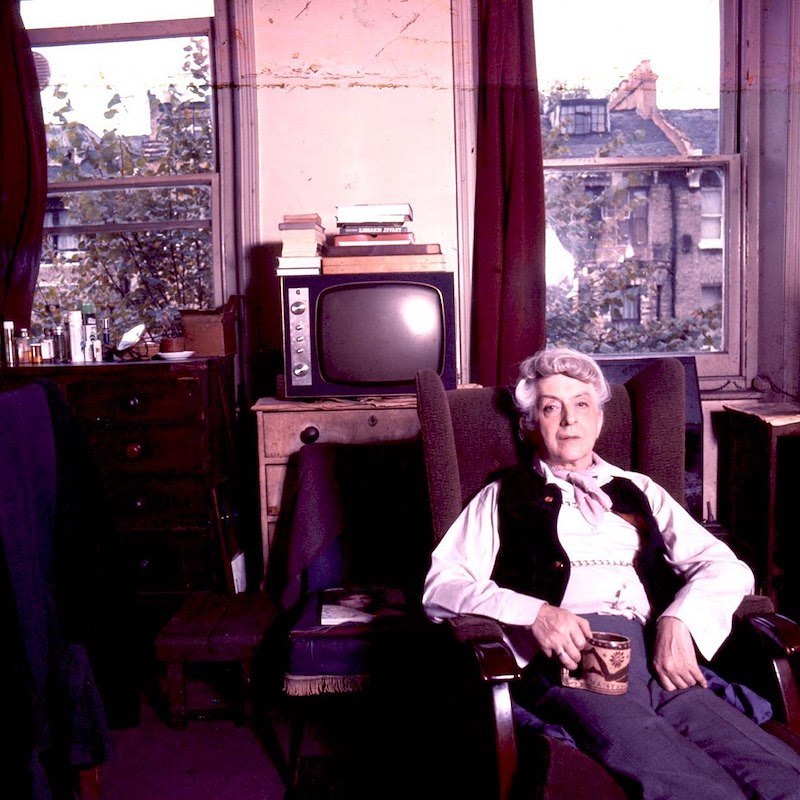
Quentin Crisp
The first openly gay person that I ever did see
Was Quentin Crisp on my TV
My mother said: “No, turn it off.”
And that was the end of that … for a while!
Quentin, your spirit still inspires
A flame that never once retires
In everyone that dares to dream
Your legacy is a shining beam.
 Out in the City