

LGBT+ History Month Archive Exploration at People’s History Museum
We explored this year’s theme of “Activism and Social Change” by delving into the People’s History Museum’s incredible archive collections.
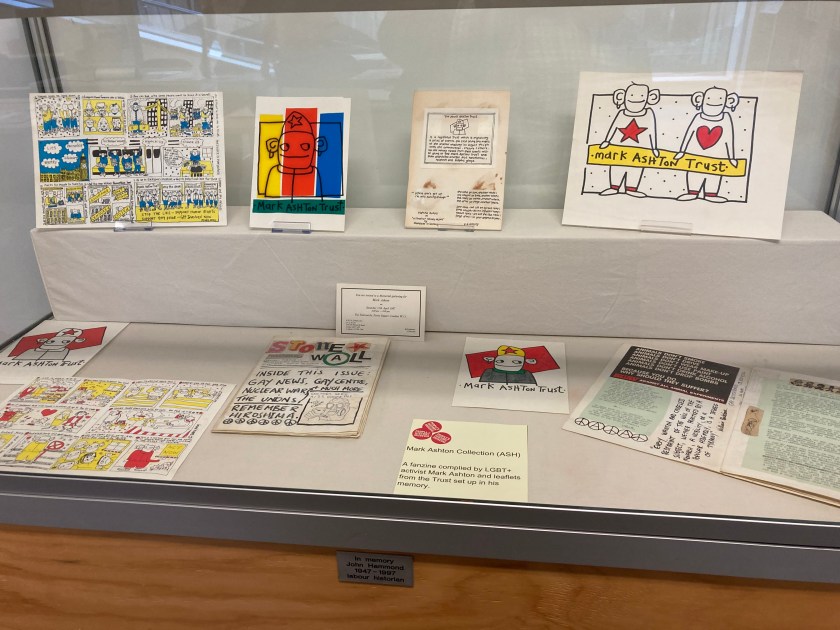
These included the archive of Lesbians and Gays Support the Miners (LGSM), collection of Mark Ashton, the co-founder of LGSM, papers of Michael Steed, former chairman of the Campaign for Homosexual Equality and papers of Hugh Fell, former secretary of the North West Campaign for Lesbian and Gay Equality. There were copies of Gay News – Europe’s Biggest Selling Independent Homosexual Newspaper.
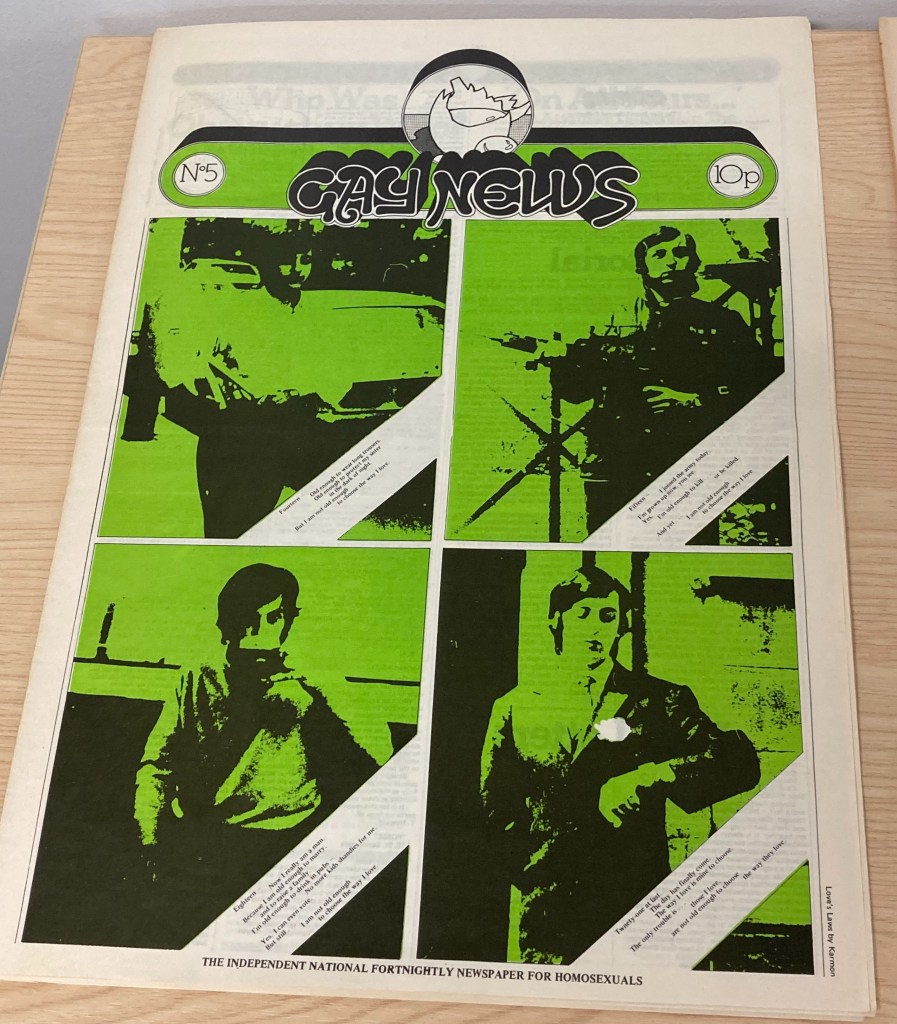
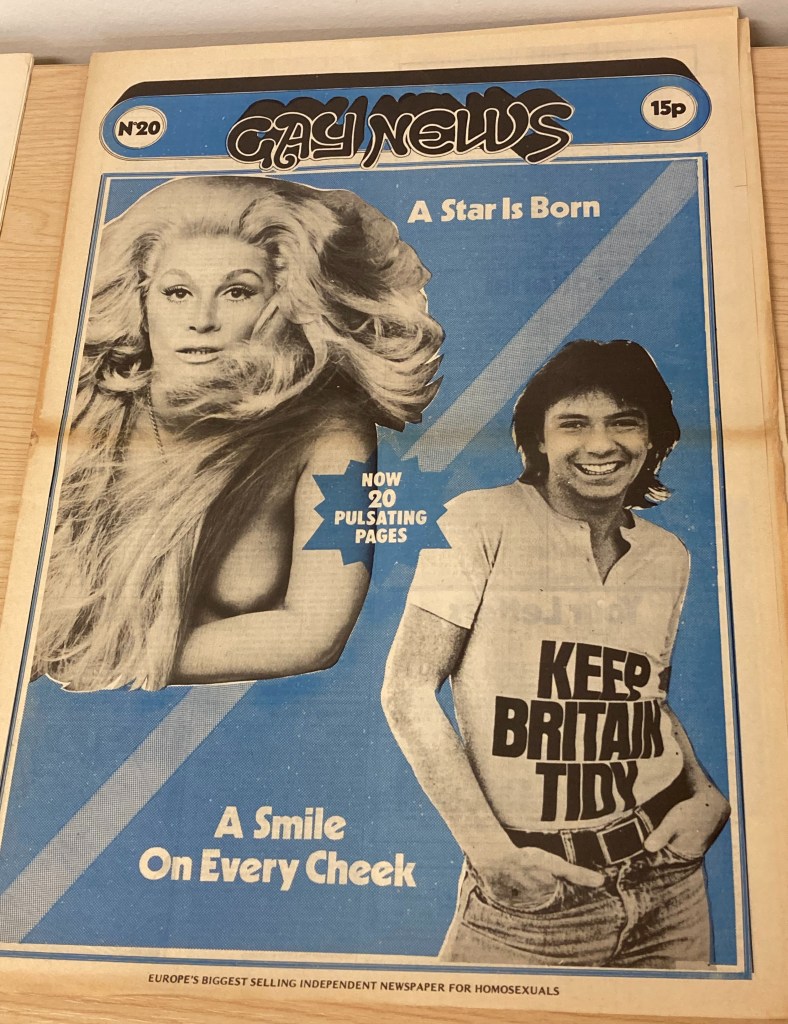
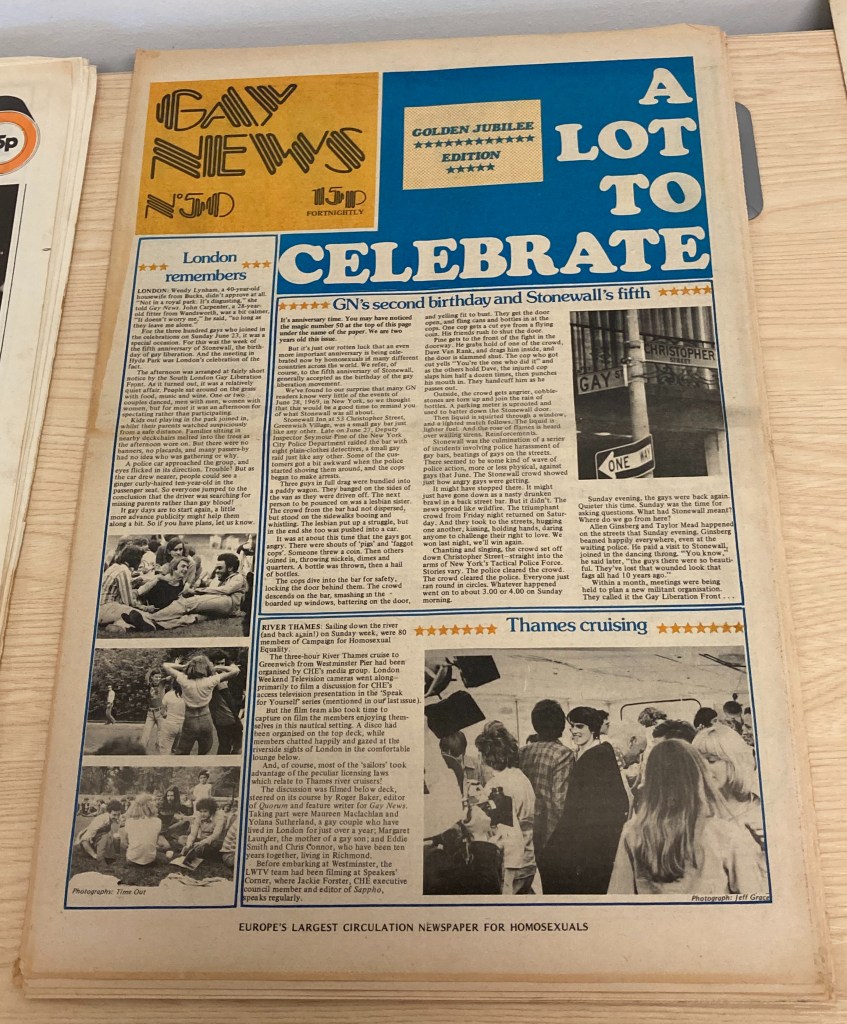
The documents included the following article:
Lesbian Line (This article was written by G in 1979)
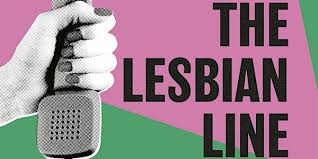
“A woman rings the line. As she talks it is like hearing a voice from the past. The same desperation. Isolation. Pain. Loneliness.
And before long … ‘perhaps it is just my cross to bear in life. I had just better get on with it.’
Stop. How can I make this woman understand? How to make her see her lesbianism in a positive light? It is beautiful. I am a lesbian, I know. Set yourself free. Come and see us, see for yourself … don’t hang up on yourself. The bonds break slowly. Words come more easily. The woman’s voice rises to a pitch and finally … she laughs. Good.
150 Calls
That is what Lesbian Line exists for. This is who it exists for. The first telephone service for women run by women.
We get 150 calls a week on average – most of them from first-time callers. The need is great and if only we had enough money, we could probably double or treble that number.
Lesbians are everywhere – from John O’Groats to Lands End. In launderettes surrounded by kids while hubby puts his feet up by the fire; 18-year-olds in the arms of incredible hulks trying to pretend they don’t have feelings; in colleges; on buses; in hospitals; on television in parliament – everywhere.
Perverted Notions
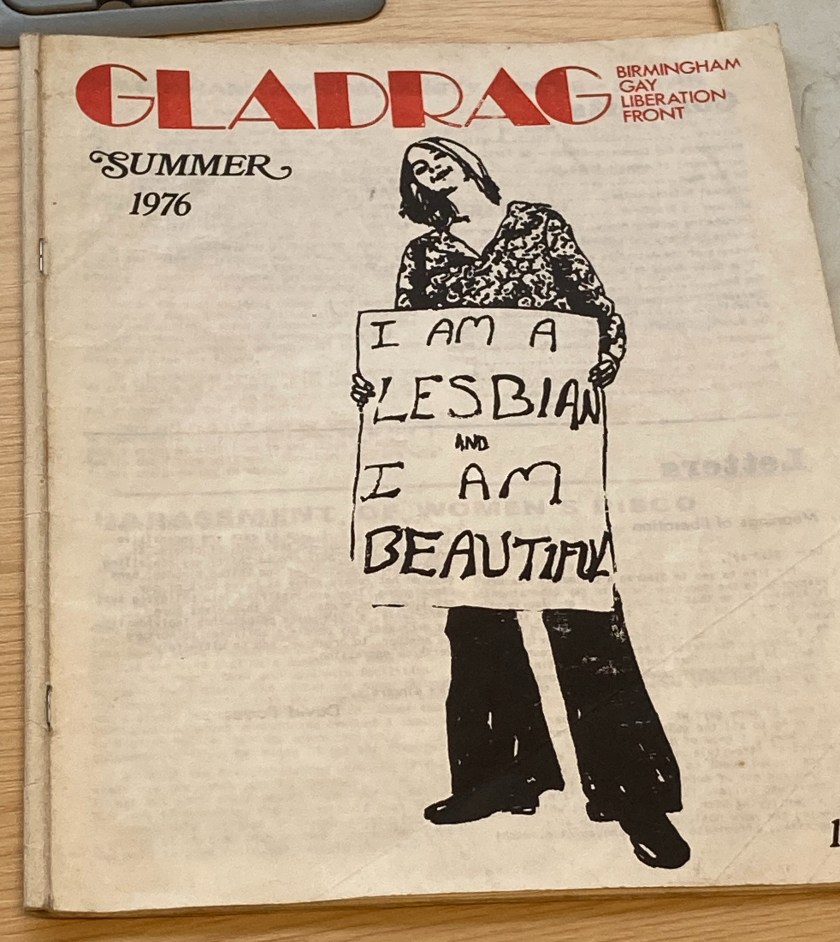
We are black, white, brown, yellow, fat, thin, Jewish, catholic, atheist, whatever.
I felt like that woman on the phone once too! Judging myself a freak because of other people’s perverted notions. Wasting my life and love away so that I could glide in white down some aisle to keep society happy.
Then at last I came out to myself – and that is the most important way of coming out. And I remember the beginnings …
‘We can cure you,’ the male psychiatrist said. ‘We can give you electric shock treatment if you want.’
I just stared blankly at him. A feeling of nausea gripped me. ‘Sick, sick’ I kept thinking.
Finally I asked him, academically: ‘And have you any idea who I would be afterwards?’
He did not answer. Any negative feelings I had about being a lesbian disappeared in that moment. Rage became my most dominant emotion.
‘I am a lesbian,’ I said clearly, ‘and I want to stay that way,’ – and I got up and left the room.
Four words, but those four words – ‘I am a lesbian’ said proudly and defiantly were enough. I was on my way.
It sounds corny, but the re-birth had started. My first real words as ME. Years of growing up in a world of heterosexuality fell away. A new world opened up.
Life begins here, whether you are 21 or 65!
Lesbian Line is itself only two years old. It was born when women working with men on other gay telephone lines broke away to form their own group. Only women are really equipped to talk to and help other women. Many men, gay or not, still view women negatively. Many lead very different life-styles to women.
It might become clearer if I tell you that that male psychiatrist was also gay (as I later discovered). Not, of course, that all gay men would act this way – but there is a difference.
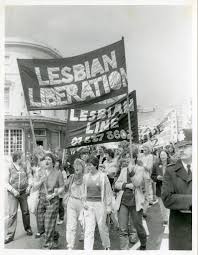
Back to the phone. Eureka! The woman says she will come to one of our afternoon socials, perhaps even to a disco.
I can’t help feeling this is the start for her. Maybe it will be her, some time in the future, on this end of the line helping other women to do the same. Perhaps it will be her going out giving talks to groups about our work, writing articles, spreading knowledge.”
We then joined a guided gallery tour, which included various banners and other items.
ASLEF Lesbian Gay Bisexual Transgender Members Banner 2005
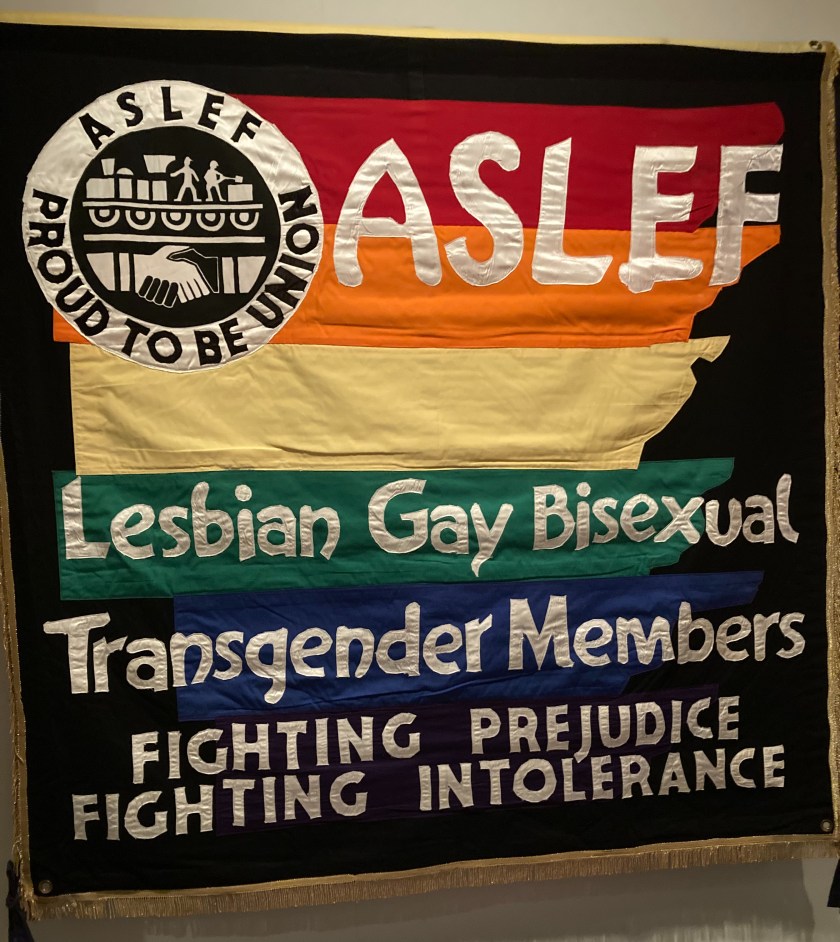
The Associated Society of Locomotive Engineers and Firemen (ASLEF) is the train drivers’ union. In 2000 ASLEF established equalities committees for its members, to represent women, LGBT people and people of colour. The committees’ roles were to challenge ignorance and prejudice within the union.
In December 2001, the union’s LGBT Representative Committee distributed ‘Facing Points’, a newsletter for LGBT members. The title refers to members ‘facing up’ to their true identities, and being proud of who they are.
The newsletter highlighted the committee’s key aims to outlaw homophobic bullying in the workplace and to establish legal protections for trans people.
Lesbians & Gays Support The Miners Banner, 1984 (made by Mark Ashton)
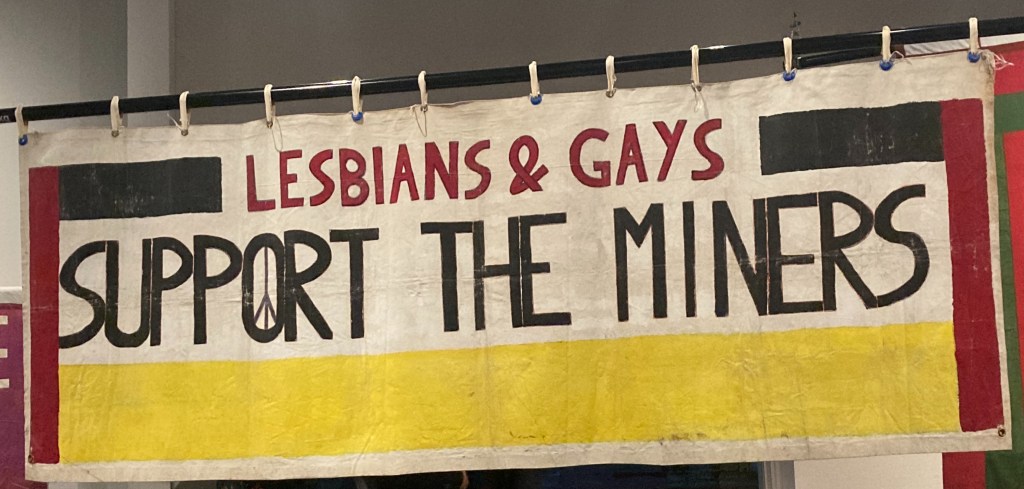
Lesbians and Gays Support the Miners (LGSM) was formed during the Miner’s Strike in 1984. LGSM’s main aim was to raise money for the striking miners and their families.
The group raised about £20,000 with events such as the benefit concert ‘Pits and Perverts’. This money helped miner’s families survive the winter.
Although small, this campaign group was significant. A bond formed between miners and the LGBT+ community, which lasted long beyond the strike. Miner’s groups were outspoken supporters in the 1988 campaign against Section 28, government legislation which banned schools and local authorities from ‘promoting homosexuality’.
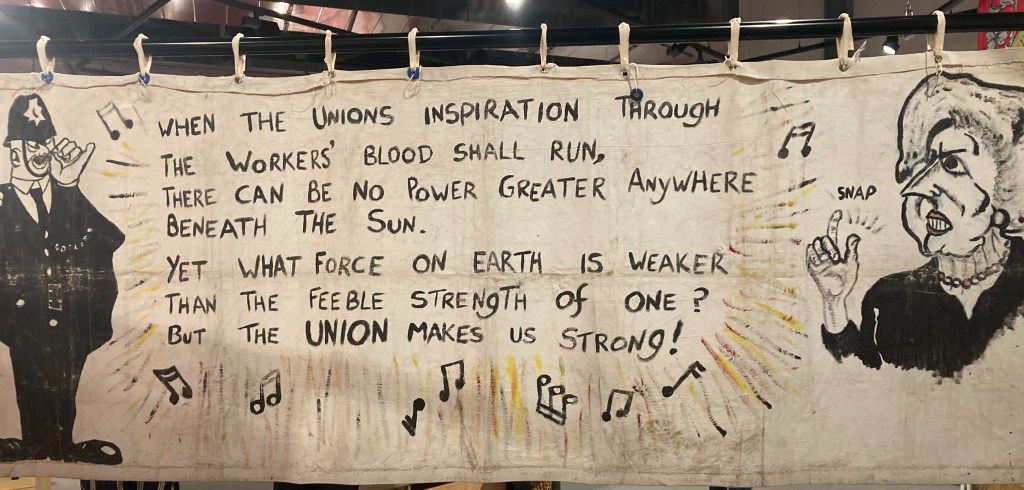
On the banner’s reverse is the first verse of ‘Solidarity Forever’, a song composed in 1915 by American Ralph Chaplin, inspired by a miners’ strike in West Virginia, featured alongside a caricature of the UK Prime Minister at the time of the 1984 to 1985 Miners’ Strike, Margaret Thatcher.
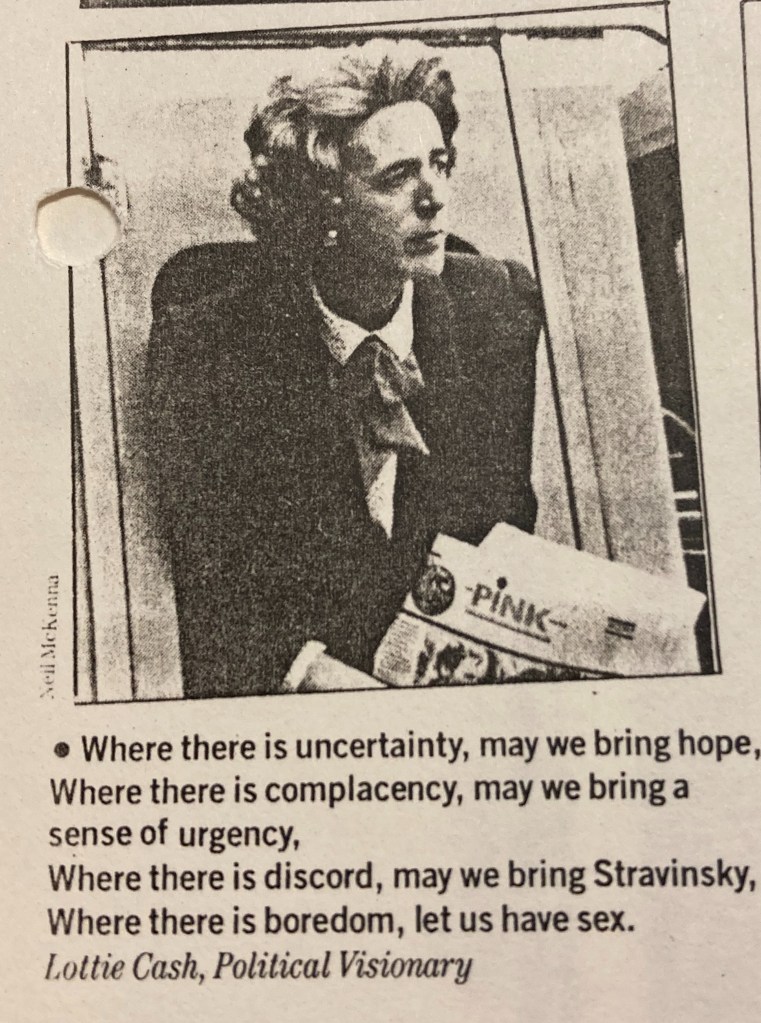

Queer Treasures at Manchester Central Library
This is the first of a short series of articles about queer treasures that are currently to be found in the Archives held at Manchester Central Library.
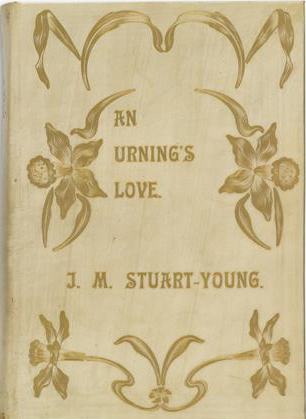
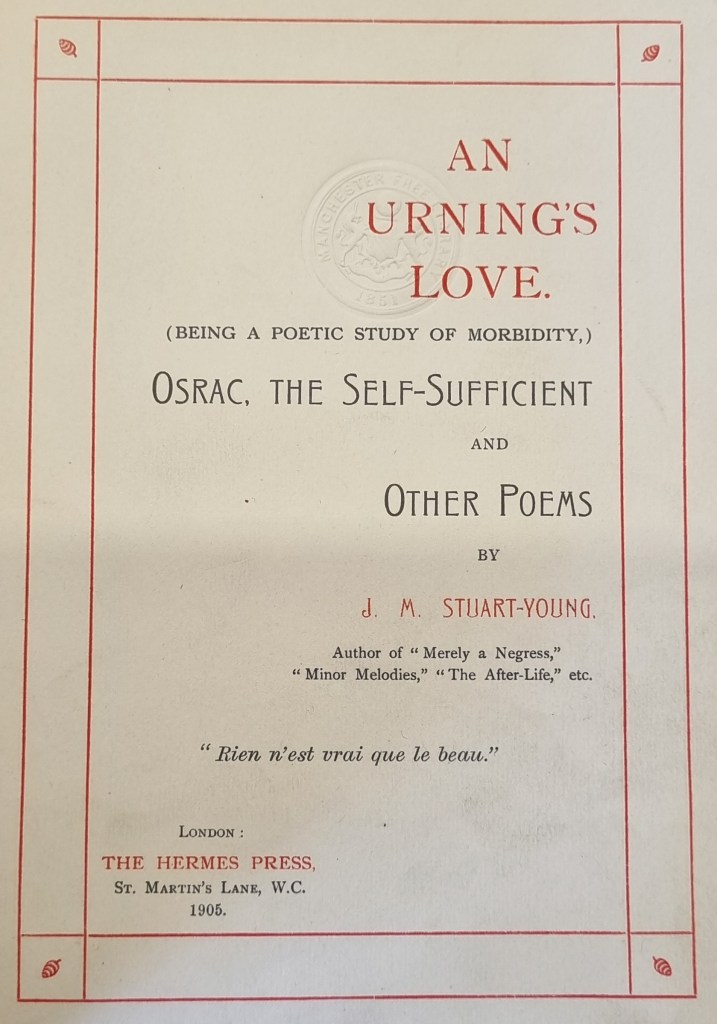
‘An Urning’s Love’ by John Moray Stuart-Young
In his seminal book on the Uranian Poets, Timothy D’Arch Smith highlighted the work of the Manchester-born writer, John Moray Stuart-Young. ‘Uranian’ was the name D’Arch Smith applied to a group of British poets who were active during the late 19th and early 20th centuries and whose work celebrated love between males. The name ‘Uranian’ was taken from Plato’s Symposium, where the male lovers of their own sex were regarded as devotees of ‘Aphrodite Urania’, who represented the purest, most devoted and selfless of lovers. It was also a word used by some of the poets that D’Arch Smith studied to refer covertly to male same-sex love. Ancient Greek models of male friendship inspired almost all of these writers, but many were also influenced by the work of those early German pioneers in the study of Sexology, such as Karl Heinrich Ulrich, Adolf Brand and Magnus Hirschfeld. And, in 1862, Ulrich coined the word ‘Urning’ to refer to a man who exclusively loved other males – hence the book’s title refers to those males loved by the poet. (*1)
Stuart-Young’s life story would warrant a series of articles in itself. However, briefly, he was born as plain ‘John James Young’ on 3 March 1881 in Ardwick into a poor working-class family; on leaving school he worked as a clerk until, in 1899, he was sentenced to six months hard labour at Strangeways, following his conviction for fraud. Throughout his life he claimed to have had an intimate friendship with Oscar Wilde, who was the subject of a number of his writings. Shortly after leaving prison he went to work as a palm oil trader in Nigeria and died at Port Harcourt on 28 May 1939 from throat cancer. Despite the ignominy of his early life in Britain, in Nigeria he lived successfully as a trader and as a poet, enjoying a number of personal relationships with other males. When he passed away he was lauded in the Nigerian press as a literary giant.
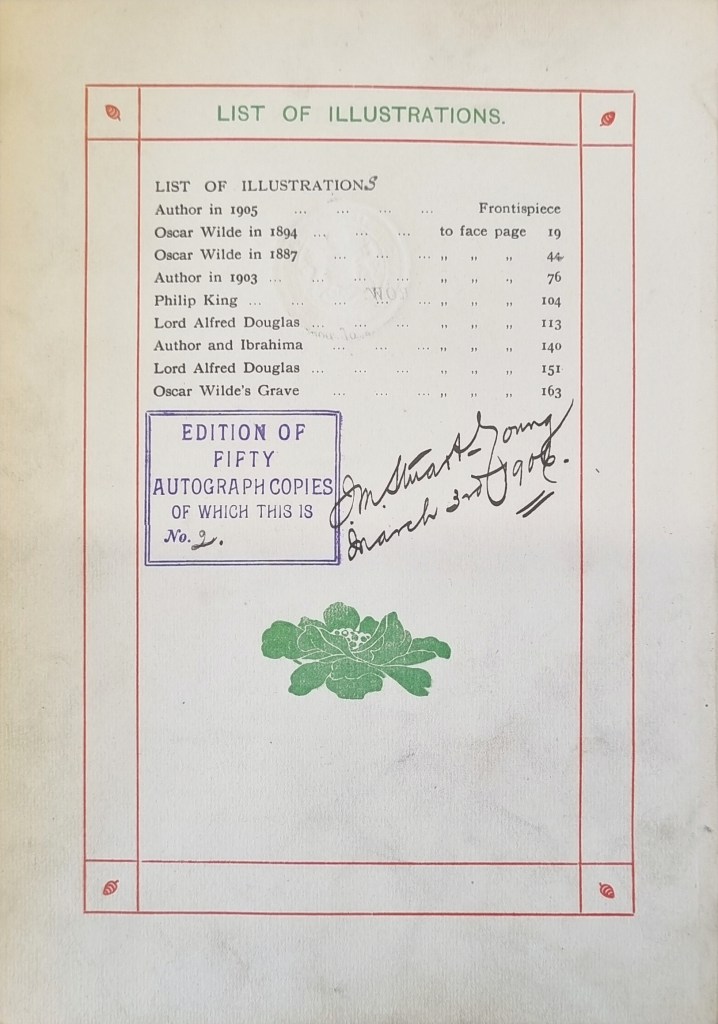
‘An Urning’s Love’ is a beautifully produced volume of homoerotic poetry, interspersed with essays. Printed in 1905 and bound expensively in vellum with gilt floral decorations, Stuart-Young produced the book whilst staying in Ardwick Green. The Central Library Archives holds copy no 2 (of a limited edition of 50 autographed copies), which was presented to the Library by Stuart-Young himself on 3 March 1906. The book has gilt-edged pages and is illustrated with coloured engravings, rubric page-framing and photographs. The title page bearing the motto in French, ‘Rien n’est vrai que le beau’ (Nothing is true but beauty), pays homage to Plato’s philosophical writings. Stuart-Young writes that the book was dedicated in particular to Daniel Derow ‘in memory of those wonderful days when we stood together on the threshold of manhood and chiefly because you remain my friend, loyal and tried’ (p7). Sadly, little is known now about Derow, though clearly he was hugely important to Stuart-Young. In his Introduction, Stuart-Young pays fulsome tribute to Oscar Wilde (whom he sometimes refers to by the anagram of ‘Osrac’), and to ‘those thousands of dreamers, to whom Nature has given a tender feminine soul encased in a masculine form’ (p7). He goes on to define ‘Urnings’ as ‘nature’s paradoxes, men who seem women, women who appear to be men, of whose company Sappho, Michelangelo and Shakespeare were members, and who will continue to appear so long as the world exists’, and lauds Oscar Wilde as ‘the veritable Urning of our times’ (p8).
His panegyric to Wilde reaches its zenith in his essay on him entitled ‘Osrac, the Self-Sufficient’ (*2) which details Oscar’s life and works and reproduces letters and an autographed picture he says he received from Wilde, which bears the inscription, ‘September 1894 Oscar Wilde to Johnnie’ (p18). A few of the poems in the volume are addressed to women, which conveniently acts as a cover for the many that are addressed to men. Also, the word ‘Urning’ was not understood by the general public, so publication would not readily receive public censure. But certainly it was familiar to a literate minority who knew much about that love that dare not speak its name.
A few of his poems reference his early sojourn in Africa and, in particular, one of the later poems in the book, entitled ‘A Glimpse’, praises the beauty of his closest Nigerian friend, Ibrahim, and is addressed to him. The poem praises Ibrahim’s physical beauty and adds –
‘But rarer than these treasures superfine,
Thine eyes, indifferent to the girls, in sweet repose to mine’ (p140).
Thankfully, the days in which homosexual men were regularly sent to prison for expressing their love has now passed, but, especially during this LGBT History Month, it is good to look back and remember those who spoke out, however covertly, to articulate the beauty of our love and to celebrate it and, in doing so, gave others the courage to love.

(*1) Ulrich referred to women who loved other females by the word ‘Dioning’.
(*2) ‘Self-Sufficient’ also references the work of Adolf Brand, who, in 1896 in Germany, started a magazine called ‘Der Eigene’; originally an anarchist magazine, it soon because the world’s first magazine devoted almost entirely to homosexual love. ‘Eigene’ in Brand’s concept of the word, could also be translated into English as ‘self-sufficient’.
Arthur Martland © LGBT History Month 2025

‘Radiant’ an illuminating biography of Keith Haring
“Radiant” is an illuminating biography of the talented artist Keith Haring, who made his indelible mark during the 1980s before dying of AIDS at age 31. Brad Gooch follows Haring from his childhood to his early days in New York City painting artistic graffiti, to his worldwide fame and friendships with Andy Warhol and Jean-Michel Basquiat.
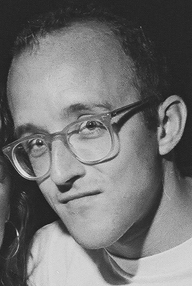
The eldest of three children and the only boy, Haring learned to draw early on from his father. Art quickly became a lasting obsession, which he pursued fiercely. Growing up in a small, conservative town, he was drawn to countercultural movements like hippies and religious “Jesus freaks,” although he mostly found the imagery and symbols appealing.
He studied commercial art in Pittsburgh but later dropped out, spending several years working and learning at the Pittsburgh Arts and Crafts Centre, before moving to New York City in 1978. Studying painting at the School for Visual Arts, he also learned about video and performance art, making interesting projects. He also began drawing images on subways and blank advertisement backboards. One of his most distinctive was the Radiant Baby, a crawling baby shooting rays of light.
Gooch begins the biography with his own encounter with this public art, which felt colourful and “extremely urgent.” It had to be done guerilla-style, before the authorities could catch him, and they were frequently painted over. He was arrested a few times.
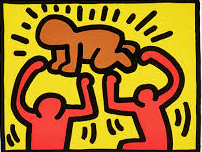
Ironically, a few years later Haring would be paid huge sums and flown around the world to create large-scale art on public property. People were amazed at how quickly he worked, even in terrible conditions. Sometimes at these events, while a crowd was gathered, he would draw and give away the artwork. Knowing that his art in galleries sold for incredible amounts, he enjoyed occasionally frustrating the art world’s commercial desires.
His Pop Shops also revealed Haring’s competing impulses. Opened in 1986, first in New York and later in Tokyo, they put his art on all sorts of merchandise, including T-shirts and posters. On the one hand, they allowed ordinary people to buy his work at reasonable prices. However, they also earned him more money and increased his public image.
He made art for everyone. His best-known pieces, featuring babies and dogs, are colourful and family friendly. Some even consider it “lightweight.” He eagerly created murals and artwork for elementary schools and neighbourhoods. But he also made art with social and political commentary and sexual explicitness. “Michael Stewart – USA for Africa” depicts a graffiti artist’s strangulation by New York City Transit Police officers. He painted “Once Upon a Time…” for the men’s bathroom of New York City’s Lesbian & Gay Community Centre.
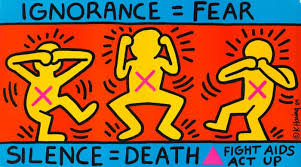
Haring worked nearly right up to his death in 1990. The Keith Haring Foundation keeps his work in the public eye, while also funding non-profits working with disadvantaged youth and AIDS education. Gooch captures Haring’s complexities; he befriended graffiti artists of colour and dated working-class men, but was sometimes ignorant about how his wealth and fame affected these relationships. Well written and sympathetic, the book can sometimes overwhelm in detail about life in the 80’s and Haring’s celebrity friends.
‘Radiant: The Life and Line of Keith Haring’
By Brad Gooch
2024, Harper, 502 pages
£18.67 (Amazon Hardback)

 Out in the City