Fairfield Moravian Settlement
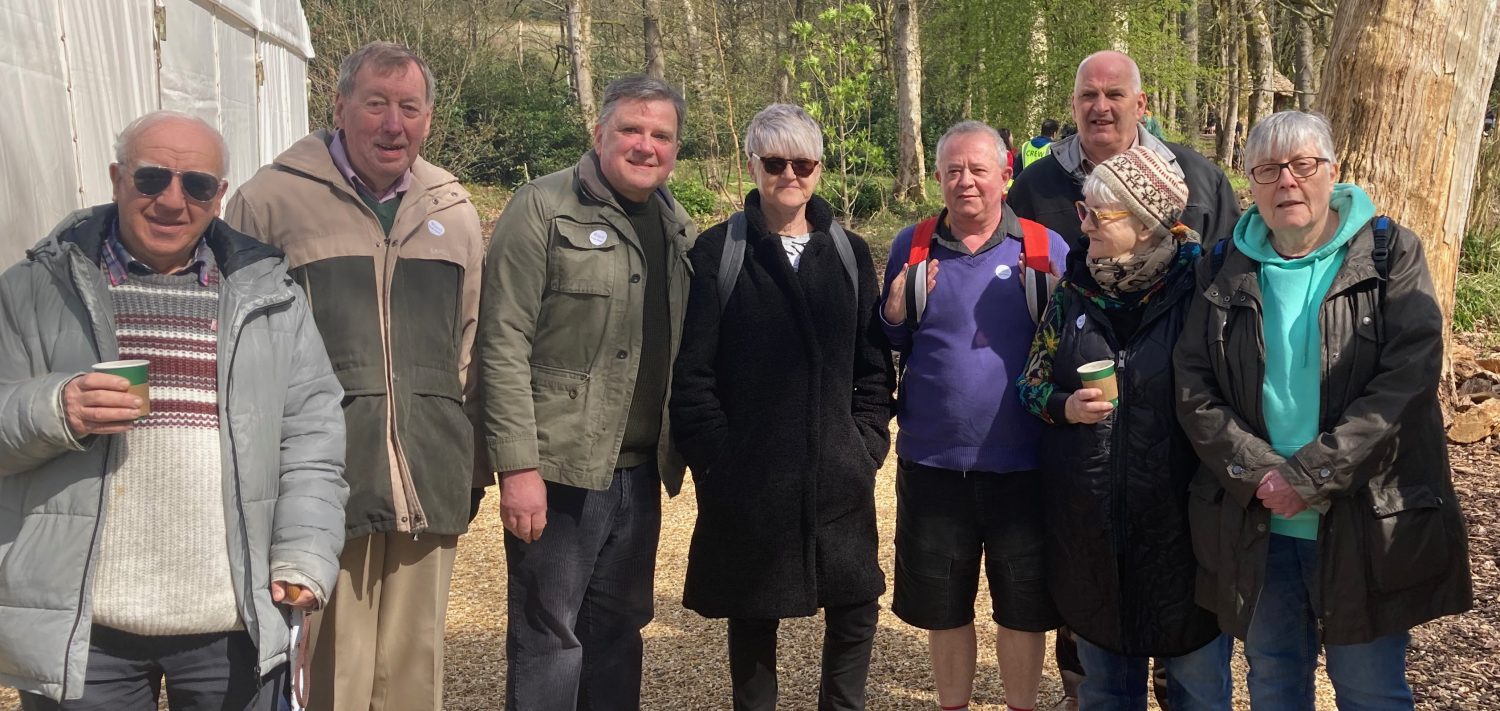
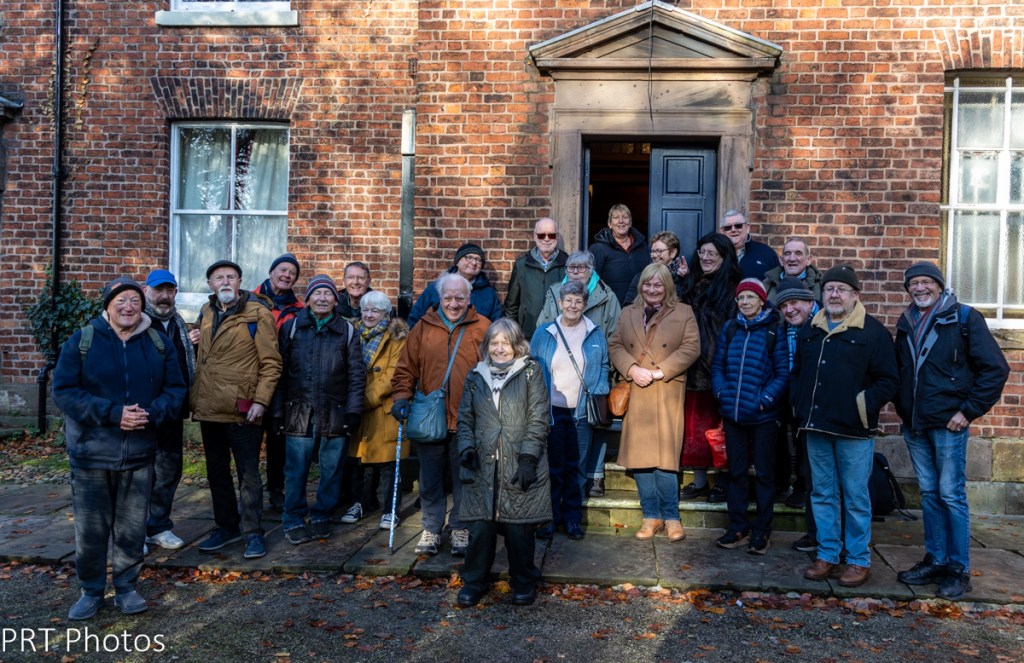
We picked a perfect bright sunny winter’s day for our trip to the little known Moravian Settlement in Fairfield – five minutes away from Droylsden tram stop but hidden away down a side street beyond the Ashton canal bridge.
It was like stepping back in time as we entered the cobbled main square and met Janet, our very informative guide for the tour, in the beautiful church.

She began with a detailed introduction to the history of the Moravians. Founded by Czech Jan Hus (1369-1415) who established the oldest Free Church in Northern Europe sixty years before the Reformation in response to the iniquitous sale of indulgences among many other unpopular activities of the Catholic Church.
Hus was condemned to death, but his vision lived on and in 1457 the first United Brethren settlement was founded in Kunwalt. After flourishing in Bohemia and Moravia for many years the church was almost wiped out in the Thirty Years War.
The Moravians found allies in Amos Comelius (1592-1670), his son and grandson, all of whom served as bishops in the church. Amos was dubbed the father of modern education and settlements included boarding schools for girls and boys.
In 1732 it was the first Protestant body to go out on foreign missions, while1749 saw the Moravian Church recognised in law in the British Parliament.
The first settlement in England was in Pudsey; a small one in Dukinfield followed, Fairfield was opened in 1785 after brethren bought a farm and land in the village. Once a kiln was built to provide bricks it took a couple of years to build the main terrace followed by the rest of the buildings. The settlement was entirely self-sufficient, with a bakery, a dairy, fields and was run like a commune. Completed in 1796, people who wished to join would apply to build their own houses.
Janet took us on a fascinating tour of the whole settlement, and we saw the burial ground, or God’s Acre, with its characteristic tomb markers set flat in the ground, men and boys to one side, girls and women on the other. In keeping with the notion of self-sufficiency the area also served as an orchard.

The Brethren House closed in 1820 and the boys’ school was taken over by Lancashire County Council in 1920. It is now a girls’ comprehensive school. Fairfield is no longer a self-contained village with its own night watchman, whose cellar was used as a lock-up for those found the worse for drink. The village pub did serve alcohol but if you ordered a pint it came with a religious tract.
It is now a Conservation Area and the houses and other buildings are Grade 2 or Grade 2* listed. We repaired to the former College, now a community centre and excellent little museum for tea and biscuits to complete a fascinating and very informative visit.
Thanks to Lizzie for this report back. More photos can be seen here.

World AIDS Day
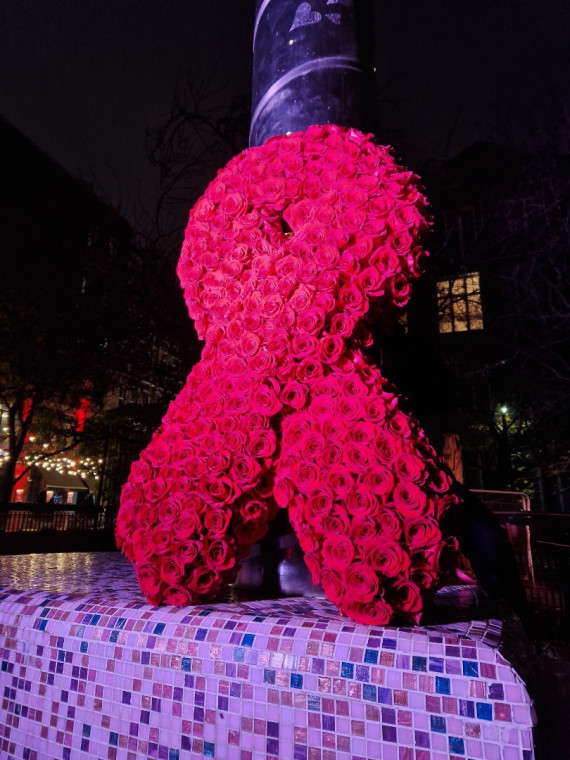
The annual World Aid’s Day vigil will take place on Sunday, 1 December 2024 at 6.00pm at Sackville Gardens, Sackville Street, Manchester M1 3WA.
Join us to remember people we have lost, show our solidarity with people living with HIV around the world and commit ourselves to ending HIV stigma and discrimination.
This inclusive event will represent all identities, facets and elements of the HIV community who will be represented through speaking, artistic performances and visibility. We will centre the history of HIV and the trailblazers who inspired us and paved the way to today. There will also be talks from Positive Speakers (people living with HIV) who will share their story and experiences.
We look forward to seeing you there.
Celebrating HIV Activism
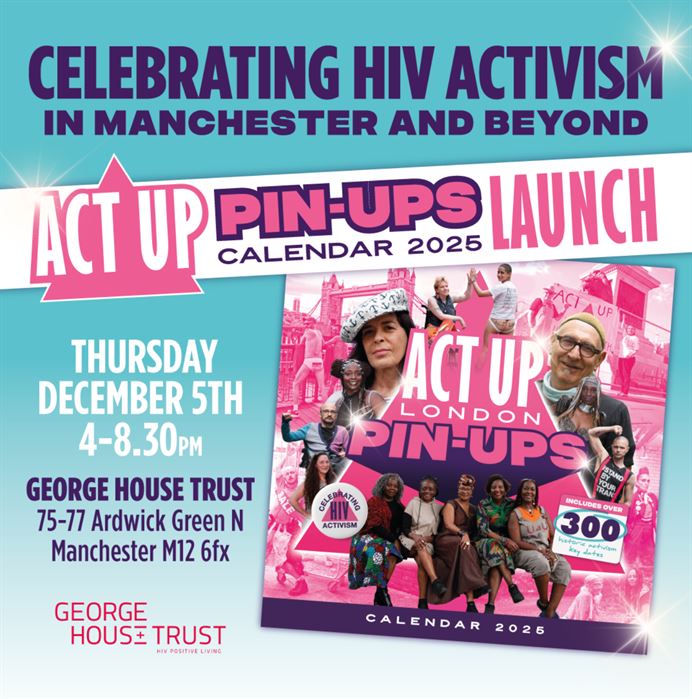
Thursday, 5 December from 4.00pm
The Lineup
4.00pm Welcome from George House Trust and ACT UP PIN UPS Nathaniel Hall, Paul Fairweather, Tony Openshaw
4.10pm Screenings and Q+A of Nathaniel’s films – HIV+Me and GHT’s Pioneers of Progress
4.30pm HIV Activism Quiz
5.15pm Recording our stories from ACT UP Manchester, Section 28 and iconic queer protests
6.00pm – 8.00pm Calendar signings, food and DJ’s.
Get tickets here.
The UK’s Gay Liberation Front had trans rights at its heart – despite what transphobes might try and tell you
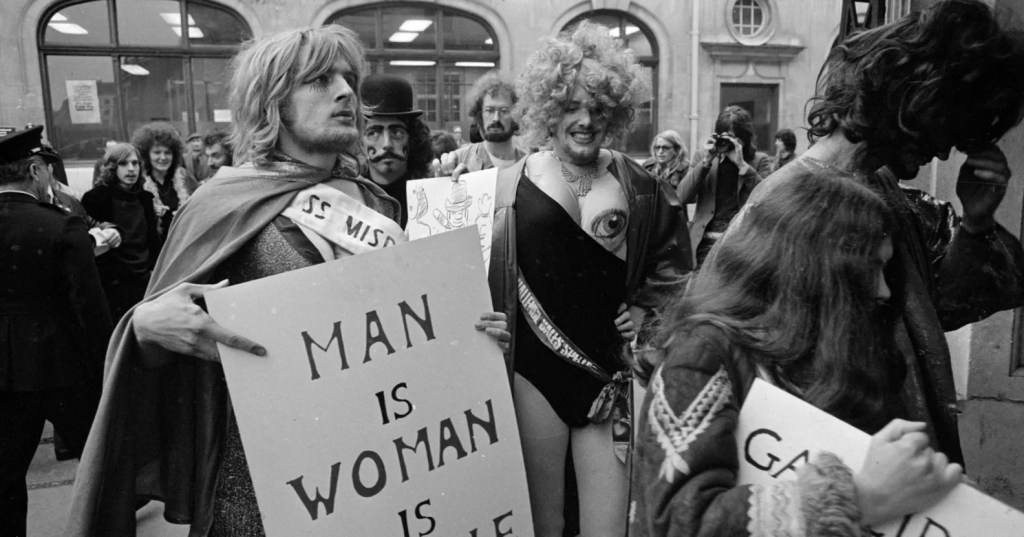
The erasure of trans people from history is sadly nothing new, so it’s hardly surprising that the fight for trans liberation in the UK is far older than many realise.
The modern-day LGBT+ rights movement started with the Stonewall riots of 1969. The demonstrations sent ripples across the world, sparking trailblazing LGBT+ movements from Boston to Berlin – and in Britain, we had the Gay Liberation Front.
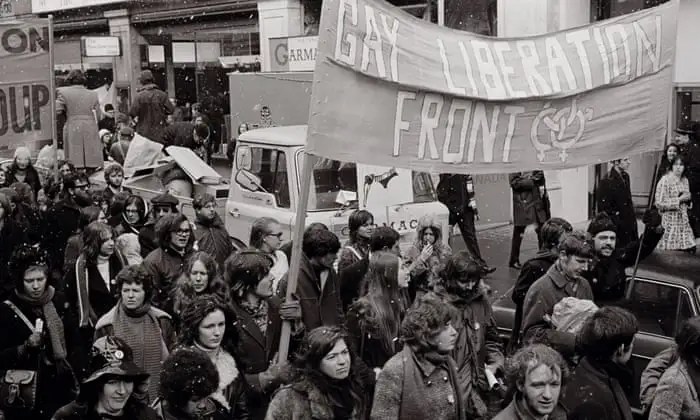
It began in 1970 as 19 people in a basement of the London School of Economics. Within weeks it snowballed into meetings attended by hundreds more, becoming a watershed moment in British LGBT+ history.
The phrase “LGBT+” hadn’t been coined yet, but that doesn’t mean transgender people weren’t there. As a member of the GLF since 1971, Peter Tatchell explains how trans rights were central to the group’s ethos.
“In the GLF era, the word transgender, with its current meaning, barely existed. It was little known and rarely used. Back in those early days, gay was, for most of us, an umbrella word for all lesbian, gay, bisexual and trans people.
GLF challenged gender norms and embraced all gender non-conformists. Trans people shared a defiance of gender rules and expectations alongside LGBs – that gave us a common interest in working together for our mutual emancipation.”
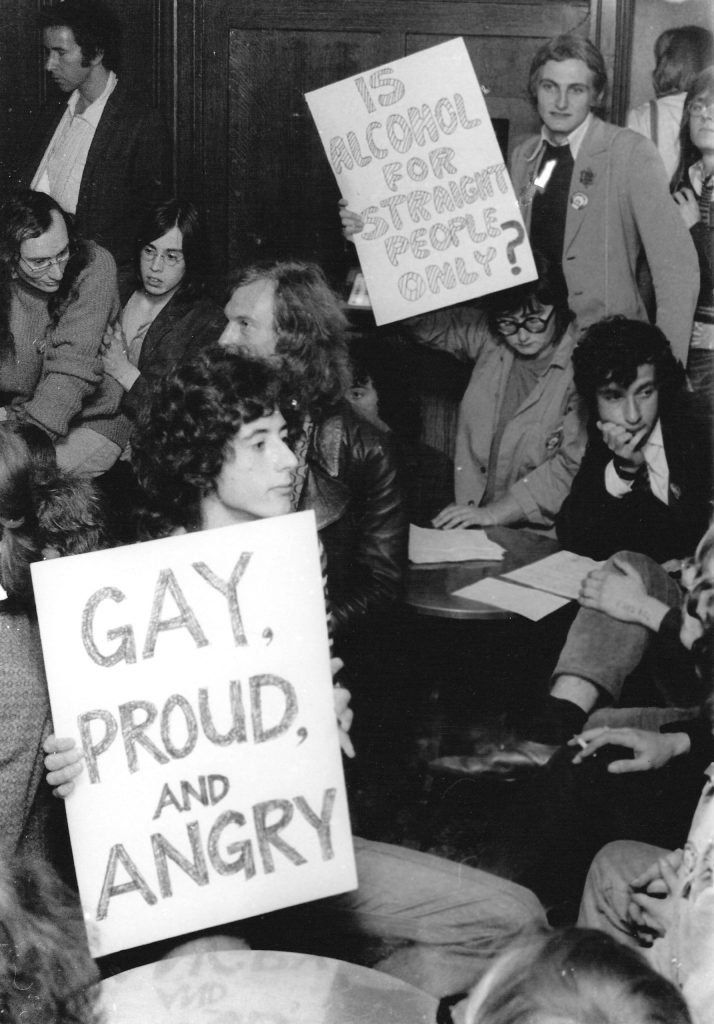
Nowadays it’s a common tactic of anti-trans activists to paint transgender people as something of a modern phenomena, claiming that their involvement in the gay rights movement is a “fiction” inserted into historical narratives.
Nothing could be further from the truth.
“Gay Liberation Front members supported the trans fight, including protesting at a café near Piccadilly Circus that refused to serve trans women,” Peter Tatchell said. “We saw trans rights as part of our struggle.”
He can recall several early issues of the GLF newspaper covering the stories of trans women, who were widely accepted as part of the “diverse spectrum” of the GLF community and movement.
“Many of us in GLF argued that sexual orientation, gender roles and gender identity are all interlinked,” Tatchell continued. “They are part of a matrix of sexual and gender subversion that challenges orthodox social expectations of what it is to be male and female.
This common thread is why GLF was allied to women’s liberation, and supportive of transgender and bisexual liberation.
Alas, not everyone in GLF embraced trans people. Some straight-acting gay male activists were lukewarm or embarrassed by them. But their reticence was not widely shared.”
While we now have a range of expression to describe the spectrum of gender and sexuality, 50 years ago many of these ideas were still in their infancy and the language we use today simply didn’t exist.
That meant it was easy for some trans and gender non-conforming people to slip under the radar, but it’s a mistake to assume they weren’t part of the fight.
Like the gay community, trans people were viewed as “gender rebels” who contradicted the same heterosexist norms LGB people did – and their causes were united from the start.
“The right to be different is a fundamental human right for LGBs and Ts,” Tatchell stated.
“The idea that people should be expected to adhere to heterosexual supremacist gender-normative expectations is demeaning and insulting for LGBs and for Ts. We share a mutual interest in working together for both sexual orientation and gender / gender identity liberation.”
To disassociate the LGB from the T, he argues, is therefore “mistaken and impossible”.
Can you sign the petition for a WASPI compensation scheme?
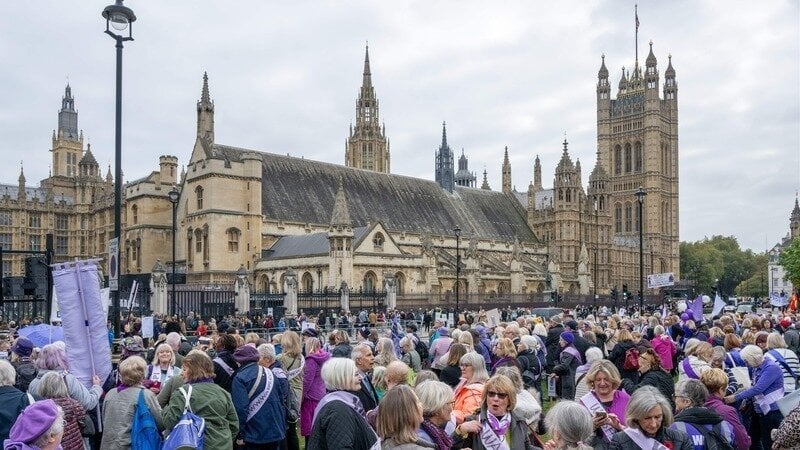
WASPI stands for Women Against State Pension Inequality. Waspi is now in common use to describe women born in the 1950’s affected by the changes to the State Pension age.
The campaign is calling on the Government to fairly compensate WASPI women affected by the increases to their State Pension age and the associated failings in Department for Work and Pensions (DWP) communications.
In March 2024, the Parliamentary and Health Service Ombudsman (PHSO) said 1950s-born women were owed financial redress and an apology due to DWP maladministration.
The Ombudsman’s findings were backed by the cross-party Work and Pensions Select Committee, hundreds of MPs and, according to polling, 68% of the public. However, only the Government has the power to put this injustice right.
The campaign wants the Government to urgently respond to PHSO report and set up a compensation scheme by 21 March 2025.
With one affected woman dying every 13 minutes, there is no time for further delay.
 Out in the City