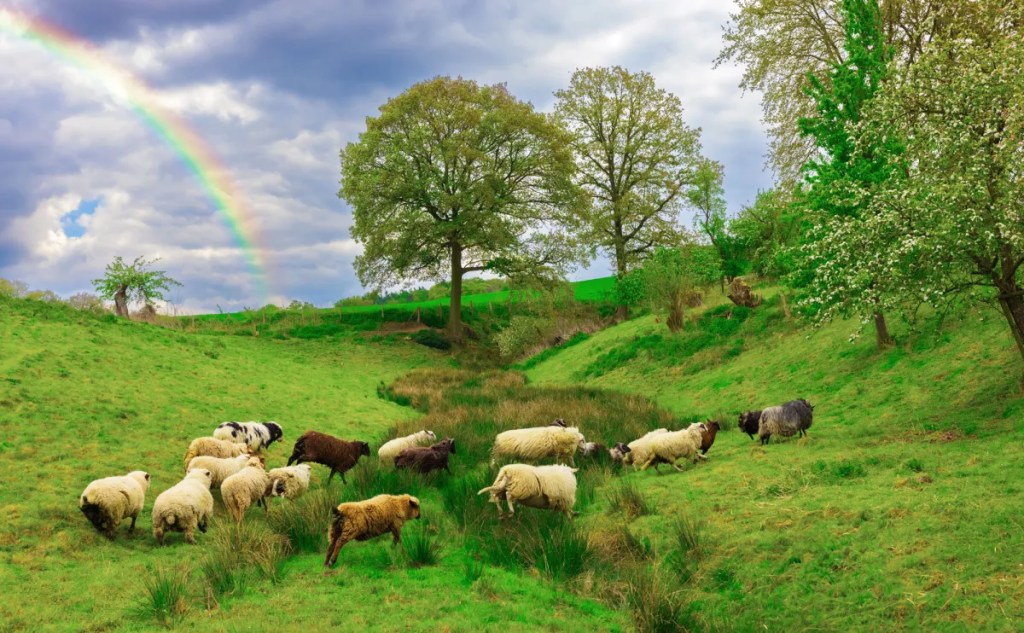
The World’s First Flock of Gay Sheep

These gay sheep are the stars of the hour. The flock of 21 rams on a farm in Löhne, North Rhine-Westphalia in Germany have risen to fame through a fashion brand called Rainbow Wool, which produces caps, patches and shoelaces from the wool of the fluffy new celebrities. What’s more, the profit goes entirely to LGBTQ+ causes.
Since the project launched, shepherd Michael Stücke’s phone won’t stand still. “In the last weeks, there hasn’t been a day on which I haven’t given an interview. The number of enquiries we’re receiving at the moment is bombastic”, the 51-year-old farmer says. A member of the Gayfarmer Network in Germany, Stücke is gay himself and lives on the farm with his husband.
The project developed from a conversation he had about homosexual behaviour in sheep with a friend who works for a PR and communications agency. According to studies, apparently about one in 12 sheep is gay.
“Sometimes rams jump at each other trying to mate or entirely reject the females and only show interest in the male species,” Stücke said
As Stücke explains, regulations dictate that there must be one ram per 50 ewes and that ram is expected to sire offspring. “If the ram is gay, he obviously doesn’t do that.” So, like many other male sheep, the gay rams end up at the slaughterhouse.
Stücke’s friend wondered if anything could be done to change this and if the rams’ wool could be used for something. It was then that the idea for Rainbow Wool was born, and the friend’s PR and communications agency bought 21 gay rams from breeders. In September 2023, the first rams moved to Stücke’s farm.
The results are the products available in Rainbow Wool’s online shop, for quite a high price, however. Do people really pay that much? “Yes”, says Stücke, “the products are in high demand. I learned very fast that this goes down really well with the younger generation. They find it cool to have shoelaces made from the wool of gay rams.”


He continues, saying: “What really delights me, is that so many people profit from the project, not just one person who came up with the idea.” The entire profit goes to The Federation Queer Diversity in Germany (LSVD+) which helps various LGBTQ+ causes. According to the Human Dignity Trust, 63 countries still criminalise LGBTQ+ activity, and LSVD+ supports international projects aiding people in these places.
To stop breeders from claiming their rams are gay just to make a profit, Stücke shares how they recognise homosexual behaviour in the animals. “The jumping on each other isn’t the criterion but showing no interest in the ewes and refusing the mating act is a good sign. The flock we have here, they obviously show interest in each other.
We shear the gay sheep separately from our own to gain their wool independently. If a few more gay rams appear and if everything can be marketed well, the project might be able to successfully grow and products be extended. We have plenty of ideas.”

LGBTQ+ Businesses Contribute £106 billion to UK Economy, Landmark Report Finds

LGBTQ+ businesses in the UK contribute a staggering £106 billion to the economy, according to a landmark report published on 28 October.
The first of its kind LGBTQ+ Business Count report was compiled in partnership between OutBritain, the UK’s first LGBTQ+ chamber of commerce, and Open Economy Network (OPEN), a think tank focused on diversity and tech, to fill a hole left by official UK data about the LGBTQ+ businesses.
Based on the largest-ever survey of UK LGBTQ+ entrepreneurs, the report found that there were around 250,000 LGBTQ+ businesses in the UK that employ at least 750,000 people, with 57% employing a majority of LGBTQ+ people.
However, despite the significant and vital contribution that queer-owned businesses provide to the economy, the LGBTQ+ entrepreneurs survey noted a number of unique barriers and challenges that affect queer businesses.
Of those entrepreneurs surveyed, 57% said that doubt and a lack of self-confidence was something that they had faced.
Meanwhile, 44% had experienced invasive or inappropriate questions about their identities, while 37% said they had encountered some form of discrimination. Respondents also reported feeling like outsiders in the business world, with 36% saying that they were disconnected from mainstream business networks.
Despite the challenges, there are positives to operating a LGBTQ+ business. In fact, 83% of those surveyed said that their business had benefited from being LGBTQ+, with seven out of ten saying their identities made them more determined to succeed. Similarly, 67% suggested that a diversity of perspectives and experiences led to business benefits.
Of course, there are still disparities among LGBTQ+ businesses. The majority (61%) of LGBTQ+ entrepreneurs identify as gay, while nearly two-thirds (64%) said they were men. Likewise, 89% of LGBTQ+ entrepreneurs are white, 4% from mixed or multiple ethnic groups, 3% Asian or Asian British, and 2% Black, Black British, Caribbean or African.
The report identified three recommendations that would support LGBTQ+ businesses to overcome some of the barriers and difficulties they face, including better data collection, specific support and increased representation and supplier diversity.
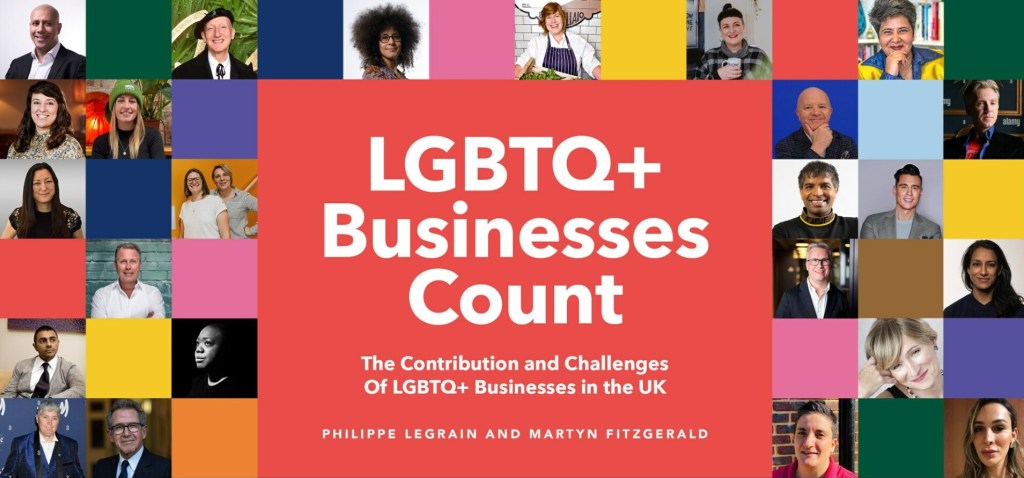
In a statement, Philippe Legrain, Founder of OPEN and lead author of the report, said: “While the UK has made huge progress in tackling legal injustices and social prejudices against LGBTQ+ people, the past leaves scars.
Moreover, business tends to lag behind society as a whole in its acceptance of LGBTQ+ people; among the chief executives of the FTSE 100 leading companies, only one is openly gay. So, it is hugely important to document both the contribution and the challenges of LGBTQ+ entrepreneurs in the UK, which is why we have produced this report as a call to action to the government, mainstream business organisations and large corporations.”
First Case of More Spreadable Mpox Detected in UK
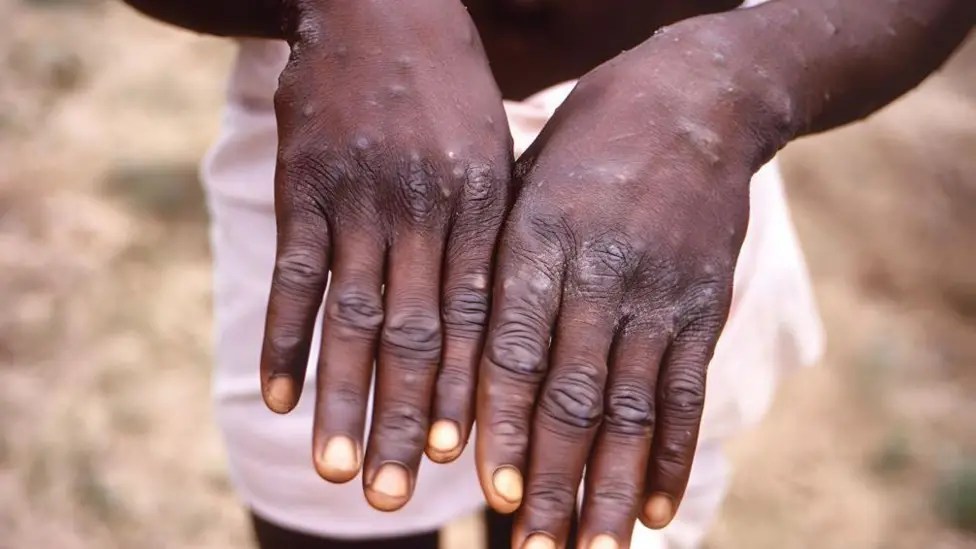
A single case of mpox – formerly known as monkeypox – linked to the recent outbreak in parts of Africa, has been detected in the UK. It is part of the Clade 1b outbreak, which appears to spread more easily between people.
Mpox was declared a global health emergency by the World Health Organisation in the summer.
The UK patient had recently been on holiday in at least one of the affected countries in Africa and began to feel sick 24 hours after flying home. The patient developed flu-like symptoms on 22 October and a rash two days later.
An mpox rash of pus-filled lesions can last for up to a month. Other symptoms include fever, headaches and low energy.
The infected UK patient is being treated at the Royal Free Hospital’s specialist high consequence infectious diseases unit in London.
Laboratory testing confirmed the infection was Clade 1b. This form of the virus has been causing mounting concern. It appears able to spread more easily from person to person through close physical contact, including sex, than other types of mpox.
In Africa, the Democratic Republic of Congo, Kenya, Burundi and Rwanda have all reported cases of Clade 1b mpox this year.
Its close relative Clade 1a is largely connected to exposure to infected animals or eating bush meat.
Clade 1b appears to be milder than 1a, although it’s difficult to know for certain because precise figures on the exact numbers of people infected are hard to pin down.
The patient’s close contacts, including those in the same household, are being traced. This is thought to be fewer than 10 people.
“This is the first time we have detected this clade of mpox in the UK, though other cases have been confirmed abroad,” said Prof Susan Hopkins, the chief medical adviser at the UK Health Security Agency.
She said: “The risk to the UK population remains low, and we are working rapidly to trace close contacts and reduce the risk of any potential spread.”
Sweden, India and Germany have all detected cases of this strain of mpox linked to travel to affected countries.
This is a different outbreak to the one that primarily affected gay, bisexual and other men who have sex with men in 2022, called Clade II. These mpox infections still happen at low levels.
Health and Social Care Secretary Wes Streeting said: “The government is working alongside the UK Health Security Agency and the NHS to protect the public and prevent transmission. This includes securing vaccines and equipping healthcare professionals with the guidance and tools they need to respond to cases safely.”
Royal British Legion Pride Poppy Badge
The Royal British Legion is a charity that helps serving and former members of the UK’s armed forces and is best-known for running the Poppy Appeal each year.
The red poppy is considered a symbol of remembrance, particularly for those who gave their lives in the two world wars and the conflicts that followed.
There are, and always have been, LGBTQ+ people in the navy, air force and army, who faced homophobia and discrimination for their sexuality.
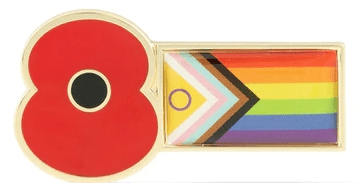
This badge symbolises support for our LGBTQ+ community who are a vital part of our Armed Forces past and present.
Available here for £8.00.
 Out in the City