
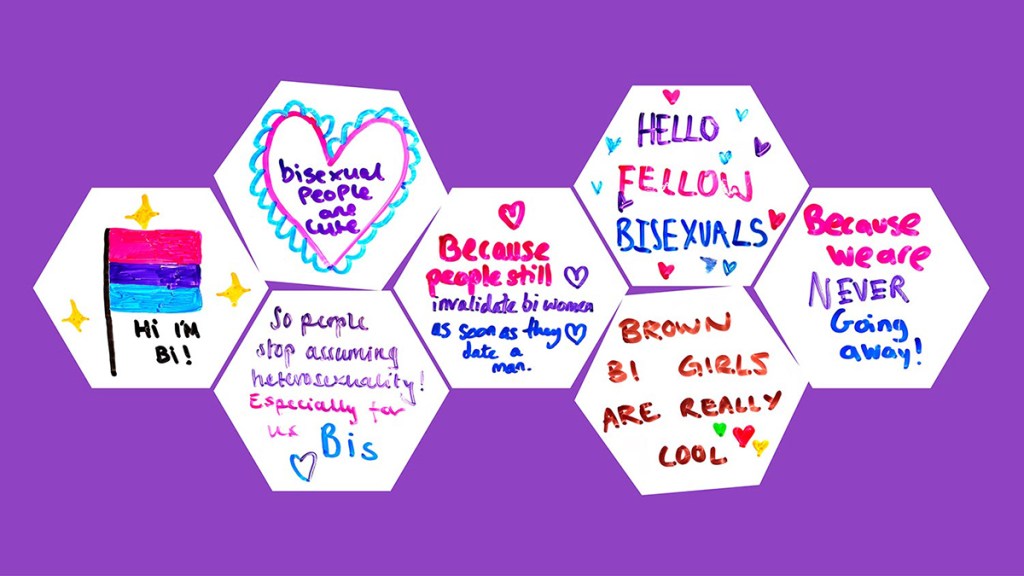
Bisexual Visibility Day – 23 September
This week is Bisexual Awareness Week – a chance to shine a light on those who represent the B in the LGBT+.
The week always culminates with Celebrate Bisexuality Day / Bi Visibility Day on 23 September. Of course, there’s a lot to celebrate about being bi but there’s also a lot of negative stereotypes and biphobia that still exists today.
This year actually marks the 25th anniversary of the occasion and Manchester was the only place in the UK to officially celebrate it back in 1999.
Research by Stonewall found that around 46% of bi men and 26% of bi women aren’t open about their sexual orientation to any members of their family – compared to some 10% of gay men and 5% of lesbians.
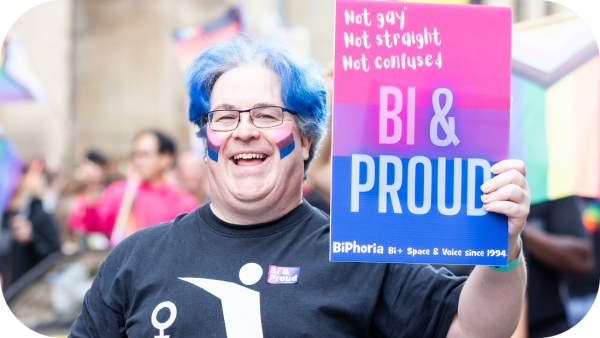
Jen Yockney MBE, who has run the international listings site BiVisibilityDay.com since 2001, said it’s expected there will be around 250 events taking place across the country on 23 September. This is up by more than 47% compared to five years ago.
“After a quarter of a century Bi Visibility Day, much like bisexual visibility in wider culture, keeps growing and growing,” Jen explains.
“I’ve been organising events celebrating Bi Visibility Day since 1999 and the transformation in that time is huge. We are more talked about and more heard as bi people than ever before; yet also the challenges and particular needs of bisexuals have been thrown into sharper relief over that time.”
Jen says that a lot of the work she does around bi visibility is often stemmed around attitudes and perceptions that have been existent for many years. There are still people who will make the same remarks that were said some 30 or so years ago.
“In the 1990s, bi people were often seen as a kind of ‘gay lite’,” Jen explains. “With the assumption that bi people were less impacted by legal and social discrimination than gay and lesbian people.
“But research increasingly shows bi people have greater mental and physical health challenges than gay or straight people. We’re more likely to experience domestic violence from our partners, too. And bi people have lower earnings than their straight and gay co-workers.
Far from the old ‘best of both worlds’ cliche, the challenge of either persistently reasserting your bisexuality or having part of your life erased proves wearing for many bi people.
“Where lesbians and gay men have one closet to escape, many bi people find that leaving one closet just leads to being put in another.
“Greater bisexual visibility is the best solution to that problem, along with creating groups and events to help more bis find a space where they are neither in the ‘straight closet’ nor the gay one.
“Across the past quarter of a century we have seen how greater visibility and the ability to connect with other bi people the internet has provided has brought so many more bisexual and biromantic people out of the closet.”
And with that, Jen hopes that the statistics for events like Bi Visibility Day in perhaps the next five years will have risen once again compared to this year.
It’s also why the work she and others continue to do is so important and valued in contributing towards that effort.
New guidance released to support LGBTQ+ inclusion in UK care homes
“There is an urgent need for improvements with regards to LGBTQ+ inclusion within care homes” said Dr Jolie Keemink, who led the project.
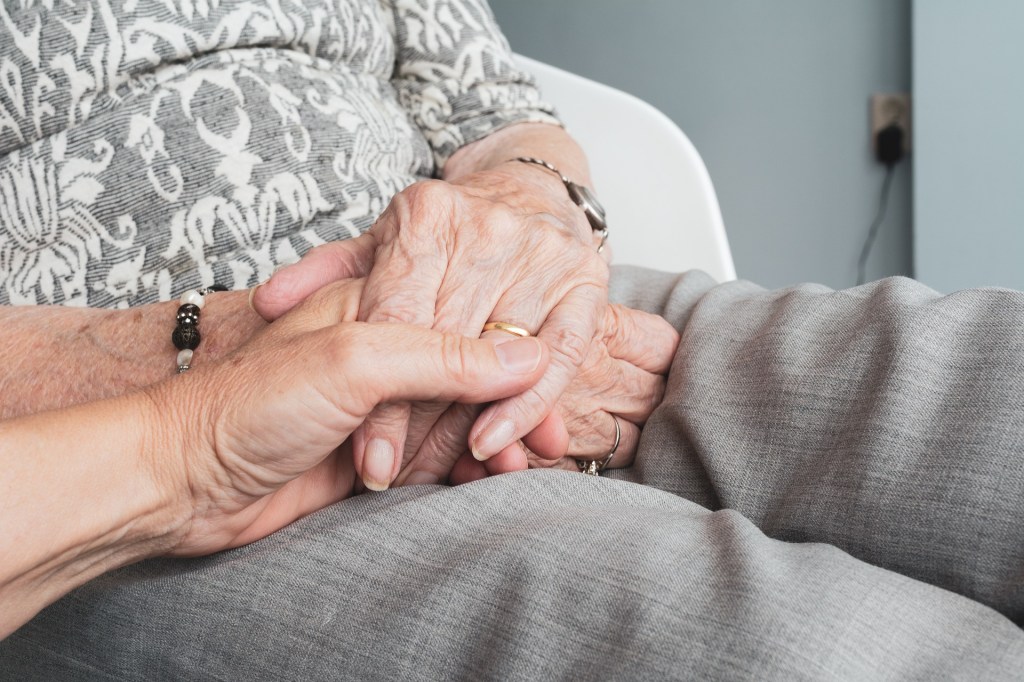
Researchers at the University of Kent, in collaboration with Surrey and Hertfordshire universities, have developed new guidance for care homes to support inclusive care provision for older LGBTQ+ people.
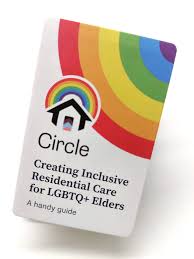
The new guide, which is available to download for free, is part of a research project, Creating Inclusive Residential Care for LGBTQ+ Elders (CIRCLE), which aims to understand how care providers can improve services for LGBTQ+ users.
“Research shows that the older LGBTQ+ population is expected to rely more heavily on social care than their cisgender, heterosexual counterparts, because they are less likely to have children and more likely to experience a lack of social support,” said Dr Jolie Keemink, who led the CIRCLE research project.
“Older LGBTQ+ people may also have unique health risks that increase their likelihood of needing care. There is an urgent need for improvements with regards to LGBTQ+ inclusion within care homes and we hope that this guide can play a useful role in this.”
The guidance arrives following a study by Stonewall which found that 61% of LGB people were not confident that social care and support services were equipped to support their needs. That same study found that 47% of LGB people said they would not be comfortable being open about their sexuality to care home staff.
As a result, many LGBTQ+ people worry about going “back in the closet” when they get older in order to remain safe.
In fact, according to a report by Metro, more than 400 reports of homophobic abuse in care homes were reported to elderly abuse charity Compassion in Care’s helpline. The issue was the subject of a moving short film, Ted & Noel, which focussed on Gay Liberation Front (GLF) veteran Ted Brown and his journey after losing his civil partner Noel, who was subjected to physical abuse while living in a care home in Croydon in 2018.
“There are at least 1 million people over the age of 50 who identify as LGBTQ+. These generations have lived through decades of discriminatory policies and laws that have severely impacted their confidence in public services,” Dr Keemink wrote in a blog post.
“These policies and laws have led to trauma, stress, and internalised stigma for the LGBTQ+ community, which may have significant health implications. Additionally, because of these experiences, there is an increased need for explicit LGBTQ+ inclusive services to signal people are safe to be themselves.”
The new guidance was developed in conjunction with a group of older LGBTQ+ people and care home managers and will provide “actionable steps that are easy to implement that will help make the care home environment more LGBTQ+ inclusive”.


Discover ‘Danesha’: Black Joy, Queer Love (£5 Tickets!) – Lowry Theatre (Studio), Pier 8, The Quays, Salford, Manchester M50 3AZ
Danesha by Stefanie Reynolds – Performance Dates: Wednesday 2 October – Saturday 5 October, 8.00pm
“Sometimes I pretend I’m in a music video. And that I have a backing group. And they’re always black, even though I don’t have any black friends, in real life”
All they play in Preston nightclubs is Little Mix and Miley Cyrus. How is Danesha the dancer supposed to vibe to that?
After successfully managing to convince her Preston mates (as well as telling a teeny, tiny white lie to her dad), Danesha arranges a night out in Manchester. She finds the sickest club with the sickest music and the sickest vibe. It’s proper, proper mint.
Then she meets Her and Danesha’s whole existence becomes one big question mark. Because Danesha thought it was normal to feel like you don’t quite fit in, to like music that nobody else likes, to move your body in a way your friends can’t, and to not know anything about your mum and the island she comes from…
Danesha is a new coming-of-age story exploring black culture, queer joy and finding and loving your authentic self.
Buy tickets here.
 Out in the City