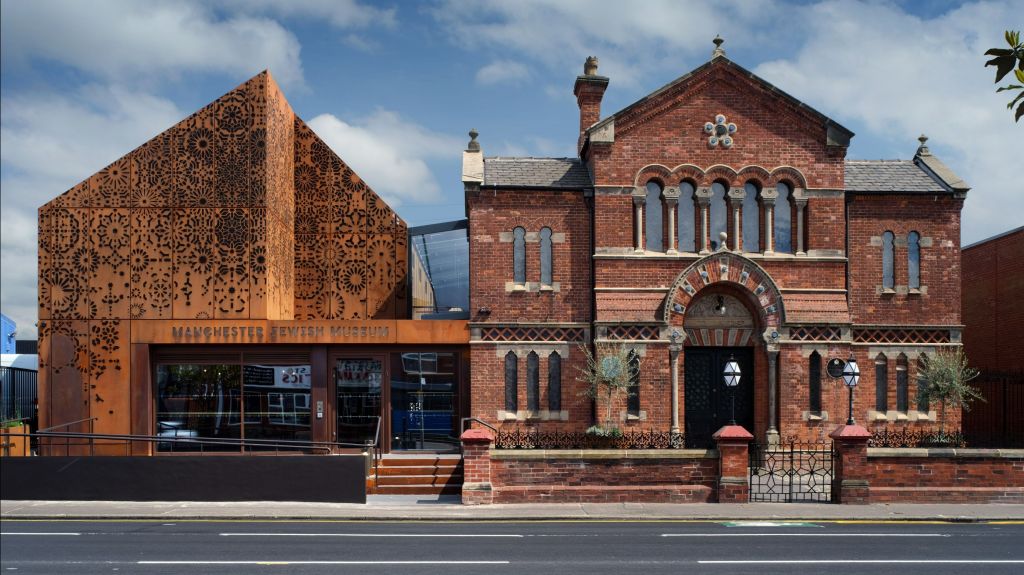
Trip to the Jewish Museum – (Thanks to Norman for the report back)
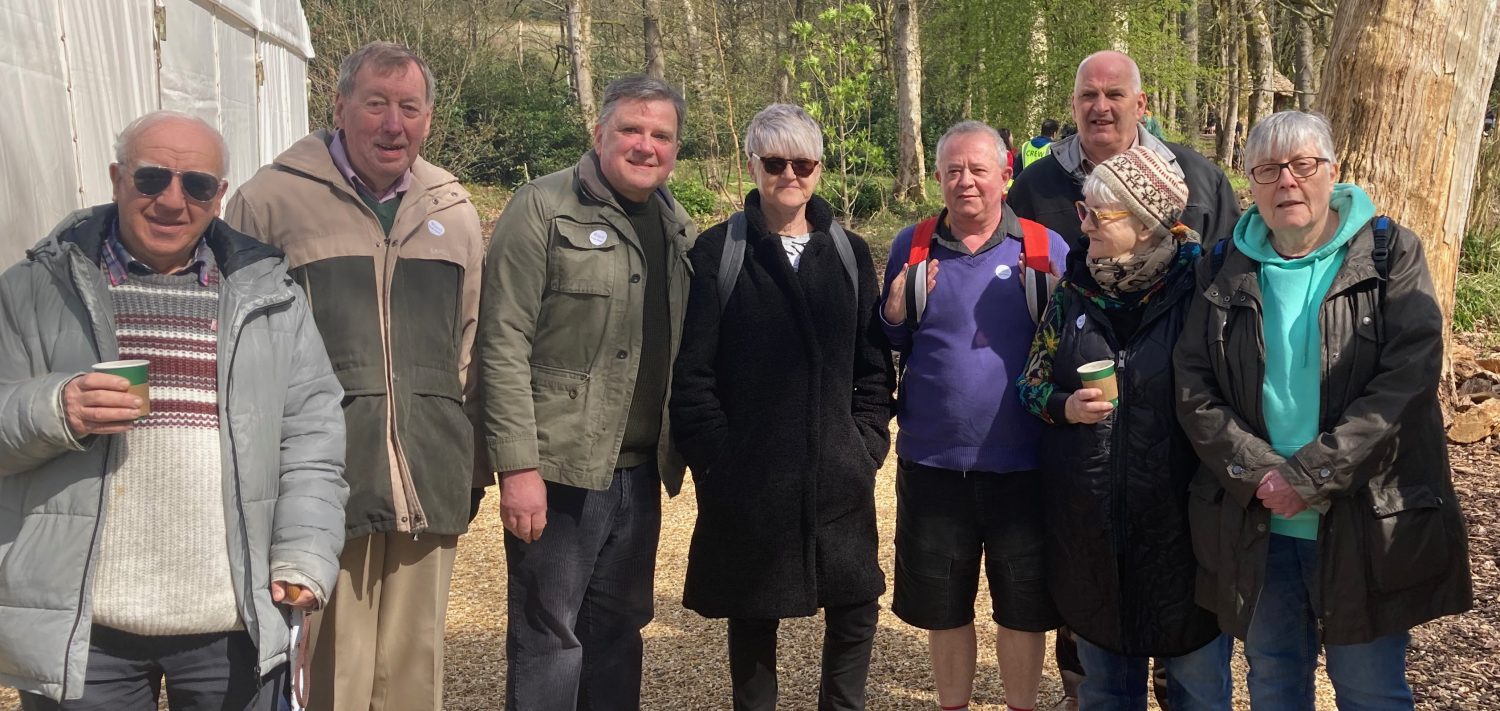
Today a party of twenty five from Out In The City had a visit to the Jewish Museum on Cheetham Hill Road, Manchester.
On arrival we were welcomed by staff and a volunteer on reception. Elly took us all into a room with tables and chairs and a kitchen where we were all excited as we were going to make Challah.
We saw some slides about the Sabbath including the shabbat candles being lit to welcome the Sabbath. Also we saw prepared food a family would enjoy for the Sabbath.
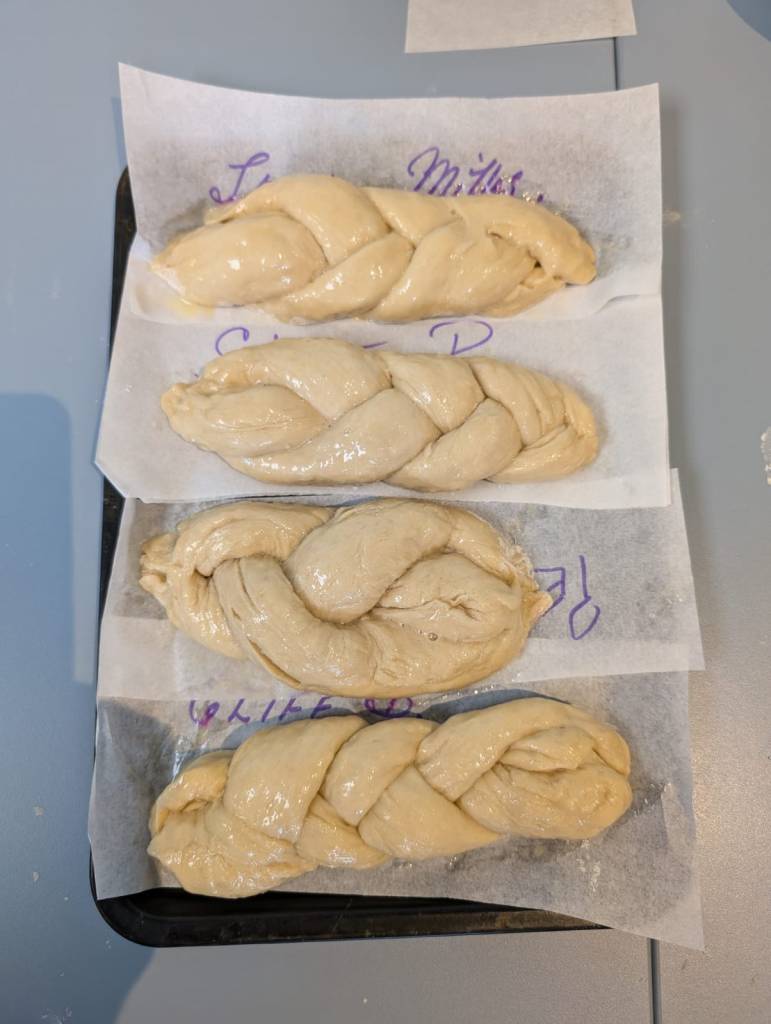
Elly gave us each a piece of dough and demonstrated how to knead and plait the dough. This was great fun, and we completed by adding poppy seeds. Our finished product went in the oven for thirty-five minutes.
Some of the group went for a coffee and others had an interesting look around the museum. About twelve of us went into the synagogue, which in the 1940s was the Spanish and Portuguese Synagogue. It is very much as it was when in use.
Richard McCarthy explained and answered questions pertaining to the Torah. The stained glass windows all represent a scene from the Old Testament such as Joseph’s dream and Moses in the bullrushes. We were shown the Ark where all the Sefer Torahs are that contain all the services in the year. Richard was inundated with questions.

Before we knew it our bread was ready, and a lovely aroma greeted us as we collected our Challah.
Appreciations were shown to all who made our visit so enjoyable. Occasionally Bar Mitzvahs or weddings are celebrated at the synagogue.
More photos can be seen here.


Derek Jarman Pocket Park
The Derek Jarman Pocket Park team is made up of a small group of LGBT+ volunteers, aged 50+ resident in Greater Manchester. They use their creativity and gardening skills to take care of the Derek Jarman Pocket Park at Manchester Art Gallery.
You may have already visited the pocket park, but if you haven’t, it’s really worth going to see. It’s a calm and queer oasis in the centre of the city!
You can find out more about the pocket park here.
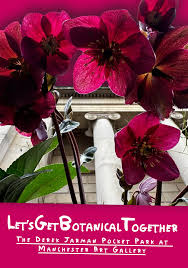
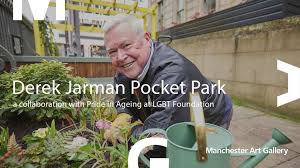
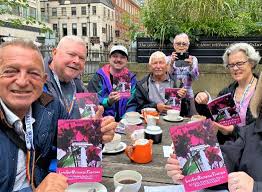
In addition to all the gardening, a couple of years ago, the volunteers put together a zine entitled “Let’s Get Botanical Together”, which really is a fantastic and inspiring read, full of important history and insight. You can find it here.
More recently, over this summer, the gardeners recorded a soundscape with artist Caro C and LGBT+ people living with dementia. Listen carefully and you will hear the voices of the gardeners, sounds from the garden and noises made with garden tools! The sound piece will be shown as an interactive installation at Bridgewater Hall as part of So Many Beauties, a dementia-friendly music festival this Friday, 20 September.
The sound piece can be heard here.
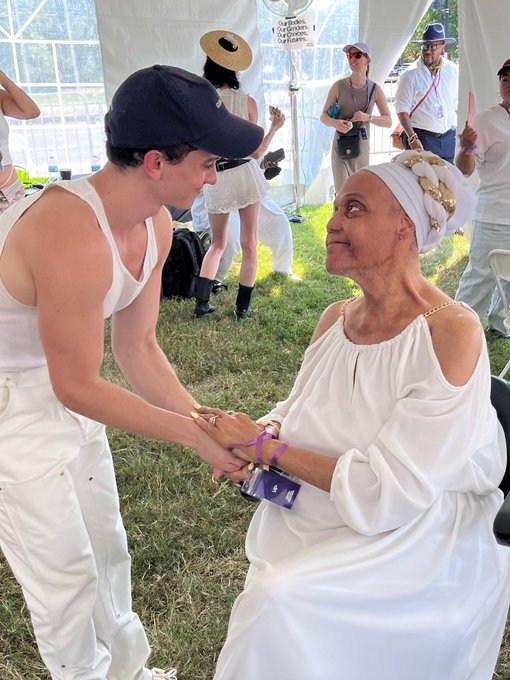
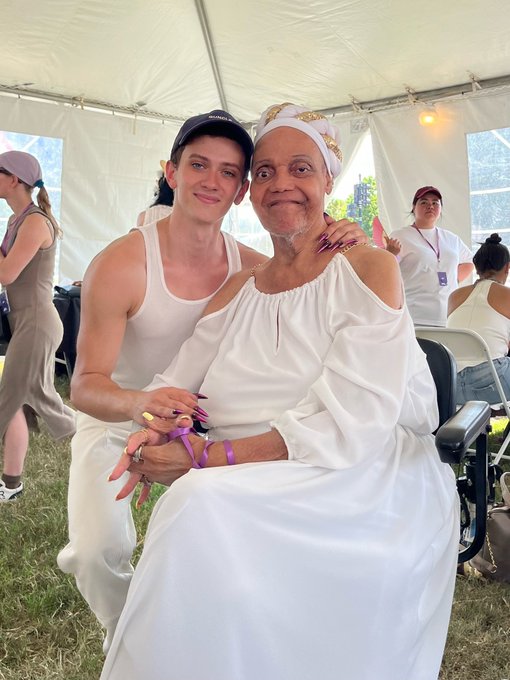
Miss Major Griffin-Gracy
Miss Major Griffin-Gracy (born 25 October 1946), often referred to as Miss Major, is an American author, activist, and community organiser for transgender rights. She has participated in activism and community organising for a range of causes, and served as the first executive director for the Transgender Gender Variant Intersex Justice Project.
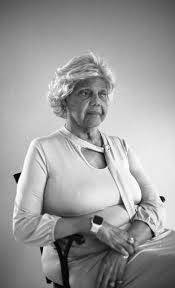
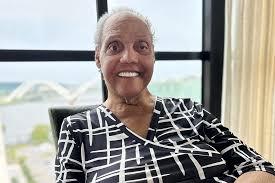
Griffin-Gracy was born in Chicago in the 1940s, and assigned male at birth. Her father worked for the post office and her mother managed a beauty shop. She has said after she came out to her parents around age 12 or 13, they responded by enrolling her in psychiatric treatment and taking her to church.
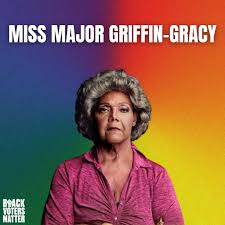
Griffin-Gracy came out in Chicago as trans in the late 1950s, and has described drag balls at the time as places where “You had to keep your eyes open, had to watch your back, but you learned how to deal with that … we didn’t know at the time that we were questioning our gender. We just knew it felt right.” She has also described the influence of Christine Jorgensen, who became well known in the 1950s for having gender-affirming surgery; according to Griffin-Gracy, “After Christine Jorgensen got her sex change, all of a sudden there was a black market of hormones out there,” and she was familiar with how to obtain illicit hormones in Chicago.
Griffin-Gracy has said she was expelled from college for having feminine clothes, and she lost her home with her parents after they refused to accept her gender. She has described working as a showgirl at the Jewel Box Revue in Chicago and New York, and how she developed her name to add “Griffin” to honour her mother. She has also discussed how becoming a sex worker provided the steadiest available income. She recalls that after an incarceration in a psychiatric facility in lieu of jail in Chicago, she moved to New York.
New York
In a 2014 interview with the Bay Area Reporter, Griffin-Gracy said that after moving to New York City, she found the Stonewall Inn “provided us transwomen with a nice place for social connection” and that few gay bars otherwise allowed entry to trans women at the time. She has said she was a regular patron of the Stonewall, and that she was there on the first night of the 1969 Stonewall rebellion. Police raids were common for LGBT bars, and Griffin-Gracy has said, “This one night, though, everybody decided this time we weren’t going to leave the bar. And shit just hit the fan.”
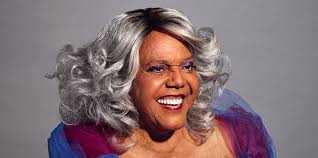
Griffin-Gracy has described the impact of the death in 1970 of her friend Puppy, a trans woman who was determined by authorities to have died by suicide while Griffin-Gracy strongly suspected she was murdered by a client. She has said, “Puppy’s murder made me aware that we were not safe or untouchable and that if someone does touch us, no one gives a shit. We only have each other. We always knew this, but now we needed to take a step towards doing something about it. We girls decided that whenever we got into a car with someone, another girl would write down as much information as possible. We would try not to just lean into the car window but get a guy to walk outside the car so that everyone could see him, so we all knew who he was if she didn’t come back. That’s how it started. Since no one was going to do it for us, we had to do it for ourselves.” She has described this as the start of her activism.
Griffin-Gracy has also discussed her years of experience in prison and her experience on parole, including after Stonewall, when she received a five-year sentence following a robbery arrest. She has described Frank “Big Black” Smith, a leader of the Attica Correctional Facility riots of 1971, as a mentor, after meeting him while incarcerated at the Clinton Correctional Facility at Dannemora. She says he encouraged her to learn about African-American history and politics, organising, and the prison industrial complex. She has recalled being released from prison around 1974.
Over twenty years, Griffin-Gracy also experienced homelessness, received welfare, and mostly found hormones through the black market.

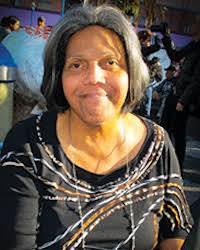
California
Griffin-Gracy began work in community services after moving to San Diego in 1978. She worked at a food bank and then in direct community services for trans women. Her work expanded into home health care during the AIDS epidemic in the United States. In the 1990s, Griffin-Gracy moved to the San Francisco Bay Area, and worked with multiple HIV/AIDS organisations, including the City of Refuge in San Francisco and the Tenderloin AIDS Resource Center
In 2004, Griffin-Gracy began working at the Transgender Gender Variant Intersex Justice Project (TGIJP), shortly after it was founded by Alex Lee. She became the executive director of the organisation, which is focused on providing support services to transgender, gender variant, and intersex people in prison. Her work included visiting trans women and men in California prisons to help coordinate access to legal and social services, and testimony at the California State Assemby and United Nations Human Rights Committee in Geneva about human rights violations in prisons.
While she was the executive director, she gave an interview to Jayden Donahue that was published in Captive Genders: Trans Embodiment and the Prison Industrial Complex, and described in a review by Arlen Katen in the Berkeley Journal of Gender, Law & Justice as “bluntly and powerfully stating that being trans* is an extension of the prison-industrial complex; even if not all trans* people end up in prison, their gender identities are constantly policed through other social and state mechanisms”.
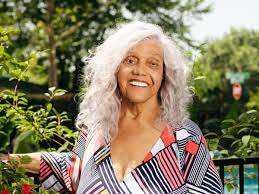
In an interview with Jessica Stern published in a 2011 Scholar and Feminist Online article, Griffin-Gracy described a sense of exclusion from the broader LGBT movement, described by Stern as for “herself and others, especially transgender people who are low-income, people of colour, or have criminal records.” In 2013, she was part of a campaign to revise wording on a Stonewall commemorative plaque; she advocated for “inclusive language to honour the sacrifice we as trans women displayed by taking back our power.” In 2014, when she was honoured as a community grand marshal for the San Francisco Pride Parade, she said, “We’re finally getting some recognition. I’m proud it finally happened and I’m alive to see it because a lot of my girlfriends haven’t made it this far. I’m trying to get as many girls as possible together at the parade so people can see we’re a force to be reckoned with; we’re not going anywhere.”
Arkansas Griffin-Gracy moved to Little Rock, Arkansas after visiting the city for a screening of MAJOR!, the 2015 documentary about her. She developed a property she initially called the House of GG into an informal retreat centre for trans people. The property includes a guest house, pool, hot tub, merry-go-round, various gardens, and over 80 palm trees. In 2023, she renamed the property to Tilifi, an acronym for “Telling It Like It Fuckin’ Is”.
 Out in the City