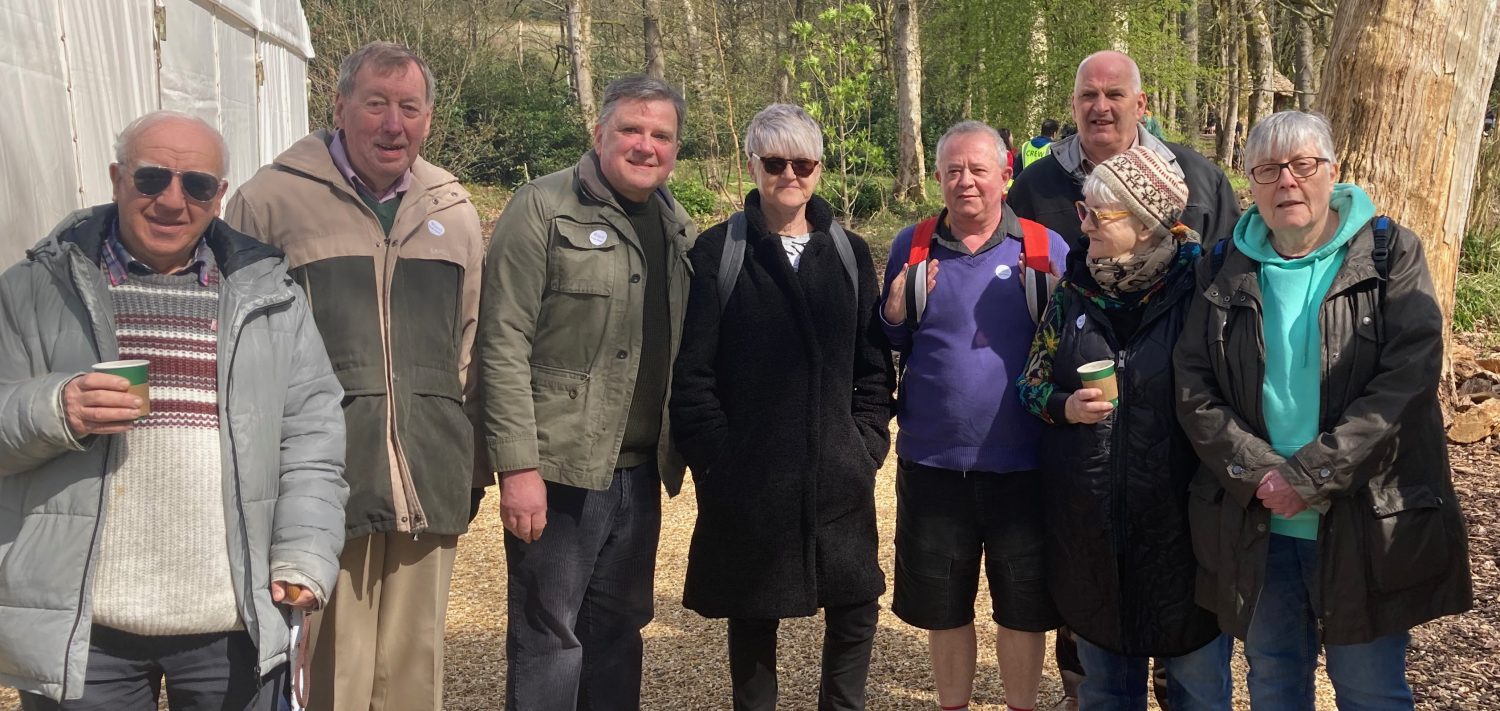

Meet the Queens
SShh! Don’t tell anyone but the time has come … to meet a new set of gorgeous queens, who are all vying for Mama Ru’s seal of approval and the ultimate accolade of being crowned the UK’s Next Drag Race Superstar.
Who do you think has the charisma, uniqueness, nerve and talent to slay the competition and snatch the crown?
Four of the queens come from or now live in Manchester!
This message will self destruct in 3 … 2 … 1 !


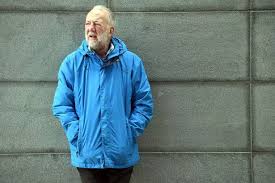
Austin Allen is 74 – he has a powerful piece of advice
Austin Allen, now 74, was raised in Middlesbrough in the Baptist Church and came out in his late 20s. He worked in academic research in chemistry before working as a singer in the early part of the 1980s, then moved on to supply teaching but was sacked the morning after Section 28 became law. He now lives in mid Wales and has given ‘coming out’ assemblies at local schools.
Austin grew up in an era where nobody talked about being gay, when students at the school where he taught would shout homophobic slurs and throw planks and bricks at him. At the time if he were presented with an opportunity to become straight he would have “grabbed at it with two hands”.
Austin stated: “I suppose the biggest challenge growing up in the 50s and 60s was just total closeted-ness. I knew I was gay when I was eight years old and I came out about 20 years later. My friends, family, neighbours, being brought up in the Baptist Church … they didn’t even talk about it. Nobody was gay.
But that actually had advantages, because back then in the 60s in senior school we believed two things: firstly that every boy went through this homosexual phase in puberty, and secondly that these ‘queers’ (the word ‘gay’ wasn’t invented then for homosexuals) were dirty old men who hung around in shop doorways with raincoats on, and we weren’t old men who hung around in shop doorways.
So I actually had quite a nice ‘puberty’ in mid teens … playing with other boys ‘willy-nilly’ if you can forgive the pun! It didn’t really bother me at all while I was at school.

(Image: WalesOnline / Rob Browne)
But it was when I left school and then thought: ‘I’ve gone through puberty, I therefore must be straight, and God is taking rather a long time’ – that’s when the problems started and I forced myself to have girlfriends and then eventually to have sexual relationships with women. It was only in my late 20s that I realised I had been trying to fool myself all these years and came out of the old closet.
I was 27 years old before somebody sat down at a table and we chatted and he said to me ‘I’m gay.’ And I had never met anybody else in my life that knowingly admitted to being gay. It was completely taboo.
I remember Malcolm Muggeridge, the old interviewer, on the telly introducing somebody once. He said something like: ‘Author, entrepreneur, traveller, self-confessed homosexual …’ That was the era. If you were homosexual and you were out of the closet you were ‘self-confessed,’ it was a crime.
I was 17 before the law changed in 1967 to allow men to have sex with each other, but I wasn’t aware of that. I had no idea I could have gone to prison for two years. It’s kind of interesting. People are an awful lot more aware of all sorts of political issues, not just gay issues. We’re more aware nowadays.
One of the reasons I was sacked in ‘88 for being gay was because I’d been relatively comfortably ‘out’ as a gay teacher with the kids previously to that. Part of that was because I’d been asked to go into classrooms for form tutors and take their sex education lessons, because they were forbidden to do that under the 1986 Education Act.
The insidious thing about Section 28 was that it was so woolly-worded … it was ‘intentionally promote,’ and it’s almost impossible to define those words, but what it did do was create this climate. I’m sure the individual head teacher that sacked me was just as homophobic the day before … he probably thought ‘I’ve now got an excuse, I’ve now got a reason, I’m now being backed by the government.’
There was never a prosecution under Section 28; nobody was ever taken to court because it was just impossible. But it created this climate. Some local government libraries were removing Oscar Wilde from the shelves because they said that it was ‘promoting homosexuality.’ I wasn’t the only teacher that was sacked. I was the one that rolled up my sleeves and said ‘you want a fight, you’ve got one!’
When I went to Wales I stopped all formal gay rights involvement, but I still did the full ‘coming out’ assemblies in senior schools in Powys. Just a few years ago I was walking home this lad, then in the upper sixth, crossed the road and he came up to me.
He said: ‘I would just like to thank you for your assembly when I was in year 7. Because I’ve just come out as gay – I haven’t told my family yet. It was such a big help.’
It makes me quite emotional now, and it’s very nice. I don’t dwell on it too much but it does make me have a little tear in my eye now and again. I know that along the way I have helped people.
There was no social media in the late 70s when I came out of the old closet. It was going down to the local gay bar in Bradford. I went down three times and walked up and down outside the pub and then went home terrified! Thinking it was going to be full of these ‘queers’ – urgh! Eventually of course I went in and found it was full of extremely nice people!
Of course it was lovely in the end. In a sense in those days you did have to go out and find, in a gay bar or gay club or whatever – real live people. That seems now to have been replaced to a large extent for some people with apps like Grindr – that’s all they want, they want sex. In one sense it’s kind of destroyed that ‘gay community,’ the places to meet.
But then I remember talking to much older people than even I who said it was an awful lot better before 1967, mainly in London when you could go to these clubs and knock on the door three times and ask for Big Bertha or whatever it was. You were in a quiet, completely closeted place. They felt they could be happy there; relaxed, for an hour or two.
The incredible sadness of some people stands out. People that I’ve known who were very very closeted ‘til the day they died. But also the light-hearted side of it as well because some of them made the best of a bad job.
My advice is to be honest and ‘accept yourself.’ Because that’s what I didn’t do, right the way through until I was 28. I didn’t accept who I was.
Now at 74 I’ve had 34½ wonderful years with my beloved Andrew and if I could have seen that at 17 I would have put up with anything.
Dora Richter (16 April 1892 – 26 April 1966)
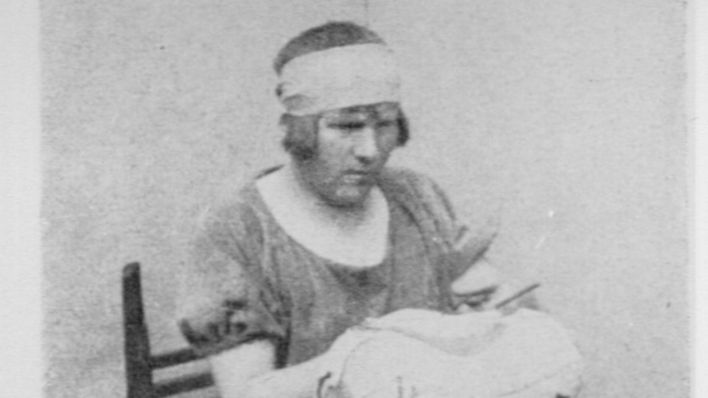
Dora “Dörchen” Richter isn’t a household name to most people, including those in the trans community. Which is a shame, because she’s one of the most historically significant trans women out there. And we just discovered that she survived Nazi Germany.
Richter is famous for being the first trans woman to get a vaginoplasty. She previously received an orchiectomy and a penectomy at the Magnus Hirschfield Institute of Sex Research, where she worked as a cook and domestic servant in the midst of Weimar Germany, a time where trans people struggled to find work and social acceptance.
Shortly after her penectomy, Richter received the first vaginoplasty surgery conducted on a trans woman in history.
It’s been long thought that Richter died when the Nazis stormed Hirschfield’s Institute, killing those inside and burning it to the ground, destroying the many decades of research at the facility.
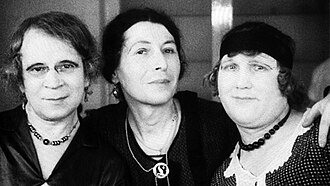
Recently, however, researcher Clara Hartmann discovered, while investigating historical trans figures, that Richter’s amended birth certificate had a peculiarity to it. The certificate, which was amended to reflect Richter’s true name, was corrected years after Richter was presumed to be killed.
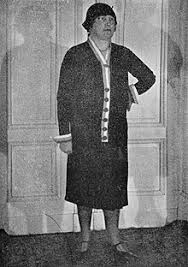
It turns out that Richter survived the attacks after all, and had moved to Czechoslovakia, where her birth certificate could be changed to reflect her correct name and gender. After Germans were expelled from the country when it joined the Soviet bloc in 1946, Richter re-entered her home country, residing in Nuremberg for the next 20 years.
She lived to be 74, where she died 26 April 1966. According to the German news outlet RBB 24, there are some people alive today that even remember her as a kindly older lady with a handbag who would always feed the birds. This is good news to the whole trans community, as it’s important to remember those who came before us and those who lived to become queer elders. Against all odds, Dora Richter found a way to survive and live a full life even when her country tried its hardest to destroy her life, and the lives of those like her.

Manchester LGBT+ Archives
The Library and Archive Team are keen to record oral histories for people who are LGBT+ over 50 years of age.
If this sounds interesting and you want to share your story, or you just want more information, please contact us here and we can get this set up fairly soon.
 Out in the City
I like the jokes!
LikeLike