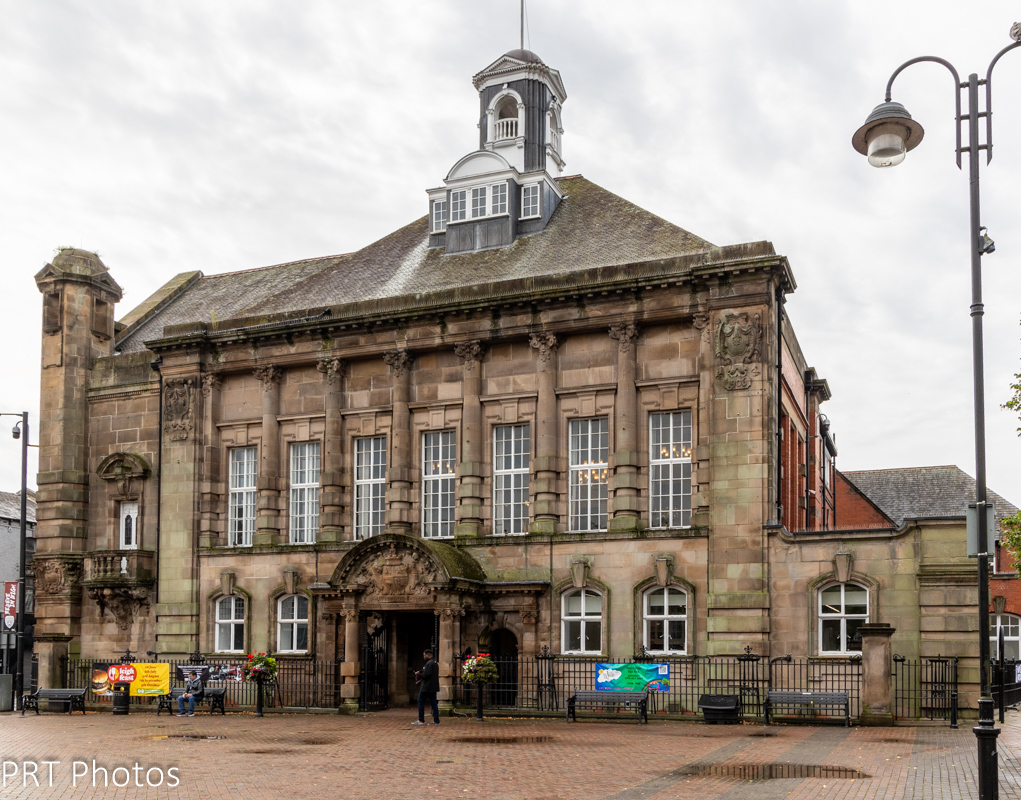
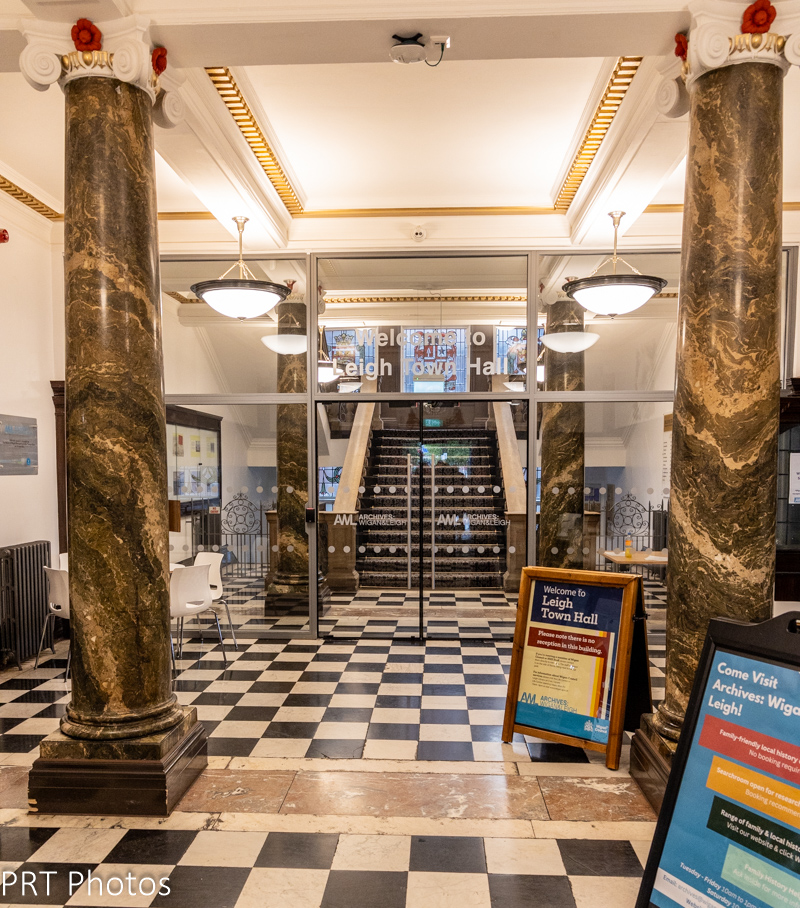
Leigh Town Hall
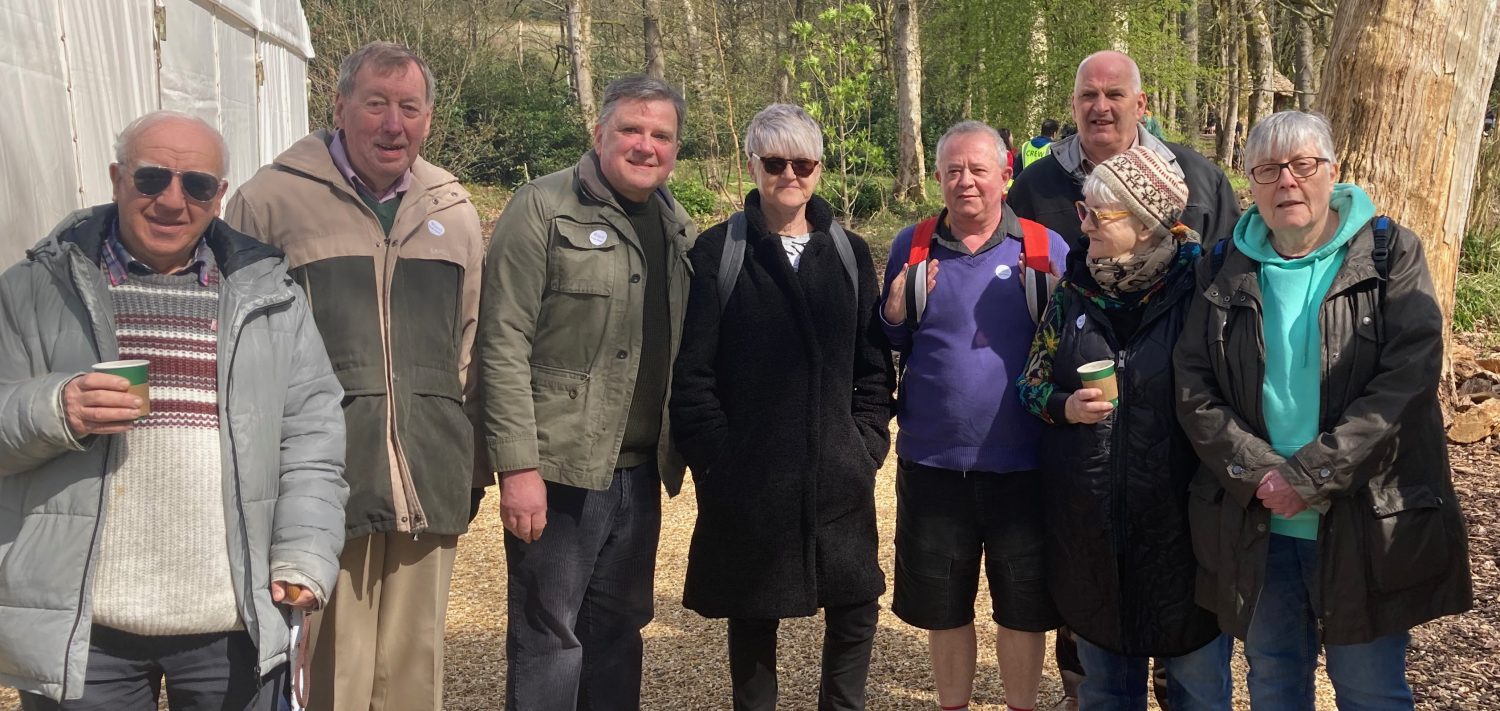
A group of us gathered at the bus stop opposite Manchester Art Gallery to take bus V1 to Leigh, a town in the Metropolitan Borough of Wigan. The route includes seven kilometres of a guided busway (along a disused railway line) that excludes other traffic.
We had lunch in a pub called The Thomas Burke named after Thomas Aspinall Burke. He was born on 2 March 1890 in Leigh and was the eldest of nine children. The family grew up in poor circumstances. He left school at age 12 to work part-time in a silk mill. At age 14, he started working in a coal mine.
Burke’s first professional opportunity happened when a local music society was presenting Handel’s Messiah. The tenor they had engaged fell ill at the last minute and Burke substituted. He later trained in Britain and Italy and became an operatic tenor singing at the Royal Opera House in 1919 and 1920. Burke appeared in several films and had a long recording career.
We made our way to the refurbished historic Leigh Town Hall where we had a guided tour of the building and the archives. Our guide, Thomas, told us that there were 2.5 million items in the 800 hundred years of archives, the oldest item dating back to 1215.
It was a fascinating visit and more photos can be seen here.

Remembering Marsha P Johnson
“Darling, I want my gay rights now. I think it’s about time that my gay brothers and sisters got their rights. Especially the women!” — Marsha P Johnson
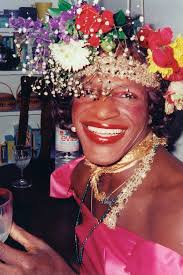
Marsha P Johnson (24 August 1945 – 6 July 1992) was known for her lighthearted and humorous approach to activism.
A joyous spirit, she dreamed of the day when queer people would be allowed to live and love freely. The drag queen and transgender icon played a crucial role in the Stonewall uprising, co-founded Street Transvestite Activist Revolutionaries (STAR), an organisation to support youth, and dedicated her life to fighting for gay liberation.
The fight for equality has come a long way since the Stonewall Riots of 1969. Marriage equality is now the law of the land; gay people can adopt, serve in the military, and donate blood. With all of this progress, it’s easy to believe that the fight is over and that we’ve accomplished everything we wanted.
Marsha P Johnson is a big part of our legacy. Her face is painted on murals, printed on pride-themed merchandise and etched into monuments in her honour. Still, I can’t help but feel like her work has been taken for granted. It sometimes feels like we learned nothing from Marsha P Johnson.
If she were alive today, would we protect her? Or would her struggles be ignored, like so many Black trans women today?
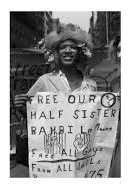
There have been 25 reported murders of transgender people in America this year alone. Nearly half of them were Black, according to the Human Rights Campaign. In 2019, the American Medical Association declared violence against transgender people an epidemic. These stories go vastly underreported and largely ignored, similar to how Marsha P Johnson was treated when she lived.
Despite decades of activism and community organising, trans women like Marsha P Johnson and Sylvia Rivera got very little in return. During the 1970 Christopher Street Liberation Day March, now known as the Pride Parade, cisgender gay men told Marsha and Sylvia that they had to march in the back of the crowd.
The men believed that trans people hurt the image of gay men. This sentiment still exists in the LGBT+ community today. This kind of mentality has allowed Black transgender women to suffer while the world celebrates our so-called progress.

While there have been advancements for LGBT+ people, these individuals face disproportionate challenges and disparities due to the intersection of their racial and gender identities. According to HRC, Black transgender people are three times more likely to live in poverty than average Americans. They are less likely to have access to healthcare, more likely to be exposed to HIV and are at a high risk of suicide.
Black trans people deserve to be supported in the way that they have supported us all in the past. Black trans people, like Marsha, have always been the core of the Gay Liberation Movement. Now that gay people have made some progress, it’s time to give back and support the Black trans community the way that Marsha would have wanted.
If Marsha were alive today, she would want us to follow her lead and fight against oppression. She would encourage us to embrace intersectionality and work to address overlapping forms of oppression simultaneously, making sure that organisations support disabled and undocumented trans people.
Despite experiencing homelessness and having to resort to survival sex work, Marsha believed that there was always someone who had it worse. Her activism relied on prioritising the most vulnerable in our community – she volunteered for organisations that support homeless trans people. She understood that donating clothes and money would keep trans folks safe and off the street.
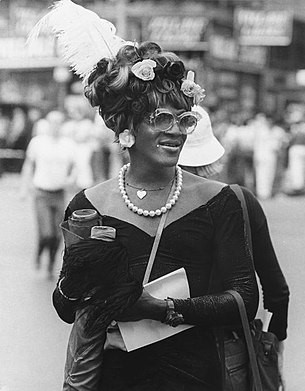
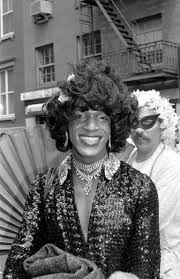
Marsha wasn’t just strong; she was also bold. It wasn’t enough to be loud; she wanted to be noticed. She became known for her elaborate outfits and handmade flower crowns. Marsha knew being seen was important; it empowered others and encouraged them to join her fight. We must do the same and be loud in our support of Black trans people. We have to let the world know that we stand with them.
Because this isn’t just their fight, it’s all of ours.

Gay flamingo couple surprises caretakers by hatching a chick at zoo
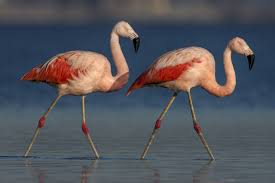
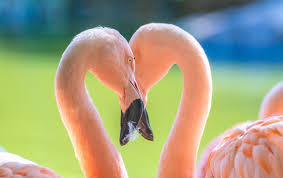
In a delightful display of love and dedication, Curtis and Arthur, a gay pair of Chilean flamingos at Paignton Zoo in Devon, have successfully hatched a chick. This remarkable event marks the first successful hatching of Chilean flamingo chicks at the zoo since 2018.
Pete Smallbones, the zoo’s bird curator, shared his excitement, saying, “Regarding the same-sex parenting, we aren’t entirely sure how this has come about, although it is a known phenomenon in Chilean flamingos, as well as other bird flocks. The most likely scenario is that the egg was abandoned by another couple, so this pair have adopted it.”
Curtis and Arthur are part of an initiative called Love Lagoon -inspired by the reality TV series Love Island – which aims to better document and engage the public with social media updates of the flamingo couples.
Earlier this year, Paignton Zoo launched a special Valentine’s Day campaign encouraging the public to name their flamingos. The “Name a Flamingo” initiative was a hit, with names being suggested and voted on through the zoo’s Instagram channel. Among the other flamingo couples who have successfully hatched chicks are Florence and Flame, Frenchie and Del, and Flossie and Lando.
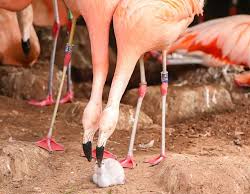
Paignton Zoo’s breeding programme really shows the bird team’s dedication in fighting these issues and making sure the species survive. Chilean flamingos, native to South America, face several threats in the wild, including egg-harvesting, tourism disturbance, and habitat degradation due to industrial mining operations.
“It’s a testament to the skill and hard work put in by the bird team, and we are hopeful that we may see more eggs hatch over the coming days and weeks,” Smallbones added.
Can flamingos be gay?
Call it ironic that a group of flamingos is called a flamboyance, but this isn’t the first time same-sex bird pairs have become parents. In 2022, two gay flamingo dads adopted a chick that was previously abandoned by its biological parents at Whipsnade Zoo.
A pair of (childless) gay flamingos Freddie Mercury and Lance Bass also made headlines in 2022 after breaking up following a three-year relationship. Same-sex behaviour isn’t unique to flamingos; many bird species, including penguins (like Sphen and Magic), and swans (like Billy and Elliot) also display homosexual behaviour. These observations highlight the diversity of animal behaviours and challenge the notion that heterosexuality is the only natural sexual orientation in the animal kingdom.
People, Pride and Progress
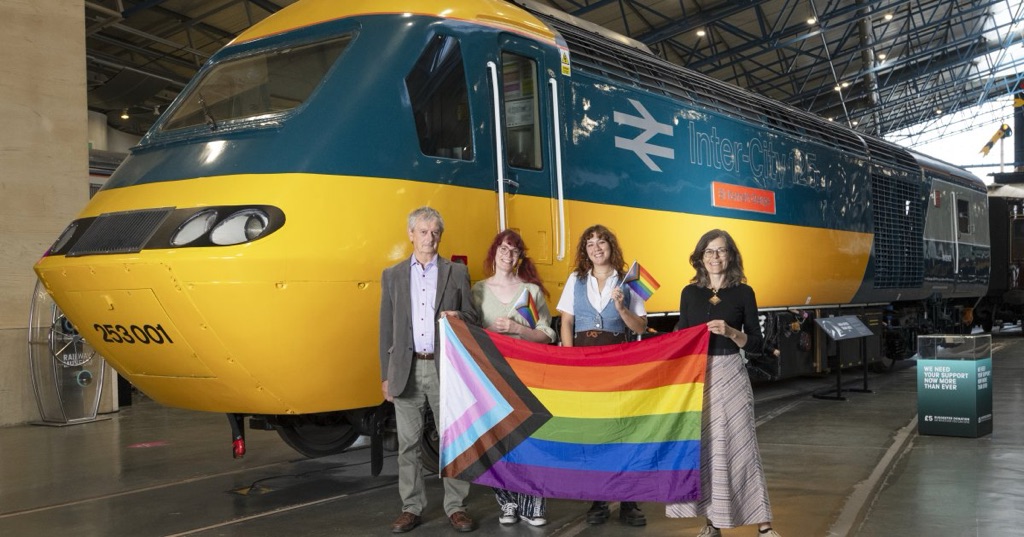
The National Railway Museum is embarking on a new project to record the stories and memories of the LGBTQIA+ community in a new oral history archive. Do you know somebody who would be interested?
This initiative is funded and made possible thanks to the National Lottery Heritage Fund and the players of the National Lottery, ASLEF LGBTQIA+ Network and the Friends of the National Railway Museum.
Aims and Objectives
The project has been instigated by, carried out and guided by members of the LGBTQIA+ community. The team are looking for older and retired members of the community, those who worked under British Rail and in early privatisation, to have a chat about the past and tell what it was really like to work in those days.
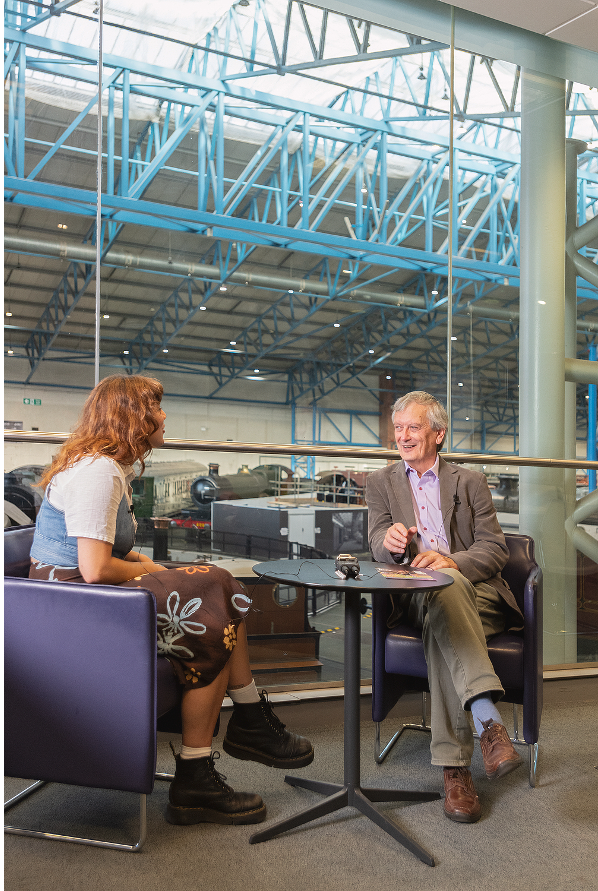
Without continuity of culture passed down via families and with a scarcity of personal records, knowledge about the culture and the community’s past is often hidden from younger members of the community. Much of the community’s history, what day to day life was like, is preserved now only in the memories of those who lived it.
The project offers the opportunity for community members to share their stories in one-on-one sessions with others who’ve experienced rail in different periods. These chats will be recorded to form a new oral history (audio only) collection that will be preserved in the National Railway Museum archive.
Do you have an LGBTQIA+ connection with the railways? Contact us to tell us more!
Email: PeoplePrideProgress@railwaymuseum.org.uk
Write: People Pride Progress, National Railway Museum, Leeman Road, York YO26 4XJ
 Out in the City