The Importance of Being Earnest
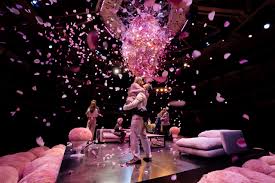
Oscar Wilde’s “The Importance of Being Earnest” has just finished an extended run at the Royal Exchange Theatre in Manchester. The new production was a vibrant and humorous update of Wilde’s classic.
The comedy about mistaken identities and finding one’s true identity is still relevant today.
Here is a timeline:
1533 The Buggery Act criminalised sex between men.
1884 Oscar Wilde married Constance Lloyd and they had two sons, Cyril and Vyvyan.
1885 The Criminal Amendment Act criminalised wider activities associated to homosexuality, terming this “gross Indecency”.
1891 Wilde began an affair with Lord Alfred Douglas, a young British poet and aristocrat 16 years his junior. Outraged, Douglas’s father, the Marquess of Queensberry, sought to expose Wilde’s sexuality.
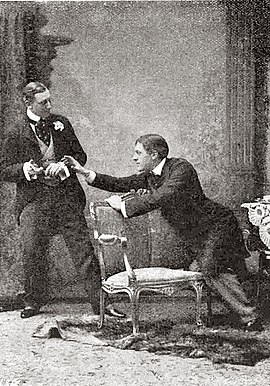
1895 (14 February) On the opening night of The Importance of Being Earnest, the Marquess of Queensberry planned to throw rotten vegetables at the stage. Forewarned, Wilde was able to deny him access to the theatre.

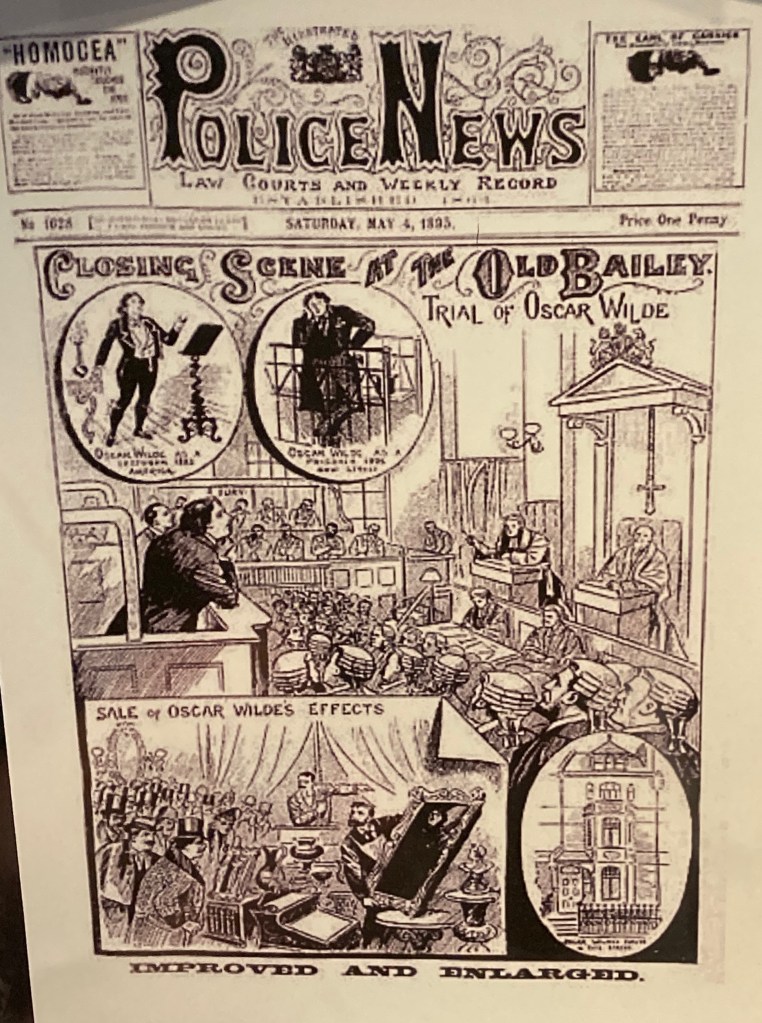
1895 (April) The feud between the Marquess of Queensberry and Oscar Wilde came to a climax in court when Wilde sued for libel. The proceedings provided enough evidence for Wilde’s arrest, trial, and conviction on charges of ‘gross indecency’. Wilde’s homosexuality was revealed to the Victorian public, and he was sentenced to two years imprisonment with hard labour. Despite the play’s early success, Wilde’s notoriety caused it to be closed after 86 performances. After his release from prison, he published the play from exile in Paris, but he wrote no more comic or dramatic works.
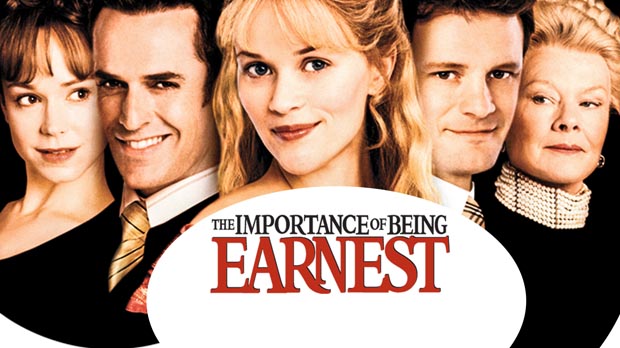
2002 A star-studded adaptation of Wilde’s comedy of mistaken identities is available on the BBC iPlayer (but only for about two weeks). Watch here.
2017 Oscar Wilde was pardoned under “Turing’s Law”, named after Alan Turing who was also convicted of gross indecency.

Nancy Valverde Defied the Los Angeles Police Department – and Won!
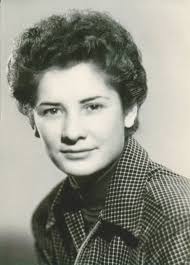
Photograph: Courtesy Los Angeles LGBT Centre
From the age of 17, Nancy Valverde was repeatedly arrested by the Los Angeles Police Department for wearing masculine clothing. By the time she died, at age 92, the city had named a square in her honour, its first public monument to a lesbian.
Valverde, a proud Chicana butch lesbian, had refused to conform to social norms, even in the 1940s and 50s, when the city’s racist and homophobic police force frequently arrested people under anti-“masquerading” laws that criminalised them for wearing clothes officers judged to be unsuited to their gender.
“They wanted me to be someone else. I could not be someone else. This is me,” Valverde said in a short documentary film about her life.
As states across the US pass laws criminalising drag performances and banning gender-affirming healthcare for transgender youth, Valverde’s battle against police harassment feels deeply relevant, said the director Gregorio Davila, who featured Valverde in his documentary LA: a Queer History, and also created an award-winning documentary short about her.
Valverde became a queer Los Angeles icon for her early resistance efforts and her refusal to hide who she was, even at a time when many people were afraid to be gay in public. For decades, butch lesbians and other gender-nonconforming people could be arrested for their clothing choices not only in Los Angeles, but across the country.
Frustrated by being repeatedly arrested and jailed under anti-crossdressing laws that dated back to the 19th century, Valverde went to the county law library in 1959 and found that the courts had actually decided in 1950 that a woman was not breaking the law simply for wearing masculine clothing. Valverde was able to use this legal precedent to stop the LAPD from arresting her, though officers continued to harass her.
With LGBT+ people in the US facing a renewed wave of political attacks, Los Angeles has made a public monument to Valverde’s fight against police harassment.
In June 2023, less than a year before Valverde’s death, city officials renamed a downtown intersection the Cooper Do-nuts / Nancy Valverde Square. The name pays tribute to both Valverde, who attended school and was arrested there, and the site of a donut shop popular with gay and trans people, which is believed to be the location of a pre-Stonewall battle against police harassment in 1958 or 1959.
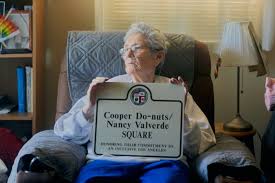
At the dedication ceremony, the LAPD made a formal apology, with Ruby Flores, the department’s first Latina deputy chief, saying: “This mistreatment of our citizens was wrong and should never have happened.”
Valverde was too frail to attend in person, but her reaction to the honour, according to Marisol Sanchez, the resident services coordinator for the LGBT+ senior apartments where Valverde lived, was: “I never thought I was going to get this, but it’s about time.”
Clashes with police
People who knew Valverde describe her charm and sense of humour, as well as her fighting spirit. “Everybody knew Nancy,” Sanchez said. “And if you didn’t know Nancy, she would make herself known.”
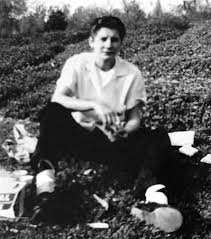
Photograph: Courtesy Los Angeles LGBT Centre
Even in Valverde’s later years, when she had less energy, “that didn’t take the sass away from her”, Sanchez added.
While Valverde is sometimes referred to now as an example of an early LGBT+ activist, that wasn’t how she would describe herself. “She wasn’t trying to make a political statement,” Davila, the documentary director, said. “She made a difference just by being who she was.”
Valverde was born in 1932 in New Mexico and moved with her family to East Los Angeles as a child. She started working at age 11, first picking apricots and cotton, then working for a restaurant, then delivering pastries for a bakery. She experienced discrimination both as a Chicana, during years when the city was razing a Mexican American neighbourhood and forcing out families in order to build Dodger Stadium, and also as a lesbian.
During the second world war, many women had taken on new roles in the workplace while men were fighting overseas. But after the war, “there was a real push to drive women back to the home and back to their ‘normal’ position,” Faderman, the historian, said. “Lesbianism became particularly threatening to that drive.”
The LAPD chief William H Parker, who was well known for his racist views of Black and Latino communities, became a champion of that effort, Faderman said, using police power to raid gay bars and crack down on any public sign of homosexuality.
The result was a police department empowered to harass, detain and even arrest people “at will, just for the hell of it”, said Faderman, one of the authors of Gay LA: A History of Sexual Outlaws, Power Politics, and Lipstick Lesbians. Being arrested for homosexual behaviour could have severe social and professional consequences: women even risked losing custody of their children.
Still, within the shelter of gay bars, butches and “hard dressers”, as they were called in the Black community, tried to find ways to express their identities.
In San Francisco, one woman recalled rolling up her trouser cuffs and wearing a long feminine coat, so that on her way to and from the gay bar she would look like she was wearing a skirt, said Kate Redburn, a legal historian at Columbia Law School. Another butch “thought she was safe because she sewed lace on her socks”, Faderman said.
While there were many butch lesbians in the 1950s, most of them “were scared to really challenge the police if they were harassed or arrested”, Faderman said. “Nancy was different.”
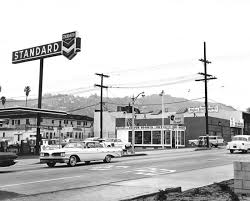
Valverde had known from an early age that she was not exactly like other girls. “I just knew I was comfortable in pants, men’s attire,” she told Davila. She said she had not learned the word “lesbian” until she went to jail.
For years after her first arrest, at age 17, Valverde recalled, she faced harsh treatment in public, in court, and in jail, where she recalled once serving a three-month sentence for masquerading. Throughout it all, she fought back.
When police officers used to tell her, “I want to see you in a dress,” she would tell them: “Sit down and wait ’cause you’re gonna get tired,” Valverde told Faderman. Officers would bring the clothes she had been wearing to display in court as evidence, and say things like: “Better not fuck around with my wife.”
When she was attending school in downtown Los Angeles to become a barber, Valverde said, the police would arrest her on Friday and not let her out until Monday morning. The head of the school demanded to know why she was always late, and she had to explain that it was not because she was partying, but because she was in jail.
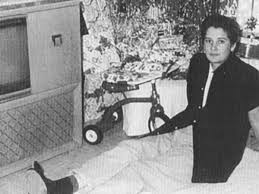
At one point, Valverde was put in a men’s section of a jail, and a male police officer tried to grope her, she said in Davila’s documentary. Valverde started drumming on the bench in her cell and demanding to see a female cop. When the man in the cell next to her complained, she introduced herself as Nancy from East Los Angeles and explained what had happened. The men in the cells around her were also Chicano, she said, and soon they were all drumming on their cells in solidarity.
Valverde did not always get this kind of support. “The gay community didn’t want me around,” she told Davila. “They said I was too out. Everybody was passing for straight, and the only place they came out was at the bars. On the streets they wouldn’t talk with me … (afraid) I would make them guilty by association.”
A potent legacy
Valverde, who raised several adopted children, stayed an active member of LA’s gay communities throughout her life. She recalls participating in one of the city’s early Dyke Marches, “when it was only about 75 of us. I thought, ‘At last, justice has arrived,’” she told Davila, wryly.
Some younger gay Angelenos remember her barbershop as a place of refuge. One now elderly man once got his first haircut with Valverde, Sanchez said, and the man recalled: “I knew she was different. I knew she was a safe space, when I hadn’t even admitted to myself that I was a gay man.”
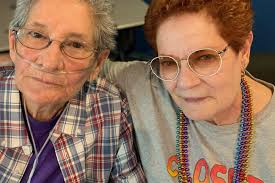
In the last decades of her life, Valverde moved into the Triangle Square Apartments, the first affordable housing development for LGBT+ seniors in the US. Valverde loved the community and felt very defensive of it, Sanchez said. There, she found love again in her 80s, meeting her partner, Andi Segal, who also moved into the apartment building.
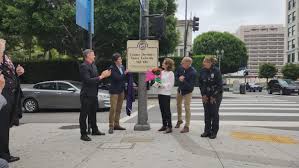
Valverde also became an important queer Latina elder for younger generations of artists, writers and film-makers, who have shared her story through documentaries, academic research, essays and even a play, Raquel Gutiérrez’s The Barber of East LA.
Today, Valverde’s story is taking on fresh urgency as Republican legislators pass new laws targeting transgender and queer people. In 2023, the year Nancy Valverde Square was dedicated, more than a dozen states introduced laws banning drag performances, and Tennessee, Montana, Florida and Texas passed them.
Though the “literal legal language” of the new drag bans is not the same as the century-old laws banning masquerading, “it comes from the same sort of panic over gender and sexuality and other norms being challenged”, said Redburn, the legal historian.
While many of the drag bans are tied up in legal challenges, the legislation has had a “chilling effect”, according to Joshua Block, an attorney at the American Civil Liberties Union, that has left LGBT+ people feeling “under assault and under surveillance”. In her later years, Valverde said she was proud of the “youngsters who are working to open up society” but was sceptical of big talk and posturing, especially in a fight that was far from over.
Her message for people fighting for gay rights today: “Put your ass on the fire the way we did – risk your ass.”
Malvern Pride: Hundreds defy rain to spread colour and love
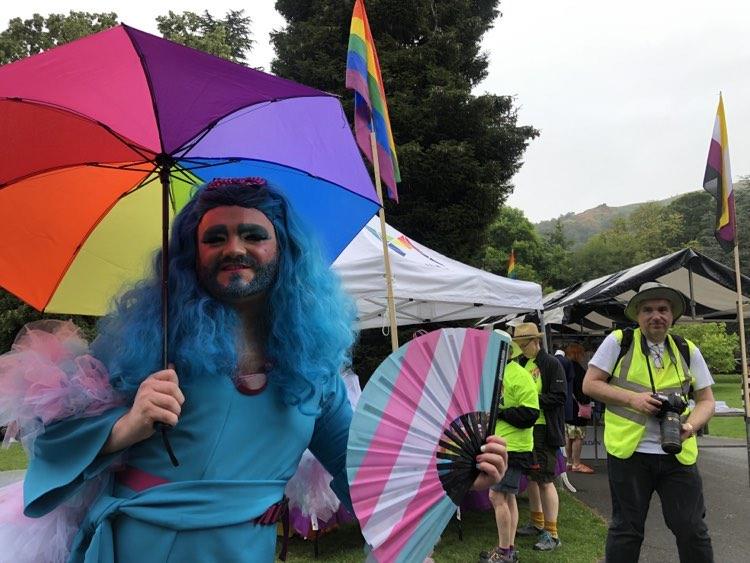
It had been a wet start to Malvern Pride today (Saturday, 27 July), but that had not deterred visitors, who came in droves to celebrate love and inclusivity in Priory Park.
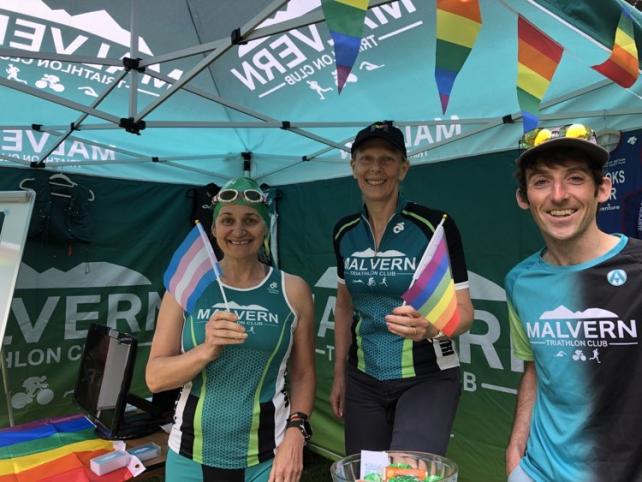
The fun got underway at noon with entertainment like live music from the bandstand, face painting and aerial performances.
When the rain started, visitors put up umbrellas, popped on ponchos or moved under trees so they could not miss out on the festivities.
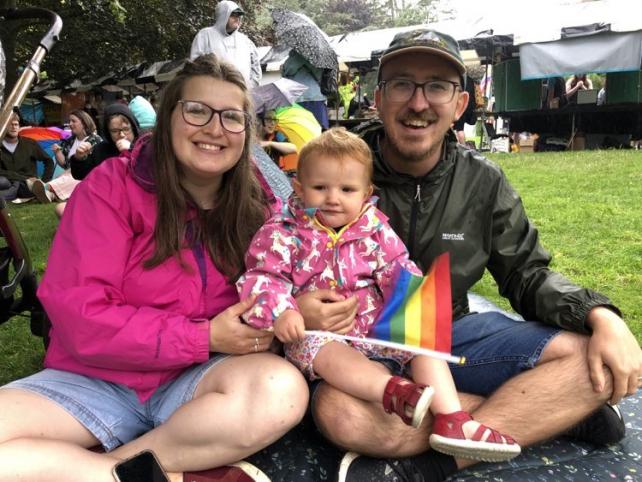
Mary Marsh, one of the event organisers, said: “Once it started raining, many people got up, and I was thinking, oh no, but they just all moved under the trees.
The way I describe (Malvern Pride) to people is it is a bit like if Pooh and Piglet do pride – it is Malvern, and Malvern would not put up with pride like in London and Birmingham because that’s not us.”

“So it has to be warm and fuzzy, so we have always marketed it as a family-friendly event where everyone is welcome. They all come because it’s great fun and inclusive in the true sense of the word.”

“People throw around words like diversity and inclusivity, but Malvern Pride is also warm.”
Malvern Town Council also made their first appearance at one of the Malvern Pride events today.
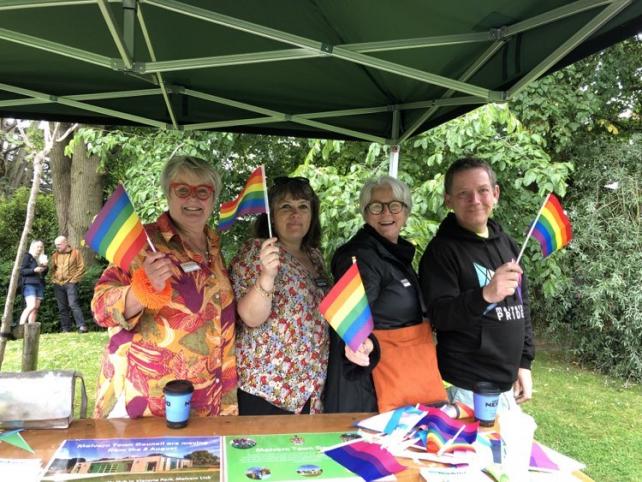
“It is great – it is really bright and vibrant and everyone has really enjoyed themselves,” said councillor Jude Green. “For us as town councillors, it has been really good to engage with the community and get all sorts of feedback.”
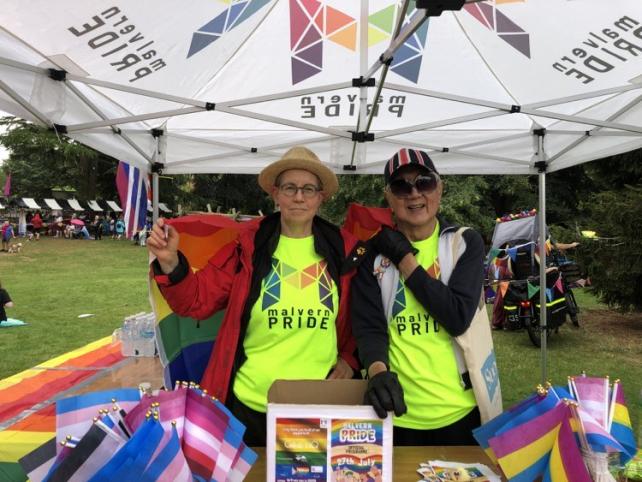
Councillor Melanie Jones said when she moved from London to Malvern, she was nervous that she would receive hostility for being gay.
She said: “I am quite new to Malvern and new to the council as well.
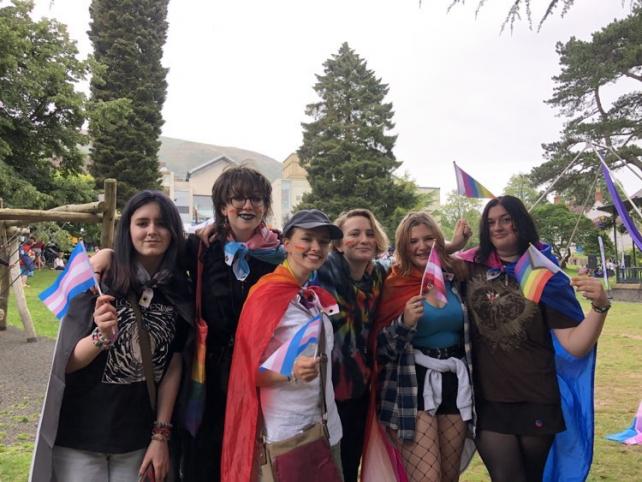
There are people from different backgrounds and different sexualities, and that does not make you feel uncomfortable here. “I do not mind saying that I am gay, and I came from London and expected there to be hostility, and I never have received that here personally. That has been amazing and to get a place on the council as an outsider is really fantastic.”
 Out in the City