

Pride on the Range
Whalley Range is an area of Manchester, located about two miles south-west of the city centre. It was formally known as Whalley in the Range, one of Manchester’s first suburbs, built by Manchester banker and businessman Samuel Brooks as “a desirable estate for gentlemen and their families.”
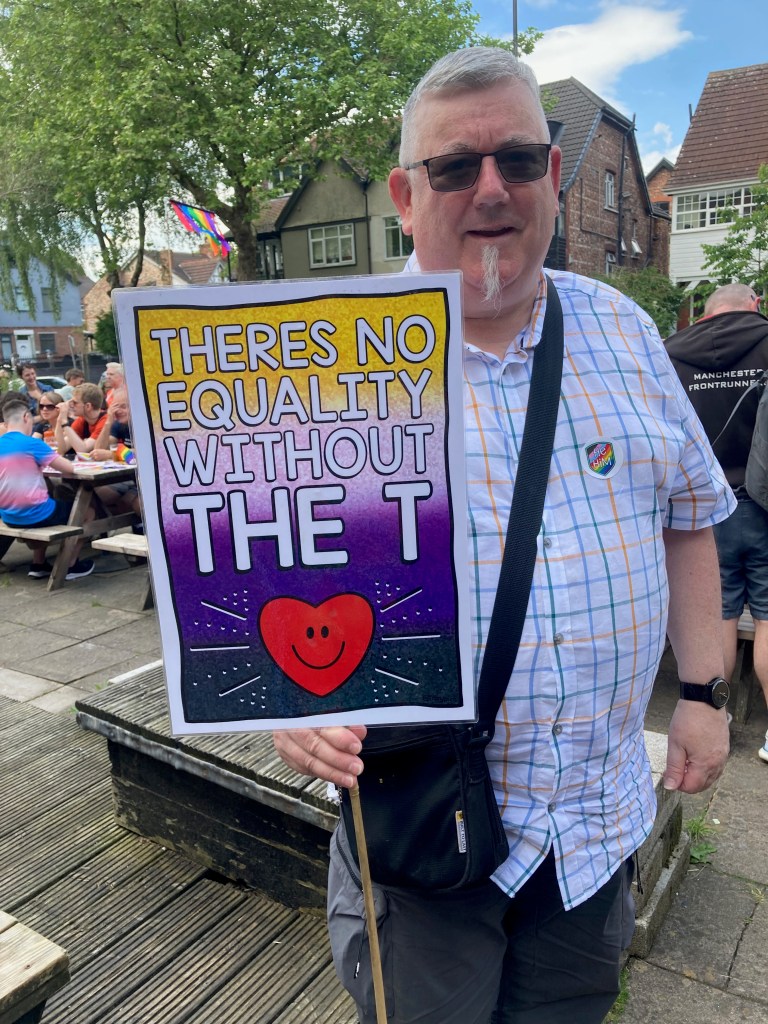
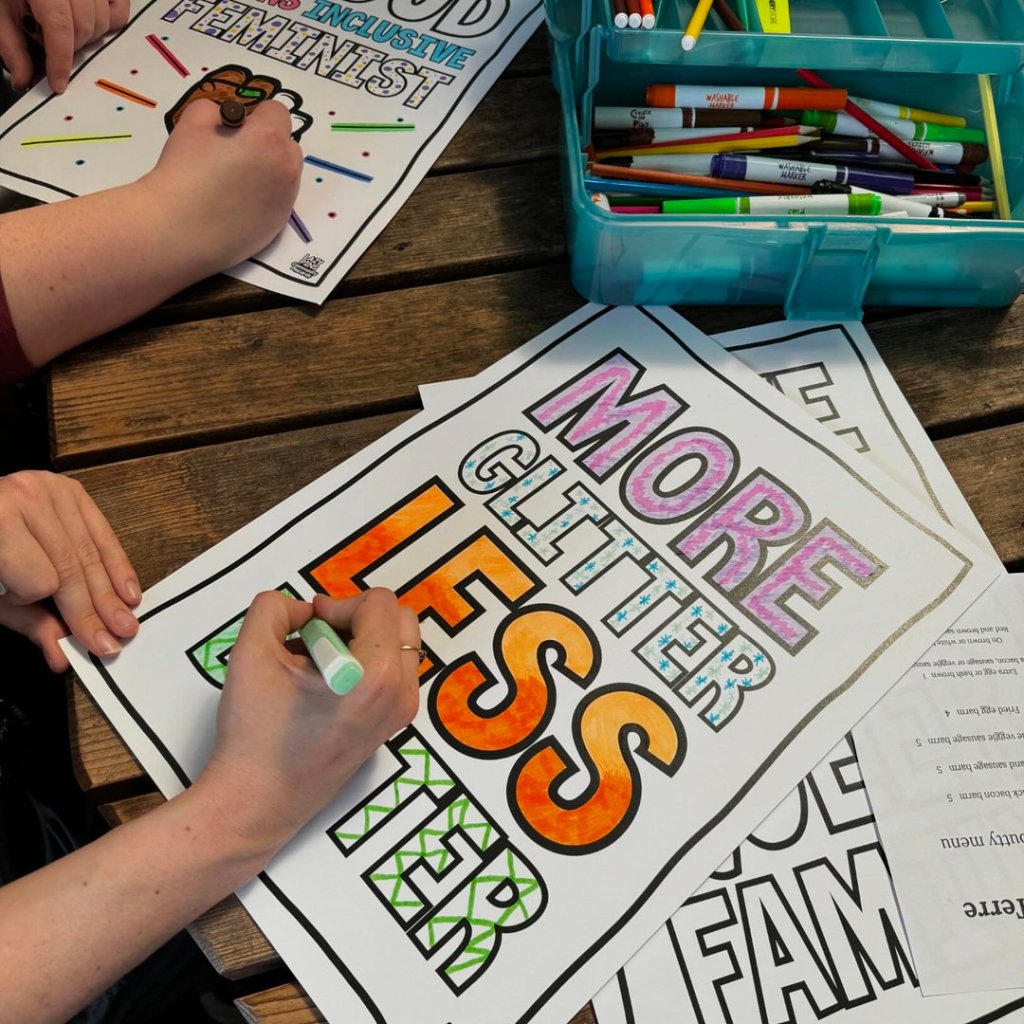
On Saturday 25 May before the annual Pride Parade, there was a placard making workshop with LazyPins Illustration outside the Nip and Tipple. People started to assemble and the parade set off at 12.00 noon ending at the Carlton Club.

Drag queen Banksy introduced vogue dancing, laughter yoga, speeches and cabaret. There was a dog show competition which included prizes for best dressed dog, campest walk and waggiest tail.
There were a number of stalls including the LGBT Foundation, the LGBTQ+ Majority Older Person’s Extra Care Housing Scheme and the Village Bakers.
We enjoyed the fish, chips, halloumi and mushy peas supplied by the Hip Hop Chip Shop. The sun shone and we had a brilliant day.
Pride Season – dates for the diary
Greater Manchester’s Pride Season has started and the following Prides are scheduled during June:
Saturday 1 June – Bury Pride
Sunday 2 June – Stockport Pride
Saturday 15 June – Tameside Pride
Saturday 22 June – Salford Pink Picnic
Sunday 30 June – Pride in Nature with RHS Garden Bridgewater

Unlike previous years, this year at Bury Pride, you do not require a ‘free ticket’ to attend the event.
Come along on the day with your loved ones, friends, family, colleagues, glitter pens, flags and have a jolly good time!
Wolf will be performing around 2.15pm.

Why Modernist Women Liked Cross-Dressing
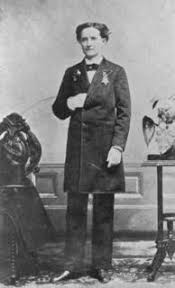
“What a relief it is to be freed from chignon, extra braids, fizzes, rats, mice, combs, pins, etc, etc,” declared Dr Mary Edwards Walker (1832-1919), feminist, abolitionist, prohibitionist, surgeon, prisoner of war, the only woman to win the Medal of Honour and cross-dresser. Mary Walker wore trousers on the battlefields in the 1860s and, in her later years, the evening dress of the early twentieth century male, including the tall silk hat.
Dr Walker was proud of having been swapped “man for man” with a Confederate soldier at a prisoner exchange. Walker’s writing on the liberation inherent in getting rid of the bondage of Victorian women’s clothing helps set the stage for the women at the forefront of what was once thought of as the exclusively male movement: Modernism.

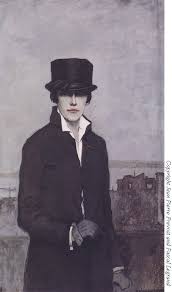
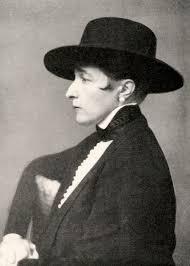
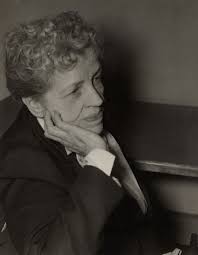
Women like Gertrude Stein, Romaine Brooks, Frida Kahlo, Radclyffe Hall, Djuna Barnes, Vita Sackville-West and others took it all a step further than “tom boys” of an earlier era, like Willa (“Willie”) Cather, who liked to wear trousers and a Civil War cap when young. The women of the early twentieth century were making a travesty of sexual signs.
Women in masculine garb could be thought of as women warriors, while men in women’s clothing were considered emasculated, ridiculous, or psychopathic. Women cross-dressers could be brooding, Byronic figures but for women the inversion of cross-dressing is not always or even primarily erotic.
The appeal of clearly seductive cross-dressers as Sarah Bernhardt and Marlene Dietrich can function as sex symbols for heterosexual men, reflecting masculine attitudes to eroticise independent women.
Female Modernists tended to be more extreme in playing the male role by using male names eg Charlotte Bronte (Currer Bell), Mary Ann Evans (George Eliot), and Olive Schreiner (Ralph Iron), among others.
A century after the Great War, women in trousers are mainstream, an illustration of the radical becoming conventional.
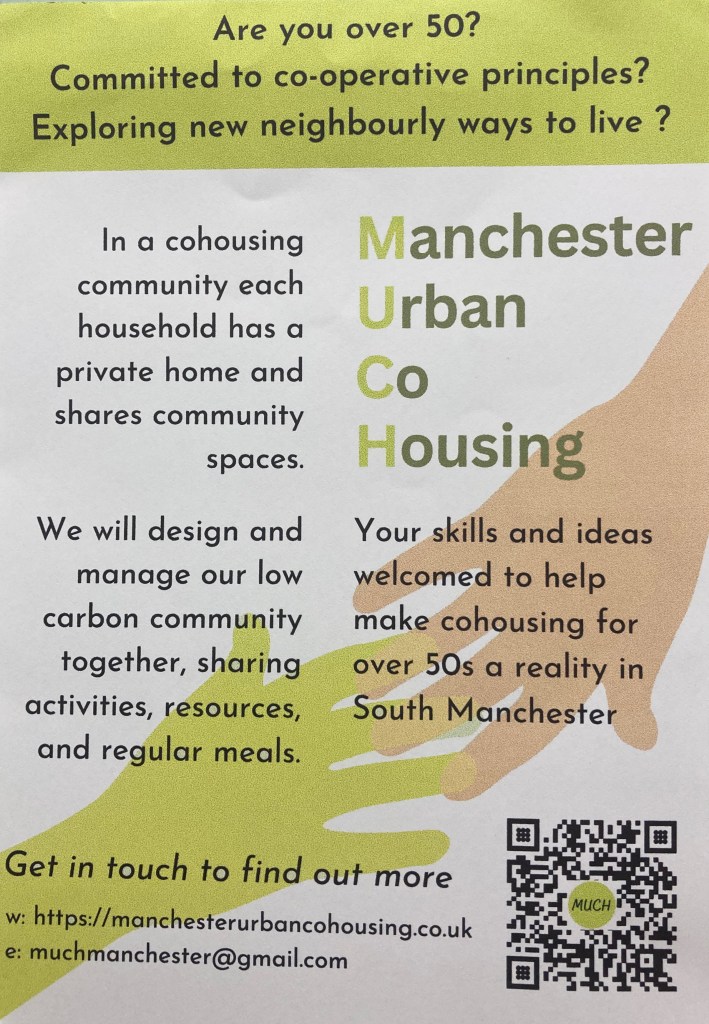
Manchester Urban Co Housing
If you are interested in cohousing, Manchester Urban Co Housing (MUCH) can be contacted on muchmanchester@gmail.com
 Out in the City
Women weren’t published at that time and they therefore had to take a mans name for their writings to be published.
LikeLike