Hat Works Museum
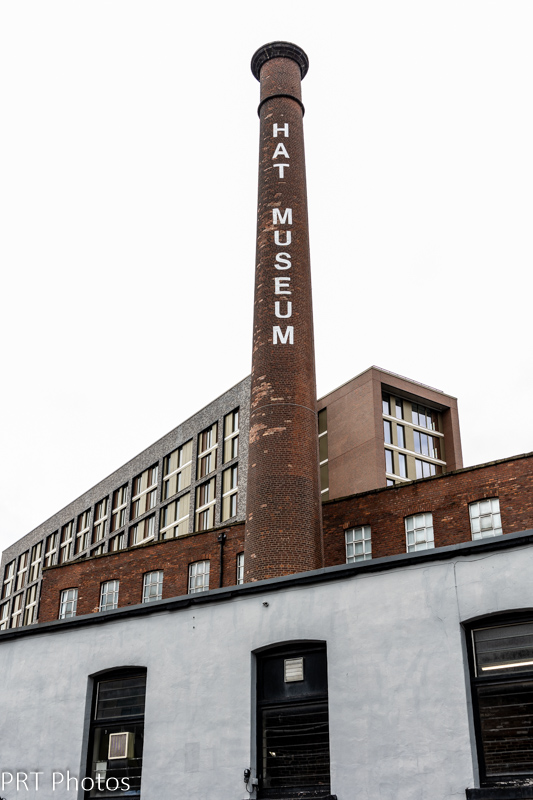
Stockport has tipped its hat to its rich industrial history with the reopening of the Hat Works Museum.
The Hat Works Museum, the UK’s only museum dedicated to the hatting industry, hats, and headwear, relaunched on 21 March 2024, after an extensive refurbishment and reinterpretation of its collection.
Stockport has been a centre for the hatting industry since the 17th Century and was famous for its high-class fur felt hats.
Stockport developed a reputation for quality in the early 19th Century and hatting grew into one of the town’s main employers, as it mechanised.
Rabbit was the preferred fur and a large factory could produce around 5,000 felt hats a week, with pelts imported from around the world as local suppliers could no longer meet demand.
In fact, the mercuric nitrate the furriers applied to the pelts was highly toxic, commonly causing confusion, mental distress and even death, which led to the common phrase we all now use – ‘Mad as a Hatter’ and, of course, Stockport County owes its nickname of The Hatters to the hatting industry.
During a 60-year hatting boom (1875 to 1935), Stockport was home to around 30 major hat factories.
However, since World War One and the Great Depression, the industry declined as cheaper alternatives and new fashions drastically altered hat demand marking the end of over four centuries of local production.
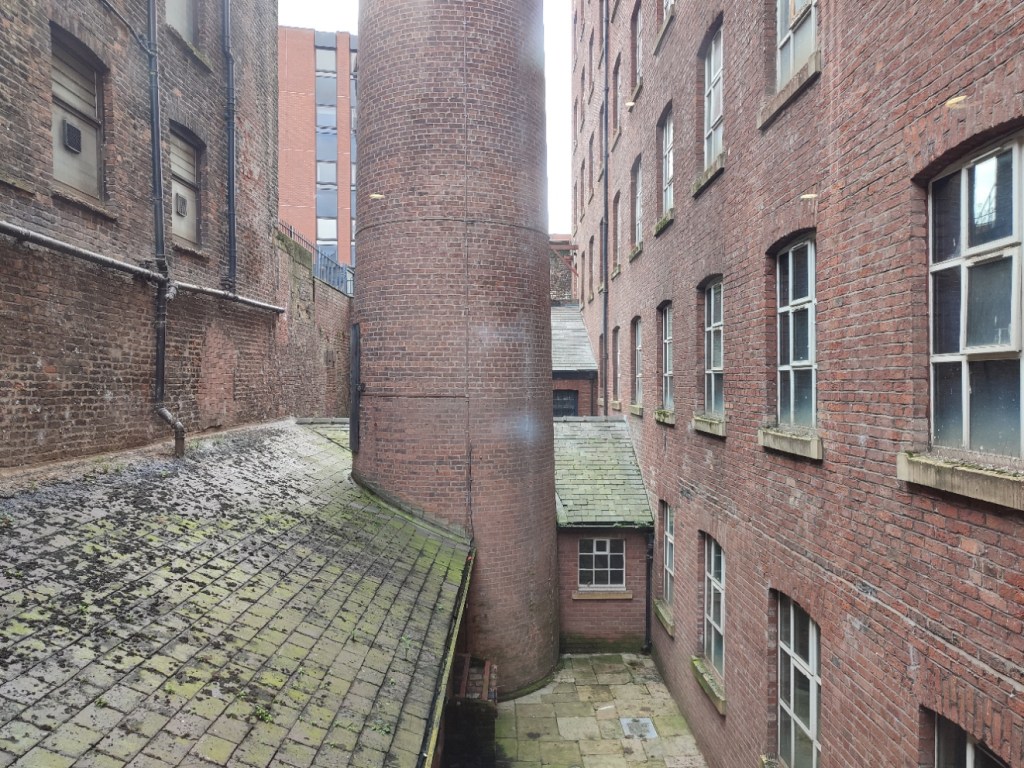
Stockport’s Hat Works first took up residence in Wellington Mill in 2000 with previously a small collection of hats on display.
The Grade-II listed Wellington Mill was built as a fireproof cotton spinning mill in the 1830s but switched to hats during Stockport’s hatting heyday in the 1890s.
Visitors can now discover more than 1,300 hats and related objects, with an array of hat types from military and practical to high-end and artistic and while many were manufactured in Stockport, the collection includes hats from around the world.
Thanks to a grant from the Association for Industrial Archaeology, which promotes the study, preservation and presentation of Britain’s industrial heritage, visitors can see the Victorian hat making machines in motion for the first time since 2016.
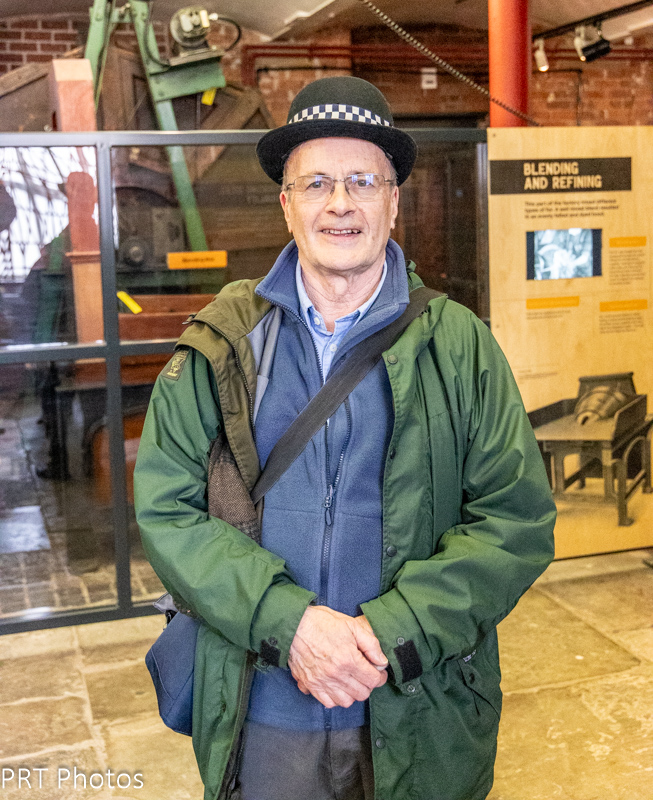
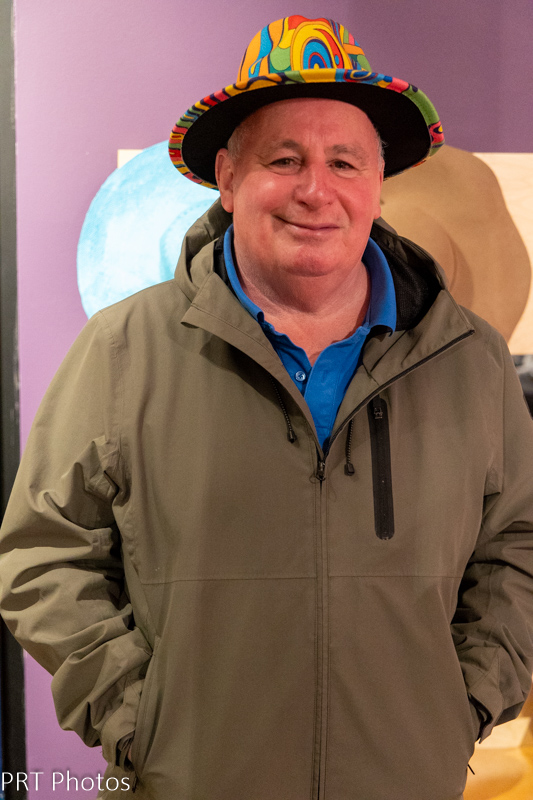
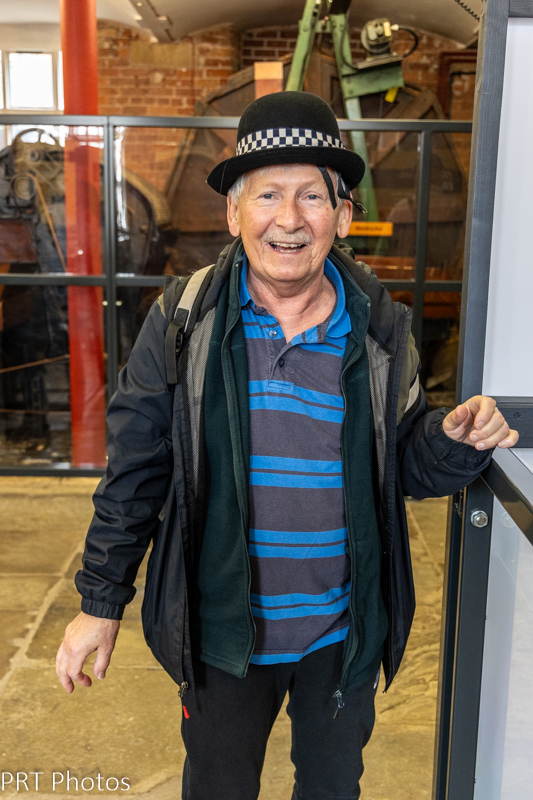
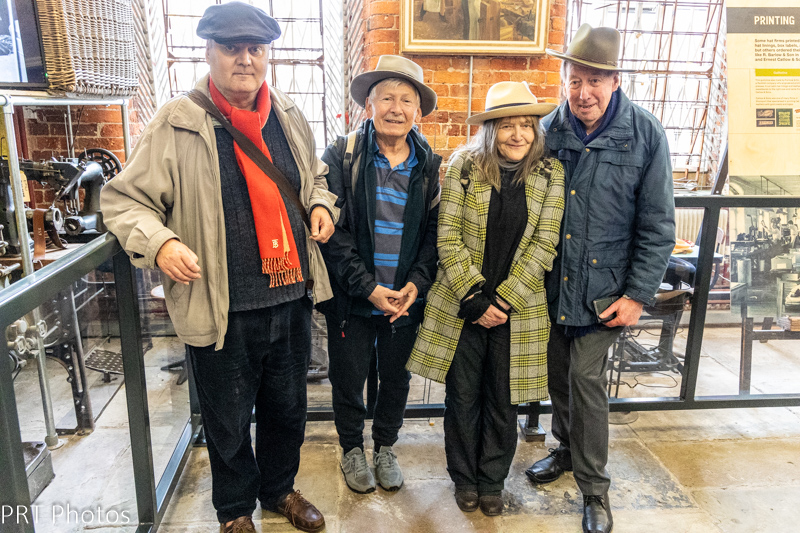
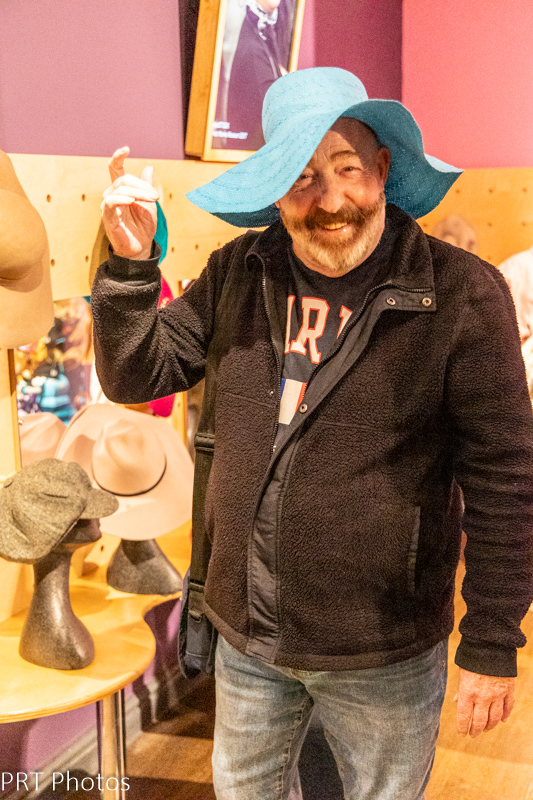
Lots more photos can be seen here.

Plans to ‘Preserve and Protect’ Manchester’s Iconic Gay Village Revealed
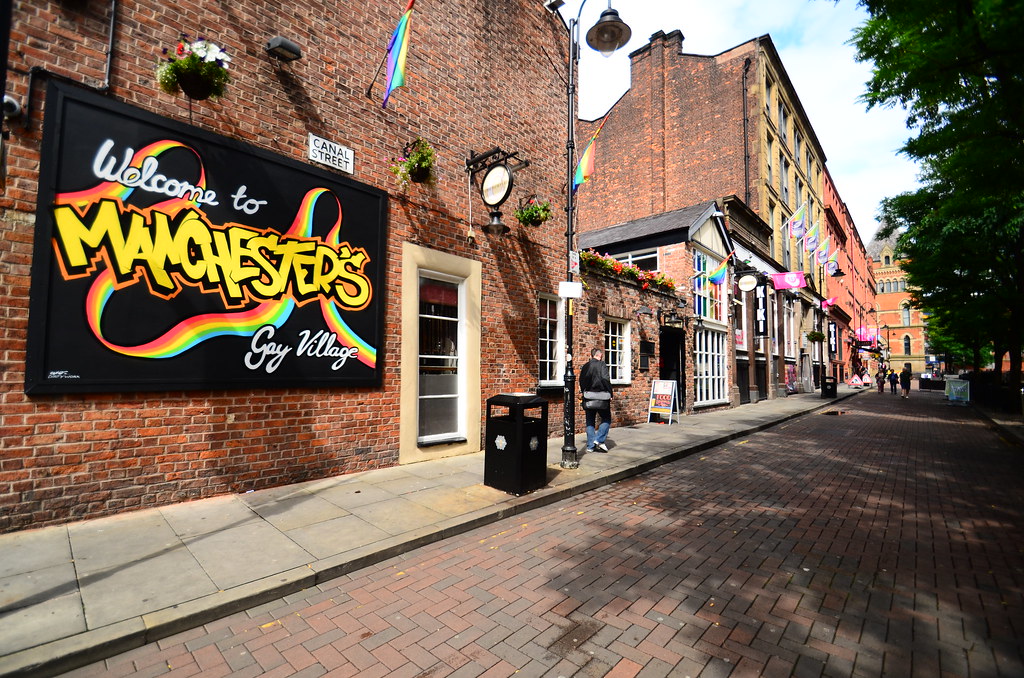
From being a haven and a sanctuary from discrimination, to a place of protest, the focal point of Manchester Pride celebrations, and so much more, Manchester’s Gay Village has been an essential safe space for members of the LGBTQ+ community who have made this city their home for several decades now.
The globally-recognised neighbourhood draws in tens of thousands of visitors each year, and there’s no doubt it’s truly one of the most welcoming and inclusive spaces in the city centre.
Which is why Manchester City Council says it’s keen to celebrate the role the area has played over the years.
And so, in a bid to do just that, an ‘action plan’ has been created to address how the character and spirit of the area can be maintained and preserved, as well as what improvements can be made to ensure the needs of the LGBTQ+ community are “at the heart” of everything that takes place down in the Village.


The Council says it’s “intensely proud” of the Village’s reputation, both across the UK and throughout the rest of the world too, and it hopes to “enhance and promote” this reputation for years well into the future.
A range of proposals have already been identified to enhance the area, both in the short and long term, but on top of this, as part of the Council’s “commitment” to the Gay Village, several consultations have also taken place to better understand what the “priorities, desires, and needs” are for those who visit, live, and work there.
Collaboration will remain key during the roll-out of any changes, and action groups will be utilised to engage with all involved too, according to the Council.
So, What Enhancement Proposals are on the Cards Then?
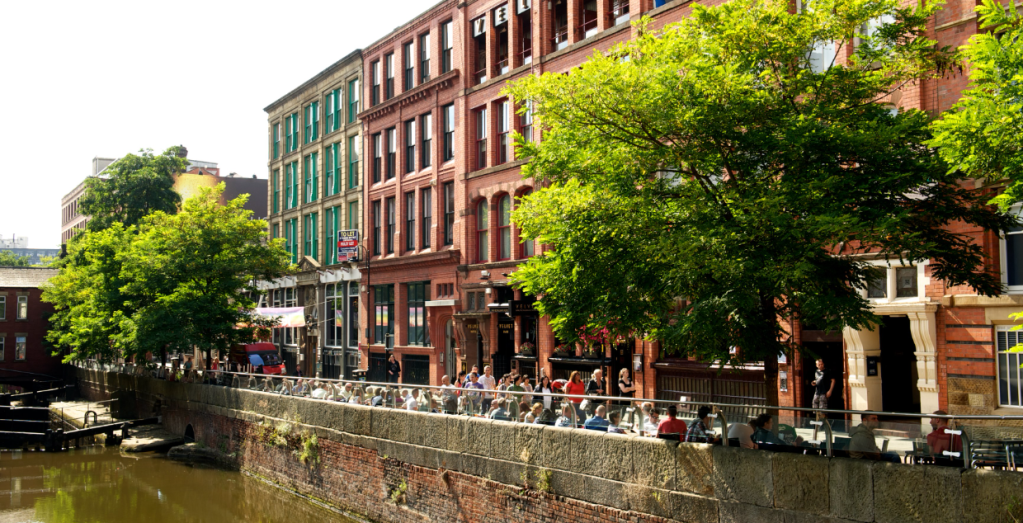
Well, according to the Council, these include the development of a neighbourhood management plan to bring improvements to the physical environment, the conducting of a CCTV audit to ensure coverage is being met, and plans to enhance relationships with Greater Manchester Police (GMP) to make sure residents and businesses are safe.
Damaged trees in Canal Street will also be replaced, alongside the developing of an exciting new social history and heritage trail for the Village as a whole.
New opportunities for street art and murals will also be identified. You can find out more, and see the ‘Gay Village Action Plan’ in full on the Manchester City Council website here.

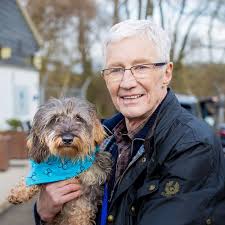
The Secret Life of Paul O’Grady – By His Friends
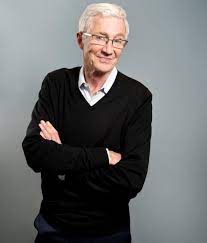
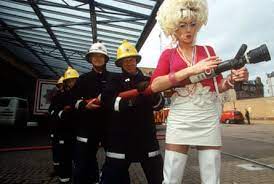
He rose to fame as foul-mouthed drag star, Lily Savage, then abandoned the wig and became a national treasure. Friends including Sandi Toksvig, Amanda Holden and Gaby Roslin remember a true, terrific one-off.
I can’t believe it’s been a year,” says Malcolm Prince, the producer of Paul O’Grady’s long-running Sunday teatime Radio 2 show. “Awful, awful, awful, awful. It’s been such a very difficult year. I’m embarrassed to say how tricky it’s been.”
O’Grady’s death on 28 March 2023, from sudden cardiac arrhythmia, came as a shock to the world. For decades, he had achieved the rare feat of presenting himself to the public as he truly was: funny, sharp, outspoken and compassionate in roughly equal measure. To some, he was best known as a comedian, to others a gameshow host, or an animal lover, or a political firebrand, or an LGBT+ pioneer.
O’Grady’s appeal was so broad that people argued about what his legacy should be after he died; even ITV’s big Good Friday show this year, a documentary entitled The Life and Death of Lily Savage, can’t begin to contain the multitudes in O’Grady’s life, instead choosing to focus on the years he spent in drag.
Everyone wanted to emphasise what a loyal friend he was. “He was a brilliant raconteur,” says TV and radio presenter Amanda Holden, who joined O’Grady as an ambassador for Battersea Dogs Home. “I can’t remember what I did last week, and then he would tell me a story about when he was in the clubs and you just go: ‘How do you remember all that?’ – especially knowing his lifestyle at the time. I absolutely adored him. His number’s still saved in my phone. I can’t delete it. I just won’t.”
Owen-Taylor first encountered O’Grady at the Black Cap pub in Camden, north London, in the early 90s, almost a decade after O’Grady had begun to perform as his alter ego Lily Savage. Owen-Taylor had just returned from Australia, where he had been making costumes for Perth’s local drag scene, centred on the town’s only gay club, a venue named Connections that was, as he recalls, located in “a room above a kebab shop”. At the Black Cap, Owen-Taylor began circulating among the performers, touting his wares. “Nikkie Vixen was the first drag artist to trust me, so I made a costume for her,” he explains. “The second one was Regina Fong. And then the third dress I ever made in Britain was for Lily Savage.”
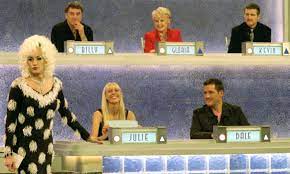
By this stage, Savage was starting to push against the margins of her club fame. Her longstanding residency at the Vauxhall Tavern in south London had attracted a feverishly devoted audience, but O’Grady wanted more. “When I met him, Paul had hired a theatre with his own money,” says Owen-Taylor. “He was trying to see what he could do and if he could fill a theatre. He and (his partner-manager Brendan Murphy) wanted to set their sights higher.”
This led to the Edinburgh festival, where Savage was nominated for the Perrier award. After his return to London, O’Grady appeared at the Hackney Empire’s Best of the Fest night, where he met Brenda Gilhooly, who was then performing as Page 3 girl Gayle Tuesday. “I came off stage and this guy was in the wings, and said: ‘I really like your act’. He had such a strong Liverpudlian accent that halfway through the conversation I went, ‘Oh my God, are you Lily Savage?’,” says Gilhooly. “You don’t know when you meet someone that it is going to be the beginning of a lifelong friendship, do you? But that was it. We were just really good friends after that. When he went on tour, he asked me to be a support act.”
He’d come in in the morning and go: ‘What sort of time is this? Oh my God,’ because he was more of a late-night person
Gaby Roslin
What was the tour like? “It’s so sad, I saw Paul about three weeks before he died,” Gilhooly says. “He made these, like, world war two sandwiches for us. White sliced bread with tinned salmon, and a cup of tea. We didn’t even think about alcohol. But on tour we were really hungover all the time. We’d be like: ‘Right, we’re not doing that tonight,’ and then go out and get really drunk. We’d be lying in all the outfits, on the ground, in the wings before the show. And then the music would start and we would just get up like puppets.”
This is also where she encountered O’Grady’s dramatic flair. “We were doing these 2,000-seat theatres and it was sold out all around the country. I remember coming into the dressing room one night and I went, ‘Hi Paul,’ and he said, ‘I’m not going on.’ The wig came off, and then the beads and I said, ‘But what about the audience?’ and Paul said, ‘Fuck ’em. Fuck ’em!’ I was in an absolute state about it. And then two minutes later, he said, ‘Ah, all right. I’ll go on.’ Afterwards he’s in the bar, talking to people and taking photos, all that. So it’s just kind of what happens when you get to know him. The rants and raves were never genuine.”
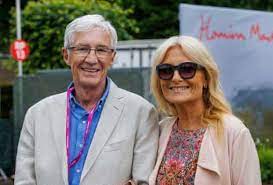
“He could be grumpy, but he said it as it was,” recalls Gaby Roslin. “There was no fluff around it. He’d come in in the morning and go: ‘What sort of time is this? Oh my God,’ because he was more of a late-night person than an early morning person.” Roslin was O’Grady’s co-host during his big leap to the mainstream, as Savage became a presenter on Channel 4’s The Big Breakfast. The show “brought Lily to a whole new generation,” says Roslin. “Before, the people that knew Lily knew Lily, you know? They realised that Lily could be naughty, but on our show she could show her complete and utter respect and love for all ages.”
This era of The Big Breakfast was marked by an affectionate kinship between Roslin and Savage. “He used to call me ‘Gaby Roselyn the Tooting Tassle-Twirler’,” recalls Roslin. “I even played the part of her in the Lily Savage Show. Me, Bella Emberg and June Brown. I showed my children a photograph where they had coloured in my roots black. They gave me a can of lager and I had my feet up and my kids were pissing themselves laughing.”
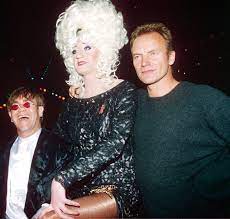
Not that success would blunt O’Grady’s sharper edges. “I remember him telling me that, even though he had a TV show at the time, he couldn’t get a mortgage to buy a nice place to live,” Owen-Taylor remembers of this era. “They told him to get a guarantor. So he got Ian McKellen and Elton John to do it. ‘There you go, a multimillionaire global pop star and a knight of the realm, stick that up your arse.’”
But as Lily Savage’s star was rising, O’Grady decided to walk away and forge a career as himself. “His decision to stop being Savage was sort of mentioned to me as an aside,” recalls Owen-Taylor, who by that point had made upwards of 300 costumes for her. “It was a little bit of a shock, because, you know, I was ramped up for doing it every year. But he explained his decision and I totally understood, because he’d done 10 years-plus on the gay scene and 10 years on telly, and it was hard work. To have to be in all that makeup and the costumes and the wig, it’s a lot to put on and to be doing it continually. He saw other people just sort of waltz into work, sit for 20 minutes in the makeup chair and they were in front of the camera. He wanted that, and he had the talent for it, so good on him. It was a sad loss for the gay scene, but we’ve got all the videos.”
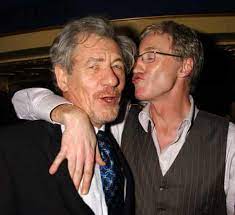
“The thing about Lily was a lot of it was Paul anyway,” says Gilhooly. “I mean, it was an act, obviously. But, and I know this is a cliche, he really was as funny off stage as on.”
Incredibly, O’Grady’s career as himself would soon eclipse that of Savage. He had his own show on ITV and Channel 4 over several years, which quickly assuaged any doubts that he would be less forthright as himself – witness the infamous clip from 2010, where O’Grady rants about the Tories.
Paul’s rant was one of the finest and most dexterous uses of expletives I have ever heard. I deeply regret not writing it downSandi Toksvig
It was around this time that O’Grady wrote a sitcom with Sandi Toksvig, entitled Nellie and Melba, where he would play Sheila Hancock’s son. “I have co-written with many people but never like that,” recalls Toksvig. “He would send me handwritten scribbles of thoughts, such as referring to his mother as ‘Eleanor of Aquitaine with a chip pan’. Sometimes we met and he just talked at me as I hurried to dash it down before going home to try to make some kind of sense of it in the form of a script.” Nellie and Melba never made it to screen but, as Toksvig remembers, “When the powers that be proved to be unsurprising idiots and decided not to make the series, Paul’s ensuing rant was one of the finest and most dexterous uses of expletives I have ever heard. I deeply regret not writing it down.”
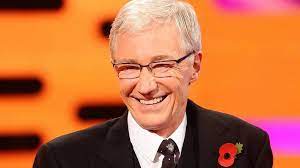
Not that this left O’Grady with little to do, since at this point he also held down his Radio 2 show. “Radio was the job he did the longest,” explains Prince. “He did it for 14 years. He did 1,000 hours of radio and more, and he absolutely loved it. He was good at it, because he understood that there’s just one person listening at home, and he had that real connection. He was a natural. He didn’t need to be taught how to do it. He could just do it. And that’s a real skill.”
It was on the Radio 2 show that Prince became one of O’Grady’s most enduring sidekicks, too. “At first, I was just silent when he mentioned me on air,” he says. “But then one day the talkback thing went wrong and I spoke on air, and the rest is history. He encouraged me to interrupt him. He took the piss out of me and I took the piss out of him. If you think about it, going back to the Vauxhall Tavern, Lily role.”
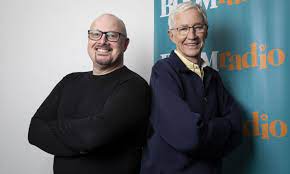
O’Grady and Prince were such a double act that, when O’Grady left the station, Prince went with him. “I was so lucky, because you can work with people and not necessarily get on with them. But I live very near to Paul’s now. I’m 17 minutes from his house. He would drive his Mini round, park downstairs, bring the dog in, have a cup of tea, slice of cake. It was lovely. Absolutely lovely.”
Between them, O’Grady and Prince signed up for a show on Boom radio. In the latter stages of preparation, Prince paid O’Grady a visit. “I saw him for two hours on the day he died,” Prince recalls. “I was there. We were having tea. And we put the world to rights as we always did, and he said how excited he was about doing Boom. This was the day before we were going to do the first episode. Apparently, when the medics went in there, the mic was all still set up.”
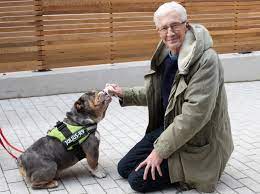
“I really miss him, says Gilhooly, tearing up. “Apart from being the most talented, wonderful, hilarious comedian – I mean, he was born to be a comedian – he was just such a dear person, a really lovely human being. He was a really good friend and fantastic company. Having a cup of tea with him was as entertaining as any show. He was an incredible man.”
“I got a new show recently,” says Roslin. “I’d always ring Savage to discuss new shows – I always called him Savage – so I went to call him. But then I had that split second where you think: ‘Oh no, I can’t.’ But I know that he’s haunting me. He always said he was going to haunt everyone, that he was going to come back and keep an eye on us all.
He knew how much we all loved him, because at the end of every phone call I’d go: ‘Oh, my God, you know how much I love you,’ and he’d go, ‘You know I love you too. Now fuck off.’”
 Out in the City