Lancaster Castle
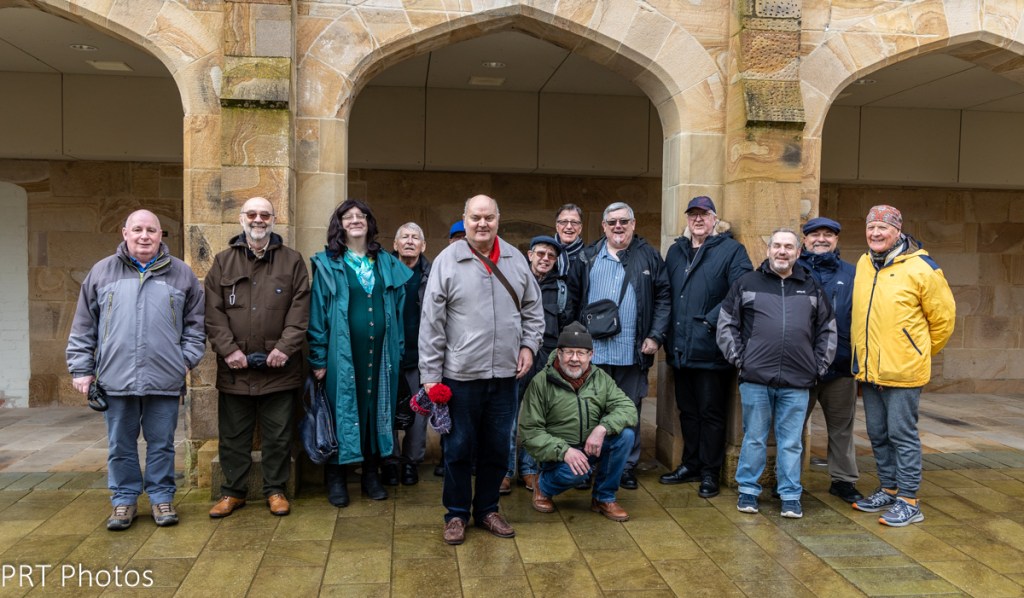
Our visit this week was to Lancaster Castle, a medieval castle and former prison. The castle was first used as a prison in 1196 although this aspect became more important during the English Civil War. The castle buildings are owned by the British sovereign as Duke of Lancaster; part of the structure is used to host sittings of the Crown Court.
Lancaster has a reputation as the court that sentenced more people to death than any other in England. This is partly because until 1835 Lancaster Castle was the only Assize Court in the entire county and covered rapidly growing industrial centres including Manchester and Liverpool. Between 1782 and 1865, around 265 people were hanged at Lancaster; the executions were frequently attended by thousands of people crowded into the churchyard.
Panopticons
As the Prison Reform movement got underway in the 1780s, the idea of simply locking a prisoner away behind high walls seemed insufficient. More control of the felon within the prison was needed to aid reform. Internal security and discipline became important design issues in new prisons built in the late 18th century.
The first construction development was the central observation tower, which allowed wardens to watch prisoners in internal courtyards. Some reformers wanted to go further to establish constant observation of prisoners’ activities – even in their cells. The great radical philosopher Jeremy Bentham was a key proponent of this idea.
Jeremy Bentham (1748 – 1832) was the leading radical of his time, and the father of 19th century liberal thought. He wrote extensively on social reform, including prison reform. He pioneered the idea of the Panopticon prison (pan meaning ‘all’, opt meaning ‘seeing’).
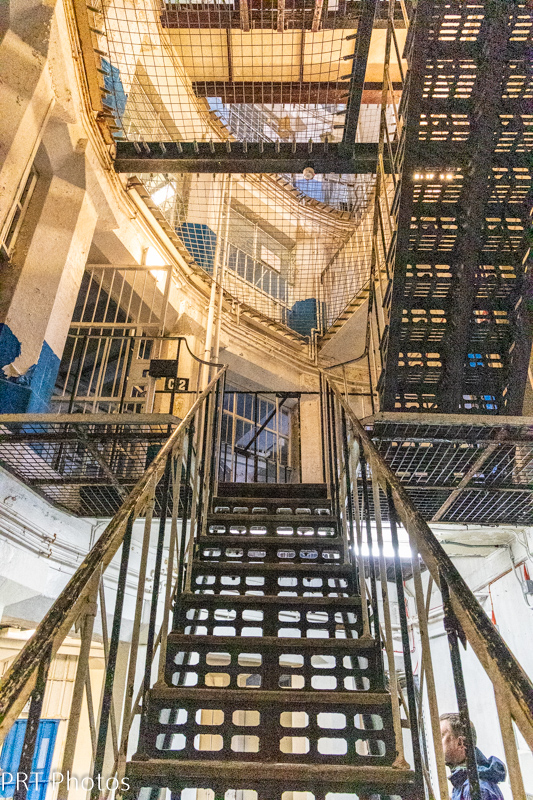
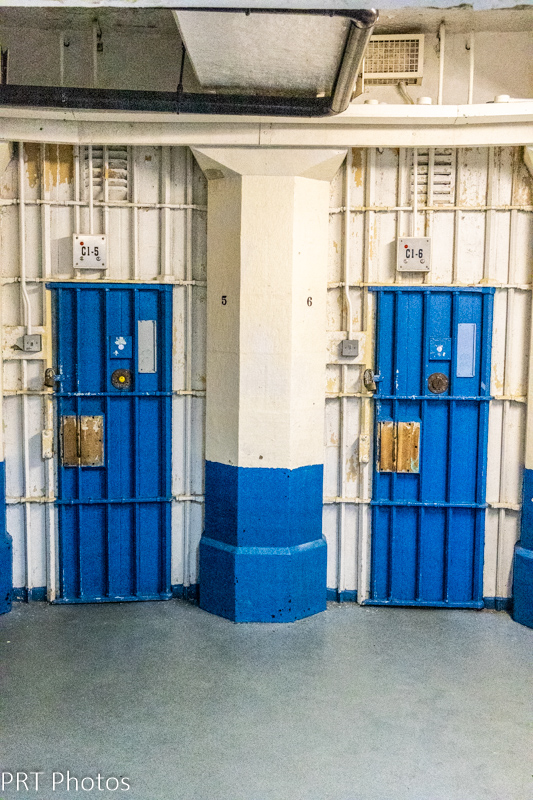
Jeremy felt this design would be ideal for prisons. Placing the cells in a circular pattern and replacing doors with bars would allow a warden to observe everything from a central position. This would reduce costs, as fewer wardens would be needed.
In 1818 Lancaster Castle built the first ever Female Penitentiary. However usage proved that without privacy humans become disturbed, leading to breakdowns, so the idea had to be abandoned.
“Committed for Kissing”
There is an amount of graffiti in Lancaster Castle and one particular piece is without doubt the most important. It is an extremely rare example of someone openly stating, in the 18th century, that they had been arrested for homosexual practices.
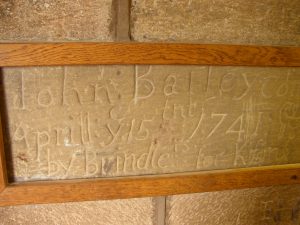
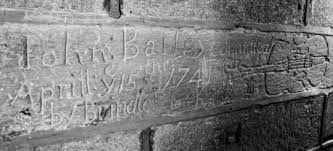
Unfortunately, we know nothing of John Bailey, and the records for the assizes of 1741 have not survived. Nevertheless, he tells us a great deal. He could clearly read and write, so he was an educated man. ‘Committed’ means that he was awaiting his trial at the time he composed the graffiti. The person, ‘Brindle’, was the man who had arrested him. The small ‘rs’ after his name probably points to Brindle being a member of The Reformation Society, whose full title was the Society for the Reformation of Manners. During the 18th and early 19th centuries this group took it upon themselves to try and stamp out drinking, gambling, prostitution and homosexuality.
The Georgian slang meanings of the words ‘kissing’ and ‘tulip’ (note the drawing of the flower), point towards the sexual act for which he had been arrested – Kissing the Tulip. It is unknown what happened to John Bailey, but records show that he was not in the prison on 1 January 1742. The most probable reasons for this are that he was found ‘not guilty’, or that he was one of the many who died of disease whilst imprisoned at the castle.
‘Desurter’ (Deserter)
In 1806 five men from the Warrington area were tried for their lives at Lancaster Castle on charges of sodomy; they were Isaac Hitchen, Joseph Holland, Samuel Stockton, John Powell and Thomas Rix. Such cases were very difficult to prove as it required someone to give evidence that the ‘crime’ had taken place, but by doing so such a witness would have to admit to committing an act that carried the death penalty. Not surprisingly, getting a witness to do so was very difficult unless an incentive were given. This usually amounted to the prosecution promising freedom to someone in exchange for their testimony by turning ‘King’s Evidence’.
During pre-trial interviews the authorities would play on the fears of the accused, not only for themselves but also for their families. Men were usually the main wage earners, and many of the accused were married men – if they were hanged, what would become of the wives and children? No doubt they would also mention that some of the other accused were already talking (whether, or not, that was actually true) so they had better make their mind up quickly or it would be too late.
Perhaps not surprisingly, it was common for such tactics to succeed and that is what happened in this case. Two men, one of whom was called John Knight, who had been arrested at the same time and also accused of sodomy gave evidence for the prosecution in exchange for all charges against them being dropped. Their evidence sent the other five to the gallows.
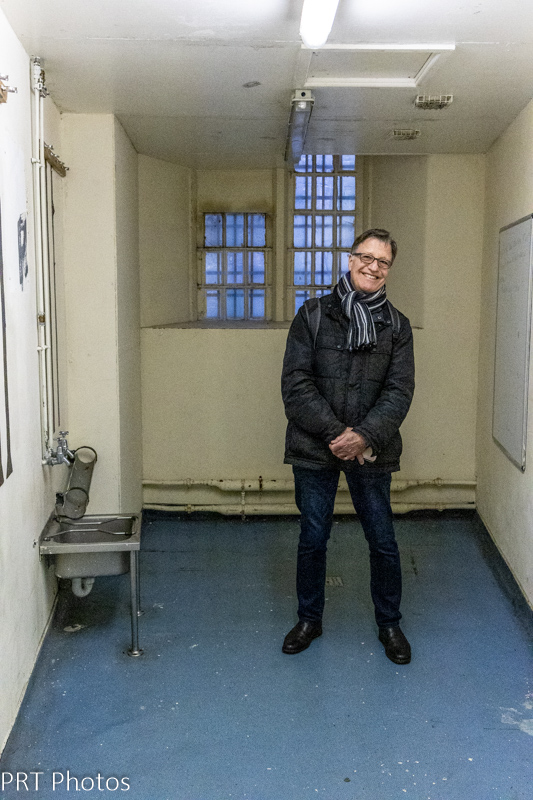
In one prison cell can be seen the name ‘Knight’ carved into the wall. Another hand has written, much more quickly and lightly, just in front of the name, the single word – ‘desurter’.
Some great photos can be seen here.

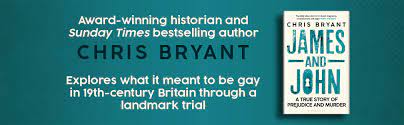
‘James and John: A True Story of Prejudice and Murder’
Available on BBC Sounds is a Radio 4 broadcast called ‘James and John: A True Story of Prejudice and Murder’ by Chris Bryant MP and read by gay BAFTA winning actor Simon Russell Beale. It is available on BBC Sounds (for the next month only) and consists of five short episodes about two men who were lovers and the last two men to be hanged in England for sodomy.
It gives a vivid impression of the life and times of that era and the injustice these two men and many others suffered.
Listen here.


The Laramie Project
The Laramie Project, created by Moisés Kaufman and the Tectonic Theater Project, presents a collage of accounts following the murder of a young gay man named Matthew Shepard in Laramie, Wyoming, in 1998.
The narrative draws from over 200 interviews with locals and people connected to the case recorded in the 18 months after Matthew’s death. The result is a moving piece of verbatim theatre that explores the dividing viewpoints of prejudice and intolerance and the potential for human compassion. The production serves as both a memorial to Matthew Shephard and a powerful commentary on hate crime and acceptance in society.
Content warnings
Descriptions of homophobia, violence, death and sexual violence.
Performances
Thursday 25 April (7.15pm)
Friday 26 April (2.00pm & 7.15pm)
Saturday 27 April (7.15pm)
Manchester School of Theatre
Cavendish Street
Manchester
M15 6BG
Tickets now available Tickets (from £5.00) for each performance can be purchased on the Fatsoma ticketing site using this link.


Important Closure Announcement
Opening Doors was the largest UK charity providing activities, events, information and support services specifically for LGBTQ+ people over 50.
It is with a heavy heart that we are announcing the permanent closure of Opening Doors on 29 February 2024 due to ongoing financial challenges, ultimately resulting in insolvency.
Since launching the charity in 2016, they have dedicated themselves to supporting and advocating for LGBTQ+ individuals over 50, addressing their unique needs, isolation and invisibility.
Despite the relentless efforts of their Board of Trustees and staff to secure a sustainable future for the work, the current economic environment has significantly impacted their funding sources, leaving them unable to continue.

 Out in the City