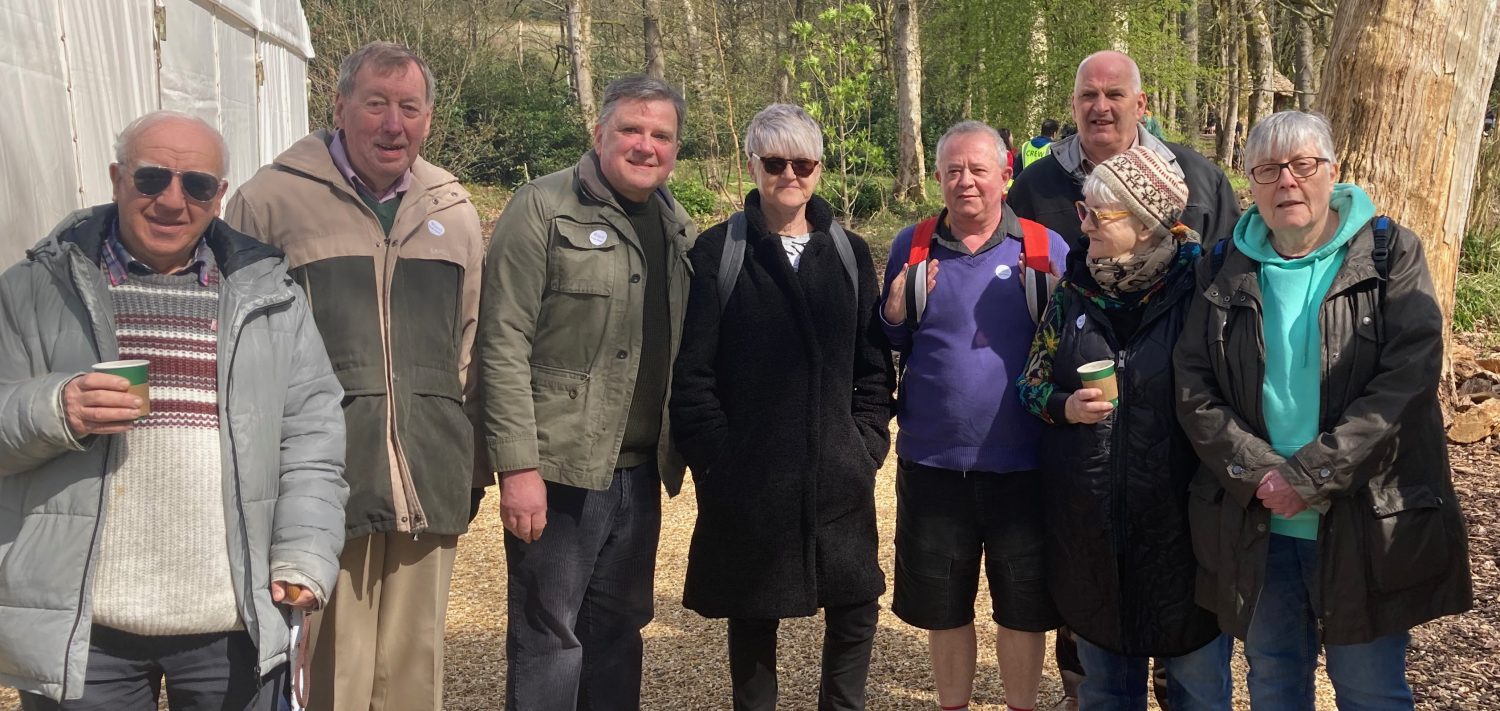

Salford Art Gallery
Our planned trip this week was to visit Salford Art Gallery. In the East Wing was an exhibition regarding Islington Mill.
2023 sees the 200th anniversary of the construction of Islington Mill, the former cotton spinning mill on James Street in Salford.
Just one year after Islington Mill was built there was a structural collapse of the building on 13 October 1824 when a supporting cast iron beam broke. The floors of the building partially collapsed, one into the other, trapping workers amidst “bricks, slate and fragments of machinery”.
People leapt from windows to escape. Eighteen people were tragically crushed to death. Three of those were boys and the rest were young women and girls who made up the bulk of the mill’s workforce, some as young as ten years of age.
Witnesses in the area reported a “cloud of dust which obscured the air” amidst intense pandemonium and distress.
Since 1996 the Mill has provided a home for artists seeking new ways to create, think and flourish in community and collaboration. The exhibition sought to shine a light on the people past, present and future who give this building and this community life.

Photos can be seen here.

UK government ‘eroded’ human rights in 2023

A damning new report has condemned the UK government for its ‘erosion’ of human rights protections and failure to act on “meaningful” pledges.
As part of its World Report 2024, Human Rights Watch (HRW) said that the UK is “nose-diving” in its domestic human rights record, which is undermining its efforts to “promote the rule of law and human rights globally”.
The report cited multiple human rights failures in 2023, including efforts to criminalise protests and worker strikes, as well as the further demonisation of asylum seekers.
HRW also noted the government’s failure to “take any meaningful steps” to act on many of its human rights-related pledges, including the inaction on conversion therapy and a failure to “fairly compensate Black Britons” who, it says, were “harmed by the government” through the Windrush scandal.
The organisation also addressed the “abusive rhetoric” towards LGBTQ+ people and the rise in anti-LGBTQ+ violence, saying that the government is “undermining” the protections of trans people.
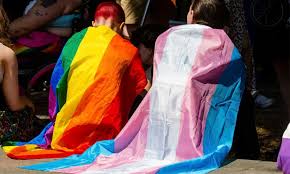
In criticising the UK government’s attitude towards LGBTQ+ people, Human Rights Watch pointed to the report by UN independent expert, Victor Madrigal-Borloz, following a 10-day visit to the country.
The report, published in May, demonstrated great concern over the way the UK government had helped to bolster the “increased bias-motivated incidents of harassment, threats, and violence against LGBT people”.
Madrigal-Borloz was particularly critical of the Equality and Human Rights Commission (EHRC), which he said gave the government a “formula” to enact transphobic legislation.
All of this, HRW concluded, had contributed to the surge in anti-LGBTQ+ violence, particularly against trans people, which rose by 11 per cent compared to the previous year. The Home Office, in its report on hate crime statistics, admitted that the rise in hate crimes could be due in part to the topics being “heavily discussed by politicians, the media, and on social media” over the past few years.
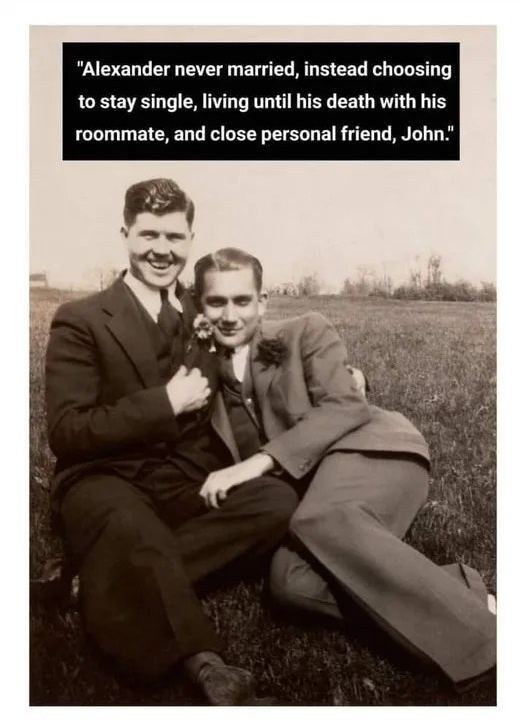
How we met: ‘It was illegal to be gay in the military, so it was very hard for us’
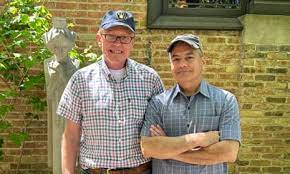
Herb, 59, and Scott, 60, became a couple when they were in the US air force together in the 1980s. After being reported and reassigned to different countries, they moved apart. Almost 40 years later, they reunited.
After finishing high school in 1983, Herb couldn’t afford the college education he had dreamed of. Instead, he joined the US air force, because they offered an educational assistance programme to help with costs. “I also thought it would be good to get some discipline and direction,” says Herb.
Stationed at a base in Michigan, he started work in the mailroom. The year after, he began to get to know Scott, who had also joined the air force after leaving school. “My cousin had talked me into it,” says Scott. As an administrative clerk, Scott regularly found himself in the mailroom, chatting to Herb.
“He had a very curious, intellectual aspect about him,” says Herb. “We had lots of interests in common and both felt different to our colleagues. We were more into culture and we were quite bookish. He also laughed at all my jokes.”
A friendship blossomed between them, but it wasn’t until August 1984, when they became roommates, that their relationship became romantic. While Scott had already been exploring his sexuality, Herb had never considered a same-sex relationship. “Scott shared with me his sexual orientation. At first, I didn’t think that was of interest to me, but as our friendship grew I found there was an intimacy between us. Even now, I’m not sure I identify as gay, as Scott’s the only man I’ve ever had feelings for. It’s more about the person than the gender for me.”
Keen to explore their connection, the two men began dating in secret. “It was the time when Aids was running rampant. There was lots of homophobia and it was illegal to be gay in the military, so it was very hard,” says Scott. Although they tried not to draw attention to themselves, a colleague discovered their relationship and reported them. “They found affectionate cards that Scott had sent to me,” says Herb. “With that information, they felt they could search Scott’s room. They didn’t find enough evidence on me, but they found enough to prove that Scott had been engaging in homosexual behaviour, so they tried to oust him from the service.”
After a long, stressful inquiry, Scott was able to complete his service and retain the education subsidy. “We supported each other through the five-month investigation,” says Scott. “I often look back and realise those should have been five of the worst months of my life, but they were some of the best, because it brought us so close together.”
Scott was reassigned to North Carolina, while Herb went to Japan. They tried to keep in touch for a year, before going their separate ways in 1987. “I hadn’t fully explored my sexuality and I still wanted to explore heterosexuality,” says Herb.
After completing his service and leaving the military, Scott went to Indiana to study, later moving to Oak Park, Illinois, where he still lives, for a job with the US government. Herb also gained a degree, before getting married and having a son. He and his wife split up in 2008 and he moved to Milwaukee in Wisconsin. He now works as a fundraiser for non-profit organisations.
The pair spoke occasionally over the years. Then, in 2013, when Herb’s father died, Scott offered to help him trace his family tree. “I’d got into genealogy,” he says. “We communicated lots more than in previous years.” But it wasn’t until after the pandemic that the spark was reignited between them.
“I was driving near where he lives in 2022 and asked if we could meet up,” says Herb. “He told me he’d still have feelings for me and wasn’t sure if it would be difficult.” Realising he also missed the intimacy they had shared all those years earlier, Herb suggested they get to know each other again. Over the next few months, their relationship evolved romantically.
In June that year, Scott had a stroke. “I went down to take care of him and we started getting into healthy eating together. Now, we go into thrift stores a lot, find nice Mediterranean cooking books and cook together,” says Herb. “At the moment, we live together on weekends and we are starting to plan what our future might look like. I love how attentive he is and how he considers small things that might affect me.” Scott feels closer to his partner than he ever has. “I always sensed this level of caring that was different from other relationships I had, even 39 years ago. I found him very attractive in 1984 – and I still do.”

Age UK Campaign
The new Offline and Overlooked campaign to end digital exclusion is gaining serious momentum. Together, we can protect offline access to the important public services we all rely on.
There are already over 47,000 signatures on the petition and MPs are definitely interested – it’s already been discussed in Parliament. One MP is also hoping to get a dedicated debate on the topic!
It’s crucial that we keep building momentum and show how important stopping online-only services is. There are 6 million older people who either don’t use the internet or can’t use it safely and successfully and they’re being shut out. I think everyone should have the right to access things offline if they want to.
Will you sign the petition too and help protect offline access?



 Out in the City