
Section 28
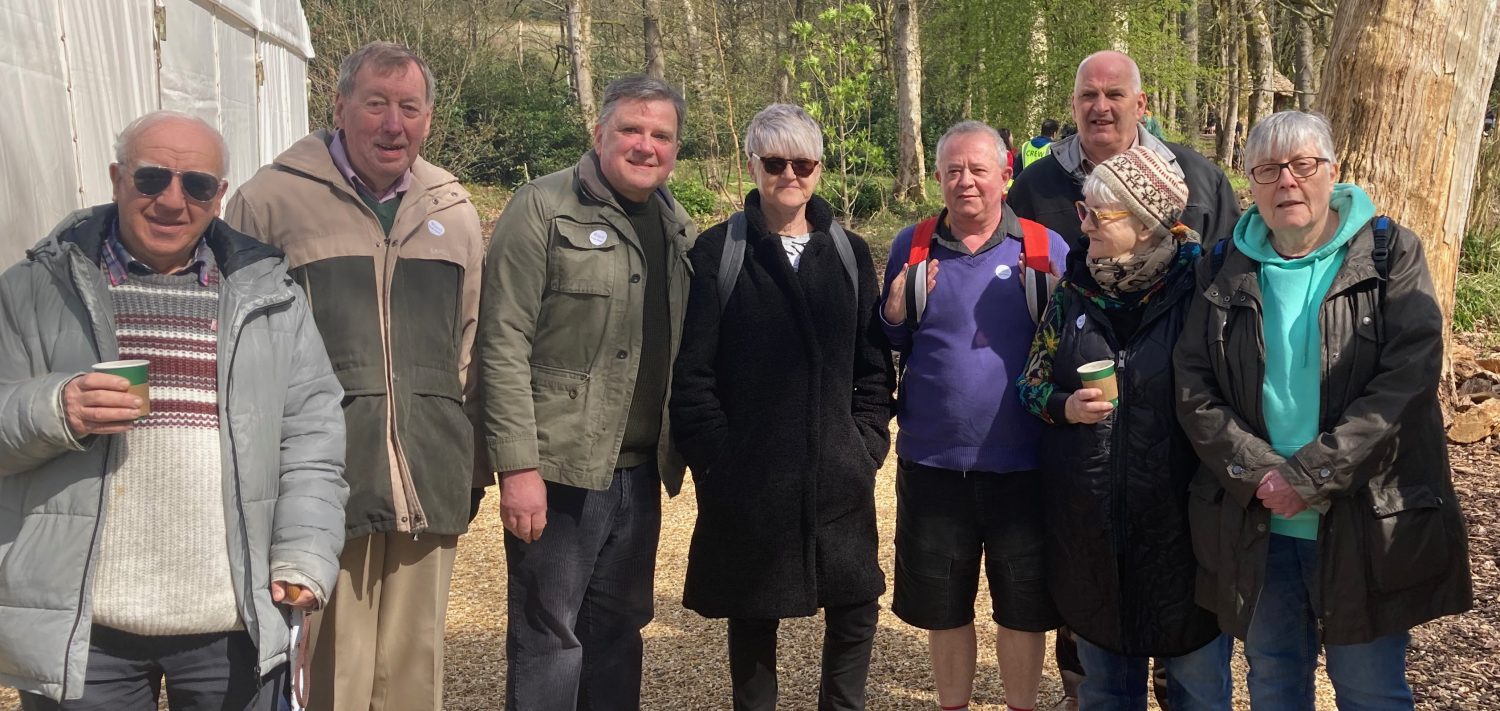
Section 28 was a legislative designation for a series of laws across Britain that prohibited the “promotion of homosexuality” by local authorities.
It was in effect from 24 May 1988 to 18 November 2003 in England and Wales. It caused many organisations such as lesbian, gay, bisexual and transgender student support groups to close, limit their activities or self-censor.
This harmful legislation – prohibiting positive discussion of LGBT+ experiences in schools – was repealed 20 years ago. Age-appropriate LGBT+ inclusive education is currently a mandatory part of the Relationships, Sex and Health Education (RSHE) and research suggests a shift in societal attitudes
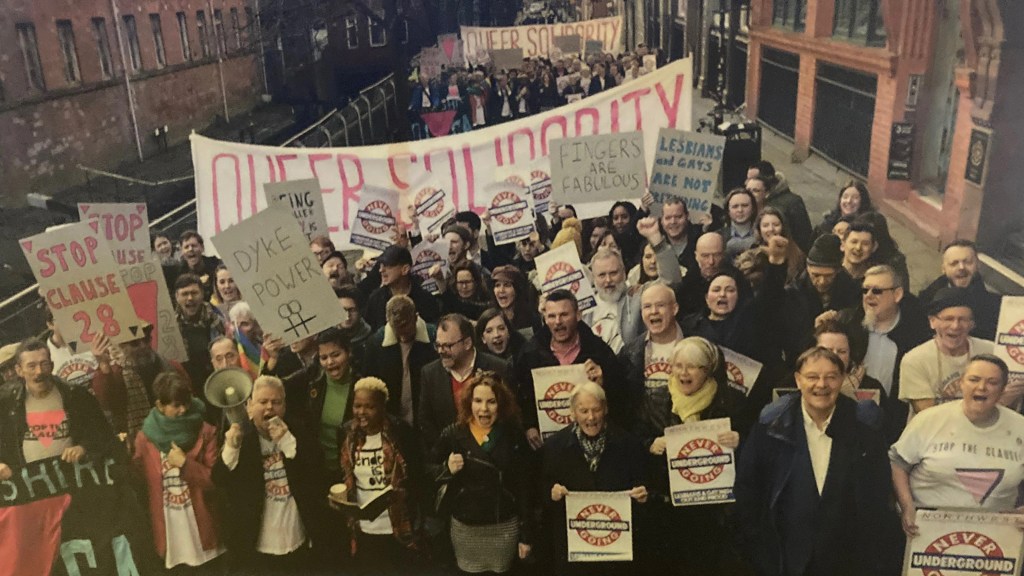

Manchester Transgender Day of Remembrance Vigil
Transgender Awareness Week, observed from 13 to 19 November, is a one week celebration leading up to the Transgender Day of Remembrance, which memorialises victims of transphobic violence.

Each year on 20 November, we honour Transgender Day of Remembrance.
Monday 20 November, 6.30pm – 8.30pm at Vimto Park, 39 Sackville Street, Manchester M1 3WE (opposite the LGBT Foundation).
This year Sparkle are collaborating with Not A Phase, TransCreative, Trans Pride Manchester, Manchester Pride and the LGBT Foundation.
The service will be held in Vimto Park and then a procession will go to Sackville Gardens for candle lighting and laying flowers to rest.
Candles will be provided if you would like to light one to remember someone or to show your respect.

Let’s commit to creating a safer world for trans people
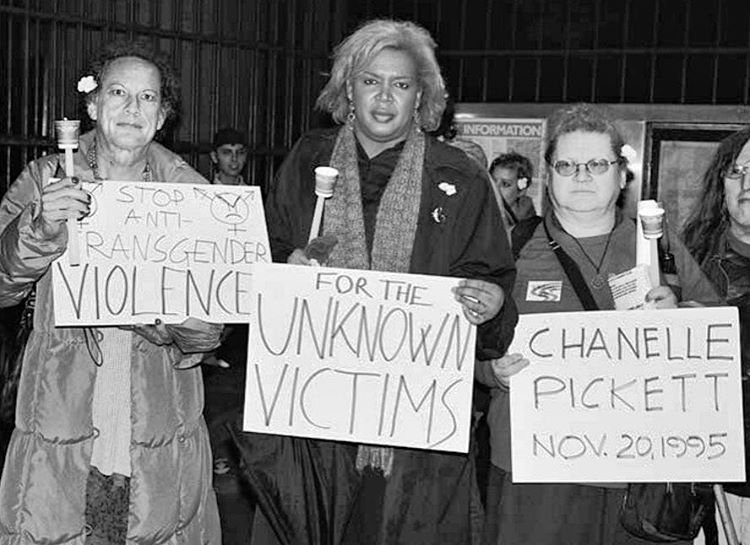
Each year on 20 November, we honour Transgender Day of Remembrance. In 1999, a small group of trans activists gathered to memorialise the lives of two black transgender women who were lost to violence.
The loss of Rita Hester and Chanelle Pickett became a catalyst for the trans community to record and memorialise the victims of violence who were misgendered, deadnamed, disregarded, and ignored as they deserved to be remembered – as their whole and true selves.
Over the past two decades, this day has become a time for our community to come together to honour those we have lost, and to commit to creating a better and safer world for trans people.
Thanks to the tireless advocacy of transgender activists, allies, and organisations, life for trans people has evolved significantly. There have been legal victories, more access to healthcare, greater visibility in media, and increased understanding of gender diversity. More people are beginning to become familiar with the transgender community, and this familiarity counteracts the dishonest tactics that extremist politicians use to score political points.
Unfortunately, backlash often follows progress. In America we have seen anti-trans legislation escalate alarmingly over the last few years. In 2023 alone, we saw more than 500 bills introduced that target LGBT+ rights, and more than 400 of these attacked the basic safety of the transgender community. Nearly 150 of these bills specifically aimed to restrict access to, or outright ban, lifesaving healthcare for trans youth.

This legislation is based on fear-mongering, misinformation, and outright lies that exploit the public’s relative unfamiliarity with transgender people and our needs. That hostile rhetoric sends the signal that it’s OK to attack transgender people simply because of who they are.
Extremist politicians target them in the media and attack their rights to healthcare, safety, and education. There are some people in our society who threaten their very right to live. But within the challenges, we find hope. We know that the trans experience goes far beyond violence, statistics, or reports.
Trans people are out here thriving every single day, even in the face of systemic social and physical violence. We celebrate with each other when we are happy and support each other when we are down. We love hard, we laugh hard, and work toward our dreams. Allies are joining the fight, recognising the importance of standing up for trans rights and creating a more inclusive society. Organised advocacy efforts, legal battles, and social movements are gaining momentum, reminding us that change is possible.
Everyone deserves to be healthy, safe, and loved for who they are – and that includes transgender people of all ages. Trans people are vital and beloved members of our communities. We are brilliant, we are beautiful, and we are full of joy. Our lives have meaning – and we matter.

Sex and Sexuality during WWII

Changing Perspectives during WWII
World War II was the first time in history that women were allowed to officially enter the military in any major capacity, outside of nursing. This change brought many white, middle-class women into the labour force for the first time and opened up opportunities to women and people of colour in jobs that would otherwise be denied to them.
The Women’s Army Corps or WAC (originally the Women’s Army Auxiliary Corps) in the US was the only one of these groups to integrate women into its corresponding military branch fully. However, in the 1940s, there were much stricter ideas of gender norms, gender expression and heteronormativity. This meant there was significant pushback against the idea of women joining the military, as this was viewed as the epitome of masculine spaces. As a result, many suggested that women did not belong in the military, despite many women joining the WAC and excelling in their new roles.
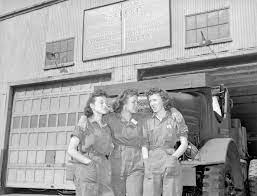
The Slander Campaign
There was a lot of concern about what women joining the military might mean. A slander campaign arose between 1943-1944 which claimed that women who joined the WAC were either promiscuous or lesbians. These rumours were sourced from several places. One is a prominent newspaper article claiming that WACs would receive free prophylactic equipment, just as the male GIs did. However, this was inherently false, one of the many double standards that women in the military were held to.
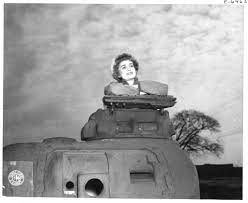
Another source of the rumours was actually from male GIs. Many men felt threatened or uncomfortable by the presence of women in the military. The official purpose of the WAC was to “free up a man to fight” by taking over the many support roles in the military. However, for many GIs, this meant that WACs would be taking their relatively safe support role, and the men would be sent to a combat role. This perceived threat from the WAC fed into the slander campaigns against women in the military.
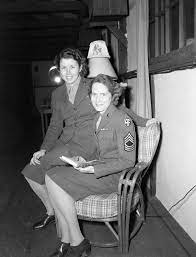
Propaganda and Femininity
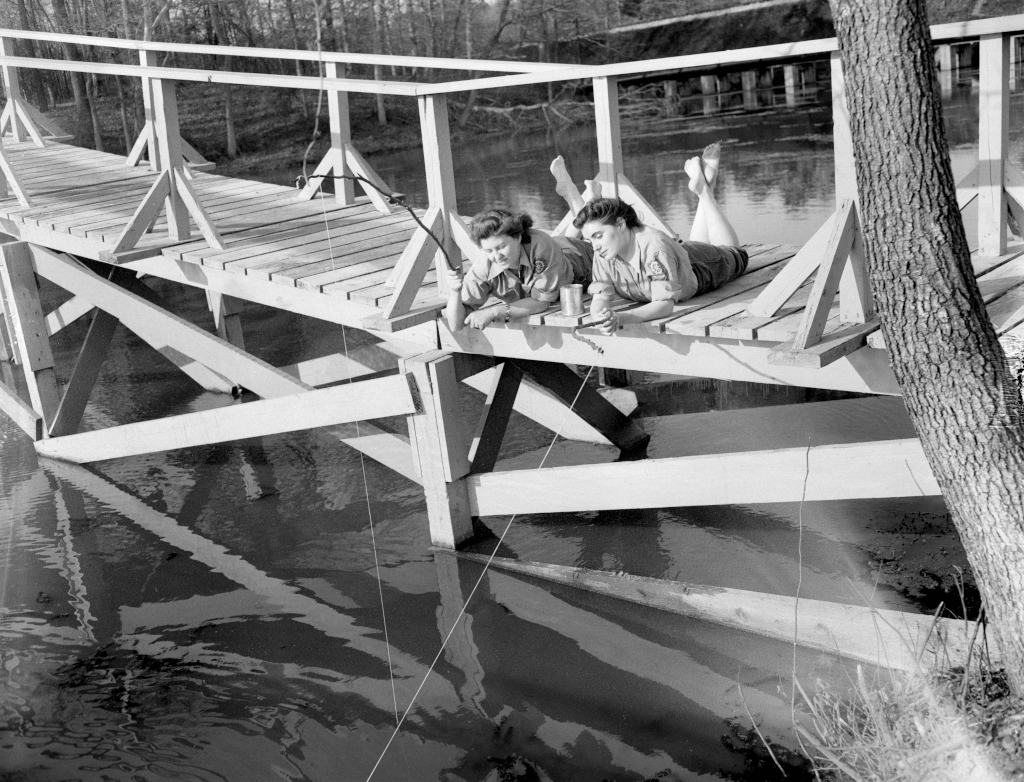
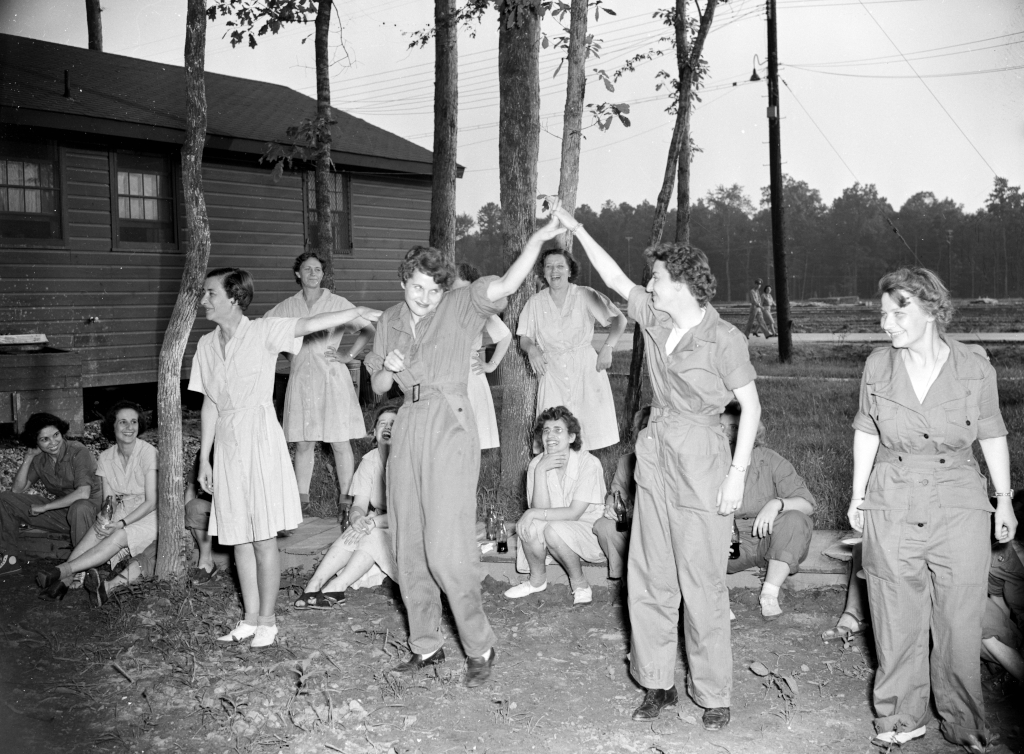
To combat the slander campaign, the Director of the WAC, Oveta Culp Hobby, created propaganda with an ideal image of the WAC, calling for women to maintain their ‘femininity’ while in the military. One of the reasons we have photographs of WACs is this anti-slander campaign. These were propaganda images used to promote the idea of WACs being feminine, wholesome women who went to museums, not ‘loose women’ who went out drinking. There were also many others outside of the military who worked to support the WACs against the slander campaign, including Representative Edith Rogers who told Congress that “nothing would please Hitler more” than to discredit WACs and American women.
In addition to this wholesome propaganda for the WAC, the military had written legislation against homosexuality among service men and women. Despite this, many lesbians (and other LGBT+ service members) created their own space within the WAC. Although homosexuality was prohibited in the military, when it came to the WACs, higher-ups were more worried about the ‘appearance’ of lesbians in the WAC than their actual presence. The military did provide regulations for the “undesirable discharge of homosexuals,” but there was concern that if many WACs were discharged in this way, it would only add fuel to the slander campaign. Thus, officers were told to only consider undesirable discharge in the most extreme cases.
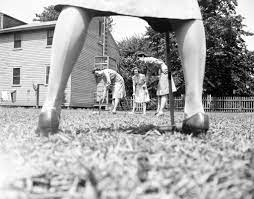
LGBT+ Women in the WAC
Because of this, many LGBT+ women were able to find their own place in the WAC, and develop their own culture within the military. Several veterans recounted having coded language to find other lesbian women and having more freedom in the WAC to express themselves in a less feminine way, if they so chose. Some veterans talked about joining the WAC to be with other women, while others discovered their sexuality after joining the WAC. Sentiment might vary between bases and units, as both straight and LGBT+ veterans from some bases said that “no one really cared” while others remembered paranoia and distrust surrounding the idea of homosexuality. Overall, because anti-homosexual legislation did exist, it was still a precarious existence for LGBT+ service members. After the war ended, and there was less need for an “all hands” mentality towards ending the war, efforts to remove lesbians and LGBT+ members of the armed forces increased.
A lesbian WWII vet was renowned for standing up to Eisenhower. Was it all a lie?
One WAC in particular, Sgt Johnnie Phelps, talked about her experience as a lesbian in the WAC during WWII on several occasions. She joined the WACs initially out of patriotism, and once in the service, realised she was attracted to women. “The thing I felt most was the fact that I was doing something for my country. When I tell you that I was patriotic then, I was patriotic. Of course, I’m also patriotic today. Gay I may be.”

Phelps initially served as a WAC medic in the south pacific and was able to find a small community of LGBT+ women there. She received a purple heart for her service and earned enough points to go home, but the war was still on, so she re-enlisted to go to Europe. However, by the time she got there, the war was over, and she served as part of the Army of Occupation. Phelps was stationed at Frankfurt, as the European Motor Sergeant, under the direct command of General Dwight D Eisenhower.
At this time, General Eisenhower received a report of a lesbian presence in the battalion in which Phelps served, and was given orders to remove them. “The General called me in and gave me a direct order. ‘It’s been reported to me that there are lesbians in the WAC battalion. I want you to find them and give me a list. We’ve got to get rid of them.’ I said ‘Sir, if the General pleases, I’ll be happy to check into this and make you a list. But you’ve got to know, when you get the list back, my name’s going to be the first.’ … His secretary at the time was standing right next to me. She just looked at him, and she said ‘Sir, if the General pleases, Sergeant Phelps will have to be second on the list, because mine will be first. You see, I’m going to type it.’ He sat back in his chair, looked at us, and then I said, ‘Sir, if the General pleases, there are some things I’d like to point out to you. You have the highest ranking WAC battalion assembled anywhere in the world. Most decorated. If you want to get rid of your file clerks, typists, section commanders, and your most key personnel, then I’ll make that list … If you want me to get rid of these women, I’ll get rid of them, but I’ll go with them.’ He just looked at me and said “Forget that order. Forget about it.”
“That was the last we ever heard of it. There were almost nine hundred women in that battalion. I could honestly say that 95 percent of them were lesbians.” It is thanks to Phelps and her strong stance against removing LGBT+ members from her WAC battalion that their base did not go through ‘lesbian witch-hunts’ as many other bases did, after the war.
As it turns out, Phelps’ piece of now-ubiquitous gay history may be a marriage of myth and fact. The story most famously attached to her, however, is now believed to be just lesbian folklore.
LGBT+ Community
Statistically we know that many of the WACs, GIs, nurses and other service members were lesbians. These women fought not only sexism, but homophobia and heteronormative ideas about gender and gender expression, all to carve out a place for themselves within the military. They proved that not only could women be part of the military, but they could at once be patriots and part of the LGBT+ community.

Rainbow Lottery Super Draw!
With the nights drawing in and Christmas just around the corner, we’ve got a fantastic prize to share with you for November’s Super Draw – a £1,000 gift card for John Lewis & Waitrose!

Whatever they want under the tree this year, you’ll be able to one-stop shop your Christmas present shopping at John Lewis – or pull out all the stops for your festive feasts with Waitrose!
Prefer a little more flexibility? The winner can even choose to take the cash!
The special prize draw will take place on Saturday 25 November. If you already have tickets, you don’t need to do anything extra, but you can always buy extra tickets.
Thank you and good luck!
Buy tickets here.
 Out in the City