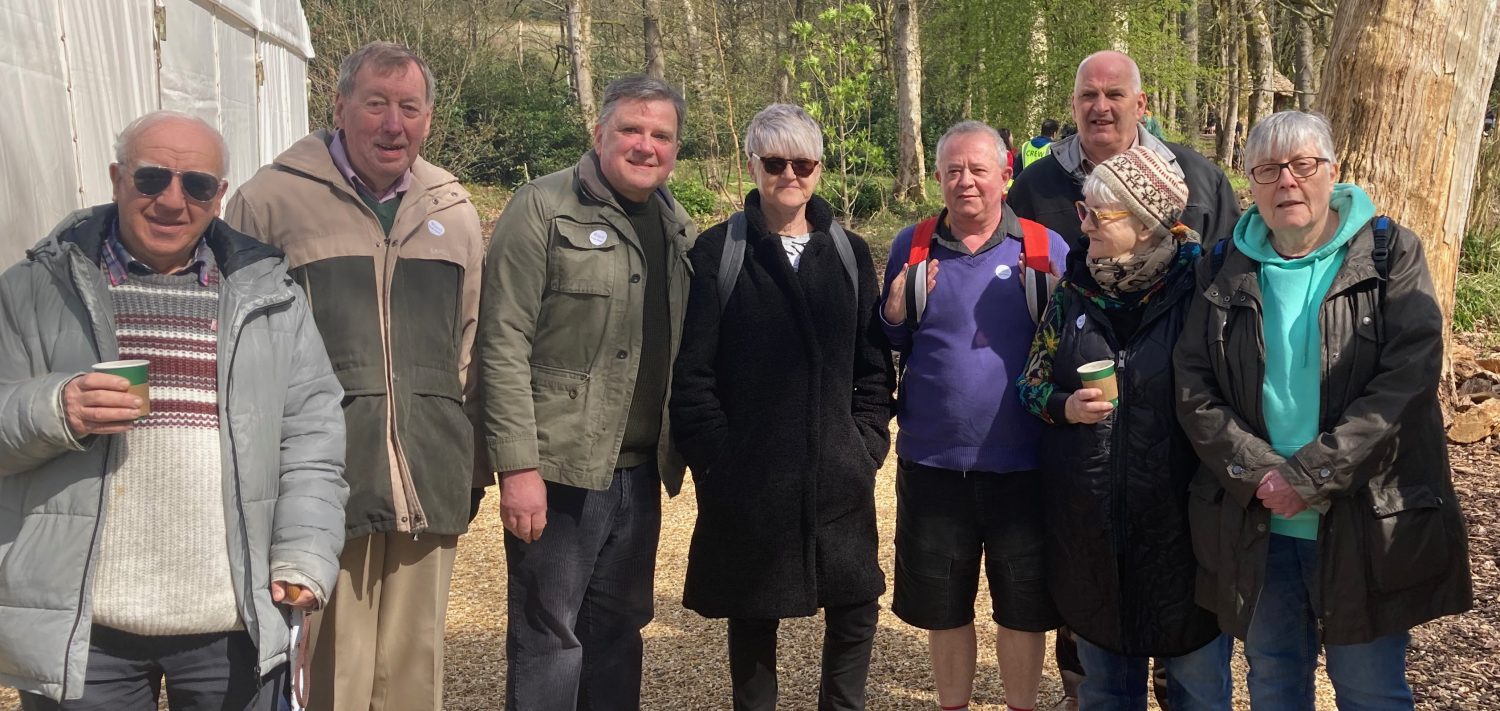
Bridgewater Hall Backstage Tour
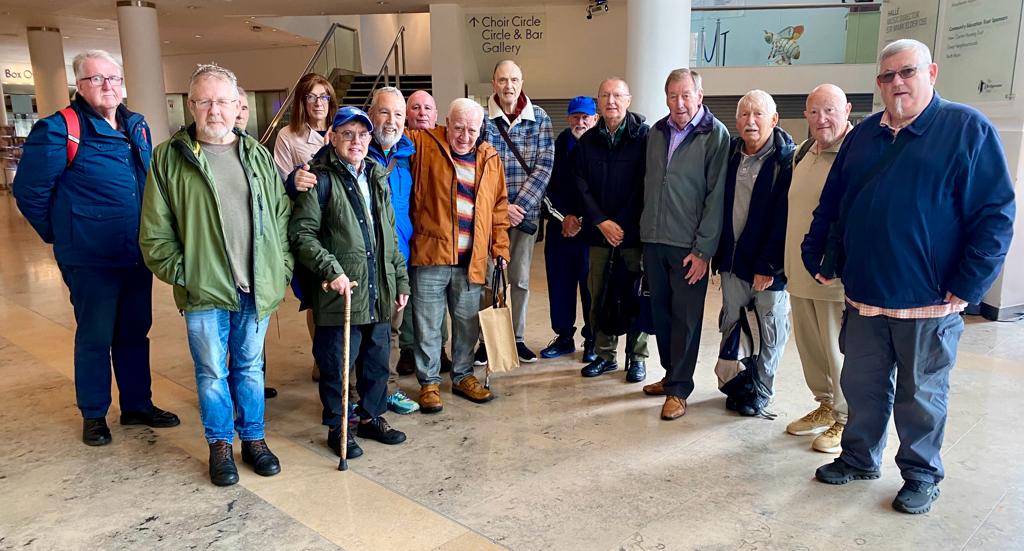
After lunching at The Waterhouse pub, we walked down to the Bridgewater Hall, a concert venue in Manchester city centre. There we met Glynn our guide, who showed us round and told us all about the history of the building.
Proposals to replace the concert venue in the Free Trade Hall were made after it was damaged in the Second World War but the hall was repaired and renovated in the 1950s. Despite being a popular venue, the Free Trade Hall, built in the 1850s, had poor acoustics and outdated audience facilities.
In the 1990s, land adjacent to the G-Mex exhibition centre (now Manchester Central Convention Complex) was identified as the site for a new hall.
It cost around £42 million to build in the 1990s, and hosts over 250 performances a year. It is home to the 165-year-old Hallé Orchestra and serves as the main concert venue for the BBC Philharmonic.
The Bridgewater Hall held its first concert on 11 September 1996 and was one of a number of structures built in the 1990s that symbolised the transition to a new and modern Manchester following de-industrialisation and the 1996 bombing.
The Bridgewater Hall can seat 2,341 people over four tiers in the auditorium: the stalls, choir circle, circle, and gallery (one more than the Free Trade Hall).
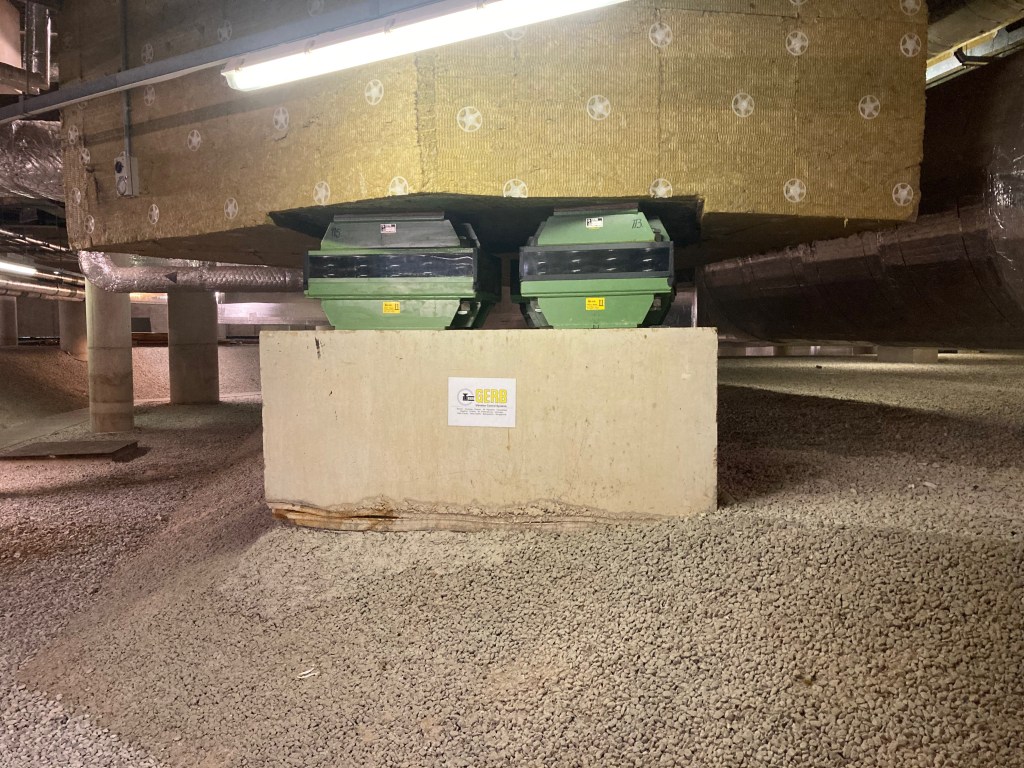
We descended the stairs to the area beneath the main auditorium. The building sits on a bed of 280 steel springs between concrete piers – earthquake-proof isolation bearings that insulate it from noise and vibration from the adjacent road and Metrolink tram line. Bridgewater Hall is the first concert hall built with this technology.
Inside the hall, the focal point is a £1.2 million pipe organ which dominates the auditorium, covering the rear wall with wood and burnished metal. At the time of construction, the organ was the largest instrument to be installed in the UK for a century.
Glynn was very knowledgeable and we had a fantastic experience.
More photos can be seen here.

A new start after 60: I spent 40 years hiding that I was gay. Then my husband’s dementia wiped away my fear
Mike Parish was 19 and on the escalator at Victoria station in London when a tiny sticker caught his eye. As he read the words “Do you think you’re gay?”, the escalator whisked him downwards. He had to go back up and then down again to copy the phone number, which was for an organisation called Icebreakers. This act proved a turning point for Parish, who had increasingly felt at odds with how he fitted into the world.
It took weeks to brave dialling the number. “I think I’m gay, but I don’t want to wear a dress and carry a handbag,” he told the man at the end of the line; it was 1974 and now, aged 68, Parish looks back and is saddened by his own lack of knowledge. The man laughed and invited him to a tea party the following Sunday. Sitting on the sofa there, he reached for his cup of tea at the same time as a young man on the other end of the couch. They smiled at each other. “I fell for Tom in that moment,” Parish says.
He and Tom were together for more than 40 years, until Tom died of dementia last year. Now, Parish has launched a community interest company to support LGBTQ+ people with dementia and their carers.
“The trouble is, for a lot of people who, like me, are approaching 70 or older, the negative experiences they had when they were younger are still there. It’s like going through some sort of crisis – you never forget it,” Parish says.
For years, he hid his sexuality at work; he spent four decades in the fire brigade, mostly as an emergency planning officer. One year, terrified that he had slipped up, he opened all the Christmas cards he had written to check that he hadn’t added Tom’s name to them.
Although they had a civil partnership in 2006, in public the pair were guarded and avoided holding hands. “Too frightened,” Parish says. “People got attacked in the street because they were gay. This happened so much in our early lives … The trouble is when someone says: ‘Look, a couple of queers’, you don’t know if the next thing is going to be a brick or a punch.”
But Tom’s dementia, and Parish’s duty of care, led them into new territory. A few years ago, they would go for coffee in Bath, Somerset. “And I would hold his hand,” Parish says. “He would fall over if I didn’t.” Sometimes passersby said unpleasant things, but Parish called them out, once challenging a builder: “Yes, we are together. He’s my husband.”
Parish says: “I spent a lifetime frightened, but as Tom got ill, my fear of doing anything publicly evaporated. I have no fear any more. It’s a good place to be.”
As an increasing number of social workers and care workers visited their home, Parish learned to advocate, challenge and question. The case of Ted Brown, whose partner experienced homophobic abuse in a care home, weighed on him. Online research suggested the problem was widespread. So, at 59, Parish retired to care for Tom at home. But sometimes people would see him feeding Tom and remark: “It’s wonderful how you look after your father.”
“I became a carer’s voice,” Parish says. “I wanted to say: ‘Look, when you go out as a social services officer and there are two men, or two women, don’t assume.” He began to give talks to local organisations. When he contacted Deep, the UK network of dementia voices, and asked if there were any LGBTQ+ dementia groups, he was told: “Not really. Why don’t you start one?”
Last year, with a few like-minded people he has met along the way, Parish co-founded the LGBTQ+ Dementia Advisory Group, to “improve the lives of LGBTQ+ people who are affected by dementia”.
Parish knows that he may need help himself one day. But he is mostly spurred on by the memory of Tom. “I gained some kind of confidence from somewhere, some kind of drive,” he muses. “And the inspiration for that came from Tom.” He understands the meaning, he says, of the words: “I’ll do anything for the person I love.
“When you’ve got that level of freedom from the things that would normally hold you back, nothing can get in your way.”
Withington Pride
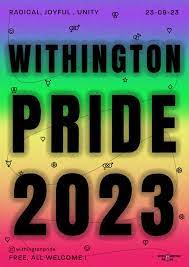
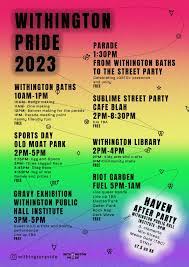
Withington Pride – 23 September 2023 – Radical – Joyful – Unity
A day and night of events across Withington celebrating the local LGBTQ+ community’s vibrancy, creativity, & value, and building community networks of care, allyship and solidarity through music, art and dance! There’ll be something for everyone from free kids crafts to a march and street party, keep your eyes peeled for more info!
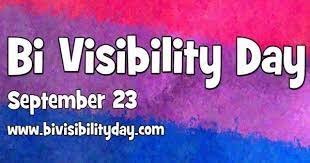
2023 will be the 25th year that we have celebrated bisexual life on 23 September.
 Out in the City