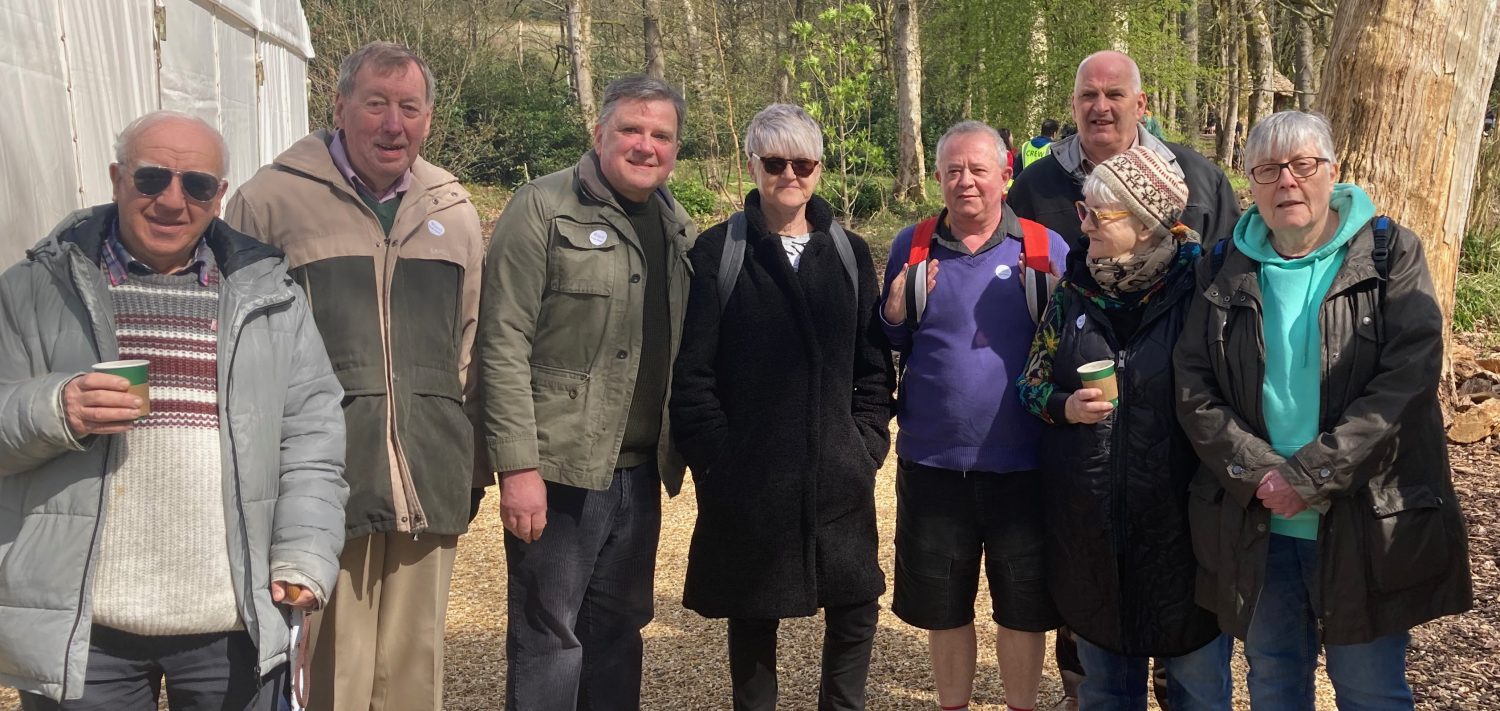
Manchester Pride
The Manchester Pride Festival is an incredible four-day celebration of LGBT+ life that takes place across the city every year over the August Bank Holiday weekend (25 – 28 August 2023).
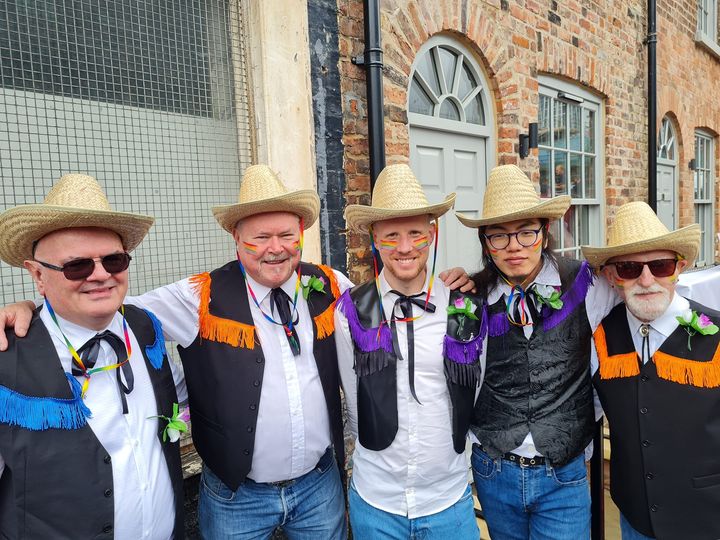
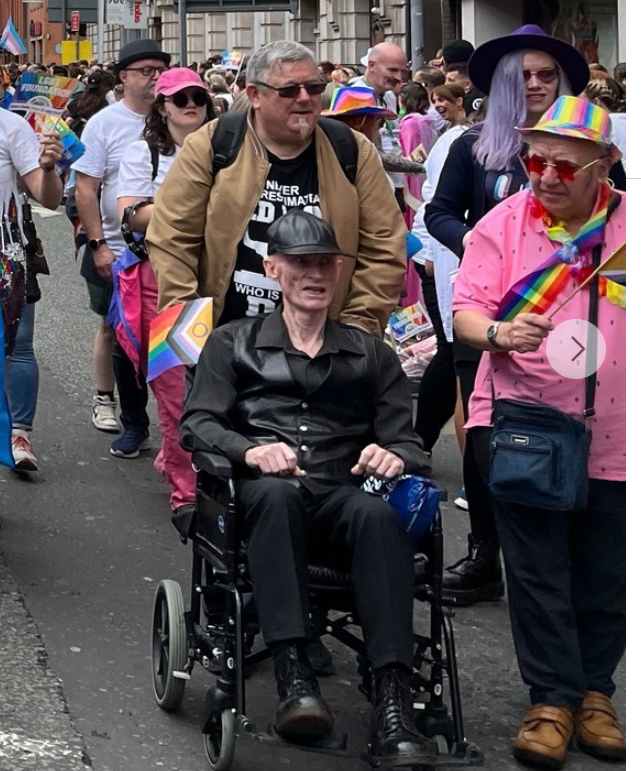
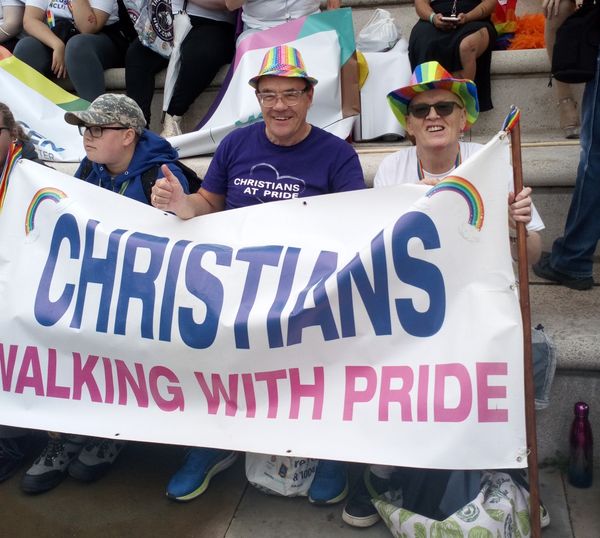
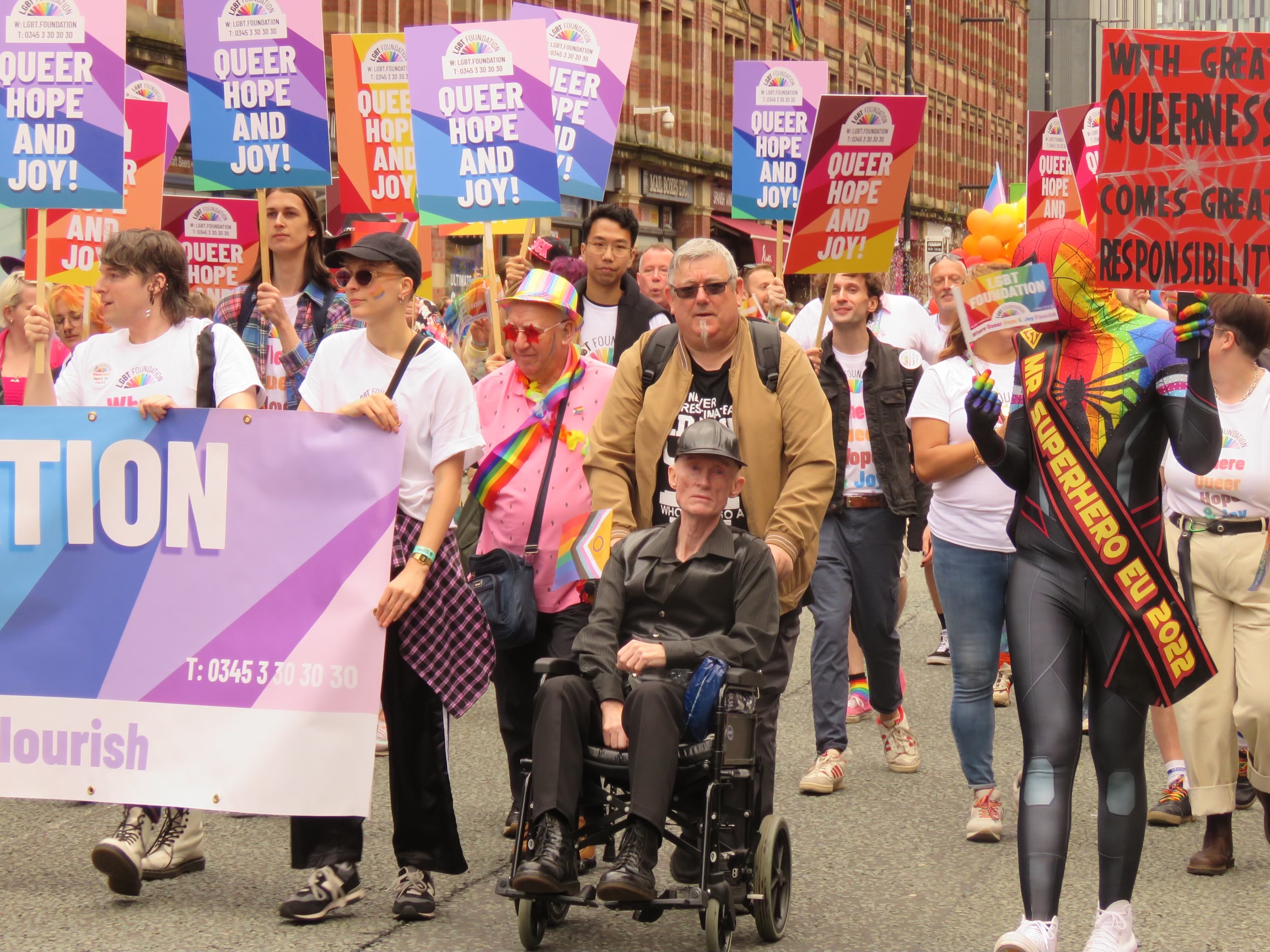
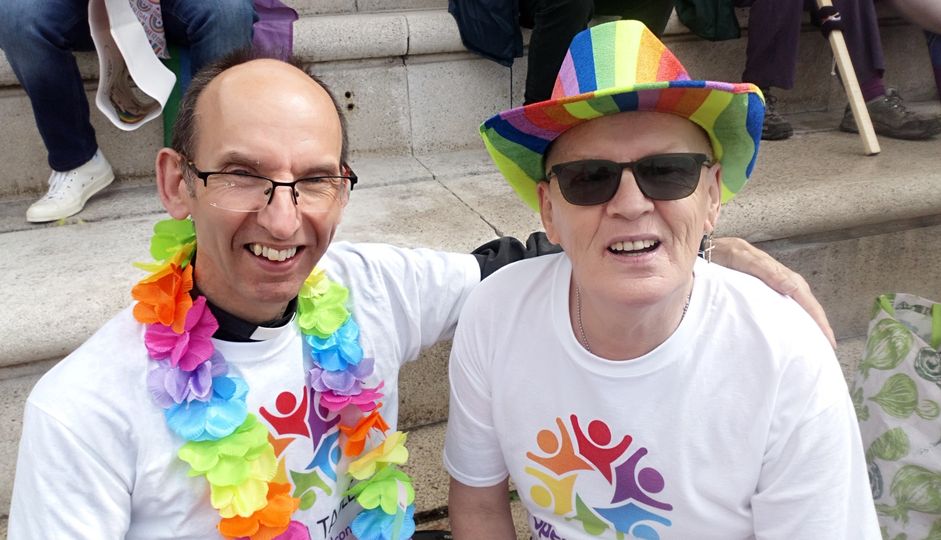
There are a number of aspects to the Festival, but the centrepiece is the parade. There was a brilliant atmosphere walking in the parade, but the downside is that you don’t get to see all the other floats and groups!
We walked with the LGBT Foundation sandwiched between the “real housewives of Cheshire” and the Ambulance Service. It was wonderful to see the streets lined with tens of thousands of people all supporting LGBT people.

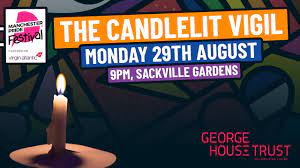
Candlelit Vigil – Monday, 28 August 9.00pm
The Candlelit Vigil (hosted in partnership with George House Trust) is a significant event that marks the culmination of the Manchester Pride Festival.
Taking place in Sackville Gardens, this moment of reflection brings together LGBT+ communities and allies to remember those we have lost to HIV and to stand united in the fight against the global epidemic and the persistent stigma that surrounds it.

There are more Pride events to look forward to:
Saturday, 2 September – Didsbury Pride, 6 Barlow Moor Road, Manchester M20 6TR
12 noon – 9.00pm
Rainbow Walk thru the Village from midday … assemble outside The Didsbury Pub from 11.30am.
Saturday, 16 September – Chorlton Pride, The Edge Theatre & Arts Centre, Manchester Road, Chorlton, Manchester M21 9JG 11.00am – 4.00pm
FREE – but booking needed on Eventbrite.
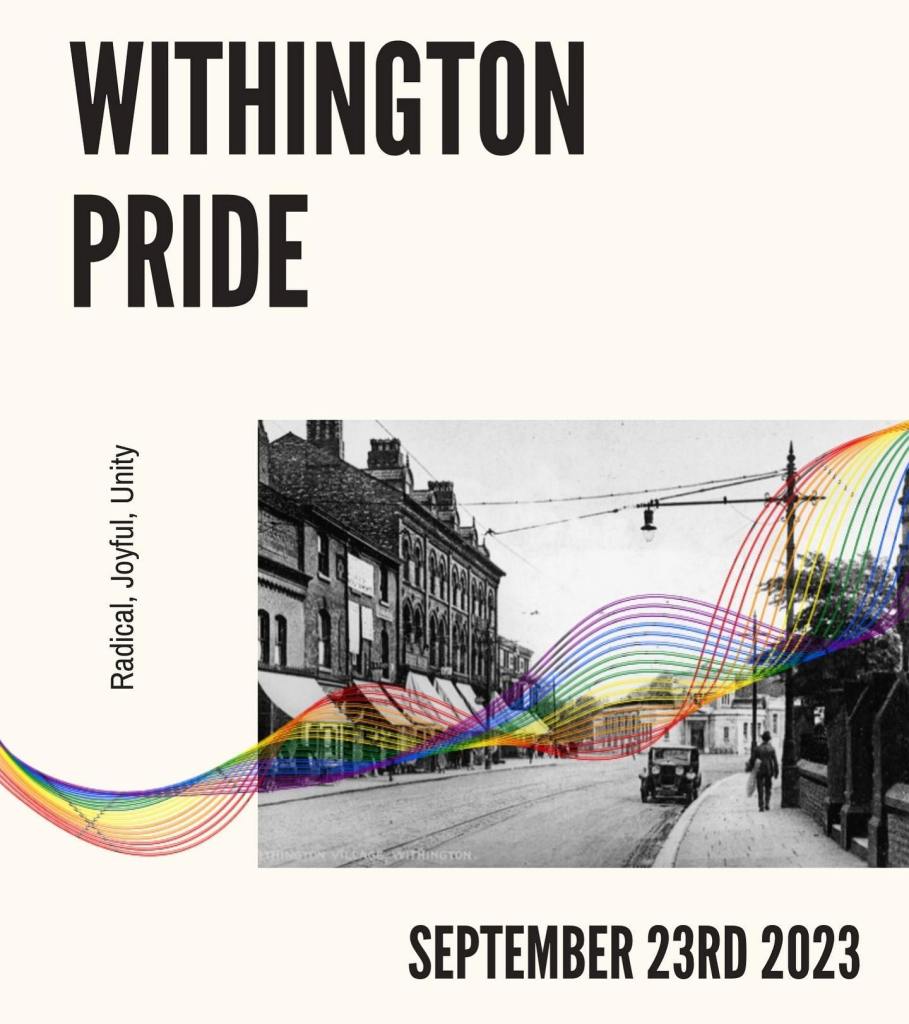
Saturday, 23 September 2023 – Withington Pride – Radical – Joyful – Unity
A day and night of events across Withington celebrating the local LGBTQ+ community’s vibrancy, creativity, & value, and building community networks of care, allyship and solidarity through music, art and dance!
There’ll be something for everyone from free kids crafts to a march and street party, keep your eyes peeled for more info!
Instagram: @withingtonpride
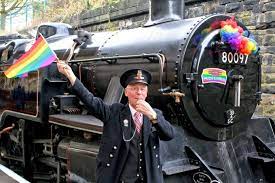
Sunday, 24 September – Bury Pride Rainbow Train
We hope you’re excited to be joining us on the 4th Annual Bury Pride Rainbow Train on Sunday 24 September at 5.00pm!
Celebrate Pride, join us, and experience a trip on East Lancashire Railway’s Heritage Steam Engine whilst enjoying dazzling Pride performances at Bolton Street Station, Rawtenstall and then back at Bolton Street and the Trackside Pub Bury.
Hop on board the extraordinary Rainbow Express at the East Lancashire Railway in Bury! This incredible steam train hosts a dazzling event celebrating the LGBTQI+ community. Experience a day filled with vibrant performances, exciting shows, and inclusive events. Join us for a journey that embraces love, acceptance, and equality.
Be part of the magical Rainbow Express! Get tickets here.
All aboooaaard!

This gay “hipster grandpa” is a world-famous fashion icon with one simple message
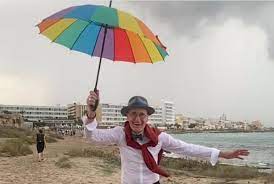
At nearly 80 years old, Günther Krappenhofft makes an unlikely influencer. He never expected to be famous. Up until eight years ago, he didn’t even have a smartphone. But he now boasts 176 thousand followers on Instagram, posting long positive messages about authenticity alongside extraordinarily dapper fit checks. He tells his followers to “just be yourself” and his German Wikipedia page describes him simply: “style icon.”
Günther plays an avuncular role as a queer elder on the streets of Berlin, where he stands out like a colourful bird of paradise. He wants to show younger people that you can still love life, live joyfully and be cool when you grow old.
He doesn’t believe in only dressing for special occasions. “With age, my perspective on life has changed. Elegant clothes that I used to only wear on special occasions, the fine, expensive china or the outrageously expensive perfume for a very special evening, all of these things are now used daily,” he tells his Instagram followers.
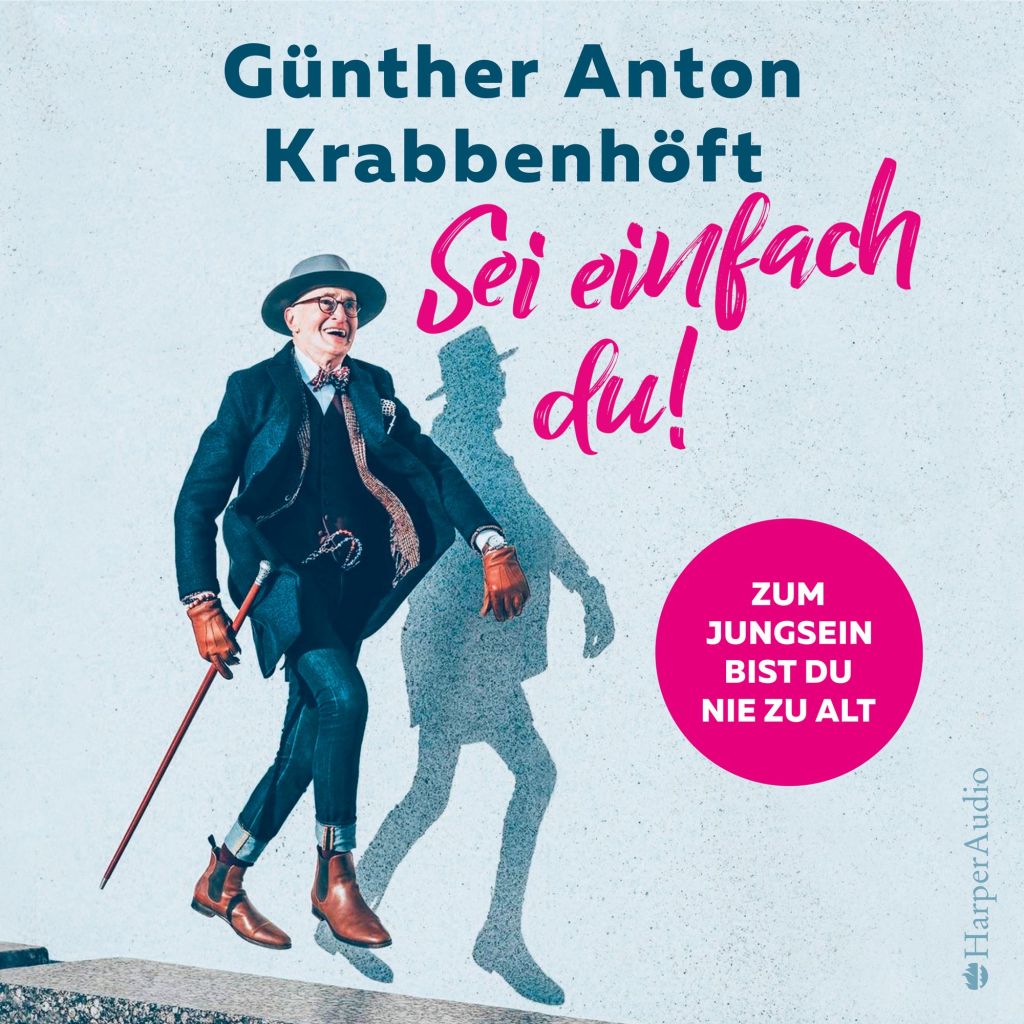
His book, Just be Yourself (Sei einfach du!) is about the value of individuality. “You need to have the courage to be true to yourself, whether that’s about how you dress or who you love. I always say: be yourself, everyone else already exists. You are the original,” he laughs.
For Günther, clothes have always been a part of that expression, but it was a chance encounter that made him the style icon he is today.
It all began when he was waiting for a metro at Kottbusser Tor, one of the seedier parts of Berlin’s vibrant Kreuzberg district. A passing photographer took a photo, and it ended up on the news wires across the world, appearing in taxi cabs and on billboards from New York to Tokyo. He became known as “Berlin’s oldest hipster,” or the hipster grandad.
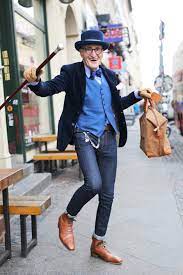
His natural style immediately caught the eye of Japanese fashion house United Arrows, who arranged his first appearance on the catwalk. “I wasn’t always interested in fashion, but my personality, my emotions, my mood were always wrapped up in my clothing.”
Günther’s life has been shaped by these happy accidents. A kid from the north German countryside, he never expected the life he lives now, and it took him a while to get there. He initially wanted to go to New York as a cook on the legendary Hamburg America Line, but they told him to wait in West Berlin until they were next hiring. This stopover in a city that was then still divided by the Berlin wall blew his mind. He never left. “The parties were all day and all night, twenty-four hours, especially in the queer scene.”
This was a scene Günther wasn’t much involved in back then. Despite the wild partying, he settled down, temporarily. The gay hipster grandpa got married at 29 – to a woman – and they had a child together. He was in denial about his sexuality and wanted a normal family life and to be a dad. “But then I met someone who threw my life off its path,” he says. Though he doesn’t regret it he says “it was a very painful process. It wasn’t always like it is today.” Being gay was illegal in Germany back then, with the Nazi-era law staying on the books until 1994.
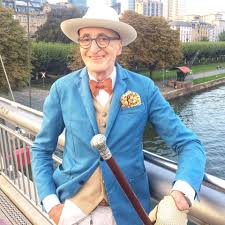
But Günther wasn’t alone – he stayed connected to his family and even ended up starting a support group called Schwule Väter (gay dads) for men in his seemingly unique situation. It turned out it wasn’t so unique at all. “We helped other people accept their sexuality and live as gay and to live with the family while still taking care of their families.” After the divorce, he even ended up as a single dad for a while, raising his daughter alone, though he adds he still has a great relationship with his ex-wife.
After being in a heterosexual marriage and then a gay single dad, his third life started when he was strolling through Berlin to meet friends and two young girls stopped and asked him, “Do you want to come with us to Berghain?” He made an on-the-spot decision to cancel on his friends and join them at the world famous nightclub, and this too changed his life.
Günther describes that day as almost like a religious experience. “I stayed there for 8 hours and danced as if there was no morning, and I was never as free and happy as in those 8 hours, connected in the darkness with this mass of people. It was like a revelation.”
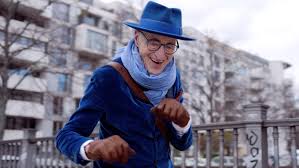
Since then, he’s regularly spotted at many of Berlin’s most exclusive nightclubs, dancing energetically way past the bedtime of most of his contemporaries. “The club is my mass,” he says.
From line cook and husband to gay dad, model, clubber and author. Does Günther have any other new hobbies or changes in his life planned? He refuses to answer. “I live a new life every day, and don’t think about the future – that’s smart at my age.”

UK’s LGBT+ community ‘more likely’ to face real hardship in retirement

The research found that 36% of LGBT+ people were not a member of any pension scheme, compared with 30% of the wider population. Photograph: Rosemary Roberts/Alamy
Close to half of individuals who identify as LGBT+ are heading for a retirement where they are at risk of struggling to afford such basics as food and heating, according to new UK data.
Looking across various measures including amounts saved and pension scheme membership, researchers concluded that members of the LGBT+ community were “far more likely than the general population” to struggle in retirement.
The insurer and pension provider Scottish Widows’s latest retirement report found that 44% of people who identify as LGBT+ are not on track for even a minimum retirement lifestyle, as defined by one of the main pension bodies, which means they are “at risk of not covering their needs” when they are older. That contrasts with the national average of 35% of people who risk falling below the threshold.
The research also found that 36% of LGBT+ people were not a member of any pension scheme, compared with 30% of the wider population.
Meanwhile, 18% had cut contributions into pension plans and similar schemes because of rising living costs – compared with 12% of the wider population.
The insurer said that, “unsurprisingly”, 68% of people from the community were worried about running out of money in retirement, which was higher than the national average of 57%.
Its report stated that the median projected retirement income among people who identify as LGBT+ was £13,000.
The Pensions and Lifetime Savings Association has developed the “retirement living standards” to show what life in retirement looks like at three different levels – minimum, moderate and comfortable – with a single person needing about £12,800 a year to meet the “minimum” threshold. The thresholds for moderate and comfortable are £23,300 and £37,300 a year respectively.
The minimum scenario leaves a pensioner with only £54 a week for food (including food away from the home), no car, and up to £580 a year for clothing and footwear. These figures assume the individual has paid off any mortgage.
Emma Watkins, a managing director at Scottish Widows, said employers and the pensions industry needed to do more to reach members of the LGBT+ community and help them achieve a decent retirement lifestyle.
The fact that almost one in five people from the community had felt the need to reduce their pension contributions “is a huge area of concern”, she said.
The insurer also said that LGBT+ people earn less on average and suffer a higher rate of mental health conditions, making them more likely to need time out of work and therefore reducing opportunities for putting money into pensions.
Stephanie Fuller, the chief executive officer at Switchboard, an LGBT+ helpline, said: “These findings are concerning but sadly do not come as a shock.
“The financial issues faced by the community are indeed significant and multifaceted. LGBT+ people are more likely to be estranged from family networks, for instance, and feel it necessary to change jobs more frequently due to issues arising from their sexuality or gender identity.
“There is also the reality that many trans people will have to fund the gender-affirming procedures they need personally and at significant cost. All this means that tomorrow’s money is often spent today, with few obvious avenues for people to remedy this.”
 Out in the City