Seven LGBT+ Uprisings Before Stonewall
The Stonewall Riots of 1969 are arguably the most famous and impactful uprisings for lesbian, gay, bisexual and transgender rights. But they are not the first LGBT+ uprising by far. Various smaller uprisings preceded Stonewall – some by over a decade – to push back against harassment, often from police and inequality.
(Courtesy the ONE Archives at the USC Libraries)
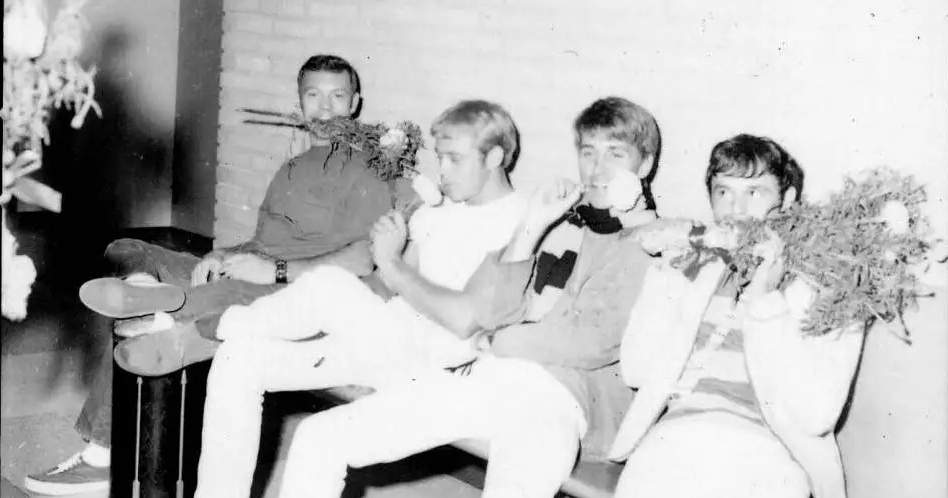
1958: Los Angeles – Cooper Do-Nuts Riot
After nearby bars closed, a 24-hour Main Street donut café became the site of a large riot one morning in May 1958. “Two cops, ostensibly checking ID, a routine harassment, arbitrarily picked up two hustlers, two queens and a young man just cruising and led them out,” novelist and one of the hustlers John Rechy said in his book City of Night.
The situation quickly devolved as angry bystanders began throwing debris and items from Cooper Do-Nuts at the cops, who eventually retreated into their car. Disobedience turned into a riot, and soon enough police backup arrived. The officers blocked part of Main Street for the night and arrested several of the rioters.
There has been some confusion about the actual location of the 1958 brawl, but Rechy clarified in a 2021 interview in the LAnd, “There was no riot at Cooper’s. It was actually another donut shop, but at that time, people called every donut shop in the city ‘Cooper’s’ because there were so many. This particular one (on Main Street) is gone now.”
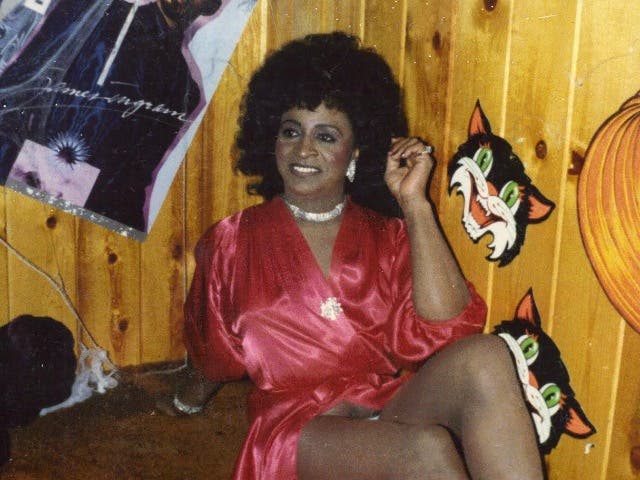
1961: Milwaukee – Black Nite Brawl
Courtesy of the Wisconsin LGBTQ History Project
On 5 August 1961, four party-going sailors entered Black Nite, a popular St Paul Avenue gay bar in Milwaukee, on a dare. They started a fight with the bouncer, only to be chased out of the bar by gender-nonconforming Black “Queen” Josie Carter, who knocked one of the men unconscious with a bottle.
The men later returned with reinforcements and began to tear the bar apart, but were met with stiff resistance by bar patrons. The sailors were arrested but the charges were later dropped due to “lack of evidence.” The bar suffered significant damage from the brawl and was eventually demolished for the extension of St Paul Avenue.
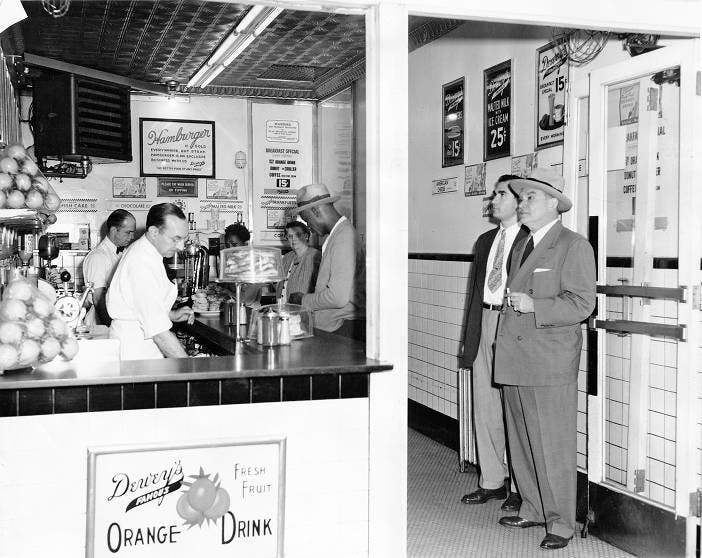
1965: Philadelphia – Dewey’s Restaurant Sit-In
Courtesy of the Special Collections Research Centre, Temple University Libraries, Philadelphia, PA
On 25 April 1965, the 17th Street location of Dewey’s restaurant in Philadelphia denied service to approximately 150 people who appeared to be gay or gender non-conforming. Three teenagers refused to leave and were later arrested, along with Clark Polak, leader of the homophile organisation Janus Society, after he offered to help the group obtain a lawyer.
Janus Society members protested outside of the restaurant for the next five days; on 2 May, three more people staged a second sit-in at Dewey’s. This time, the protesters weren’t arrested and instead left the restaurant voluntarily a few hours later. Dewey’s agreed to stop denying service to LGBT+ people.
1966: New York City – Julius Tavern “Sip In”
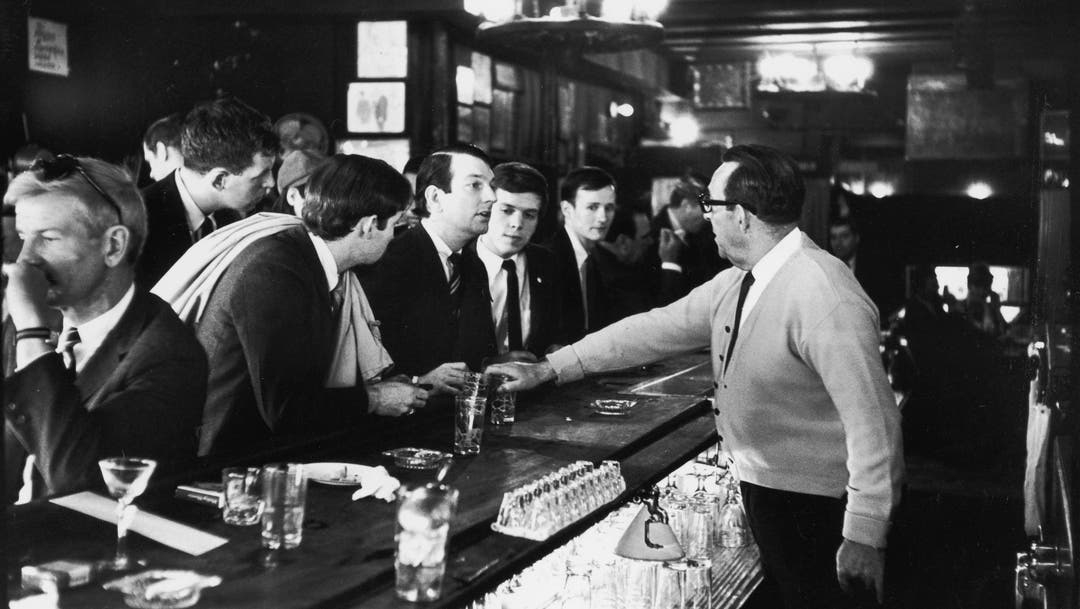
After pouring their drinks, a bartender in Julius’s Bar refuses to serve John Timmins, Dick Leitsch, Craig Rodwell and Randy Wicker, members of the Mattachine Society who were protesting New York liquor laws that prevented serving gay customers, 1966.
In Spring 1966, members of the early gay rights organisation Mattachine Society staged a “sip-in” – a twist on “sit-in” protest – in which they visited taverns, declared themselves gay, and waited to be turned away so they could sue. At the time, LGBT+ individuals couldn’t be served alcohol in public because liquor laws considered their gathering to be “disorderly.”
The group was finally denied service at the Greenwich Village tavern Julius, which had been raided by police a few days earlier for serving gay people. This led to the quick reversal of the state’s anti-gay liquor laws.
1966: San Francisco – Compton’s Cafeteria Riot
Nestled in the San Francisco Tenderloin neighbourhood, Compton’s Cafeteria was a 24-hour restaurant and refuge for sex-working trans women, who often faced intense violence from clients and police. One day in 1966, an officer placed his hand on a trans woman at Compton’s – she responded by throwing her cup of coffee in his face.
Chaos ensued with Compton’s patrons throwing cups, saucers and other diner items at the police, who retreated until reinforcements arrived. A riot erupted as dozens of trans people, drag queens and gay men fought the police. They broke windows, destroyed a police car and set a newsstand on fire. Drag queens hit police with heavy purses. In the end, however, police arrested the women.
1966–1967: Los Angeles – Black Cat Tavern Protests, Los Angeles
Opened in November 1966, Black Cat Tavern was a haven for Silver Lake’s LGBT+ community, who were subjected to harassment from police enforcing anti-homosexuality laws. On New Year’s Eve 1967, undercover cops tore apart couples celebrating at midnight and began beating them. The brutality eventually spread to a neighbouring bar where police attacked the bar’s owner and two bartenders. By the end of the night, 14 people were arrested and two of the men were later forced to register as sex offenders for kissing.
On 11 February 1967, over 200 demonstrators formed a picket line outside of The Black Cat Tavern to peacefully protest against police abuse. Though many police were dispatched to the protest, it remained charged, but peaceful.
1968: Los Angeles – The Patch Bar ‘Flower Power’ Protest
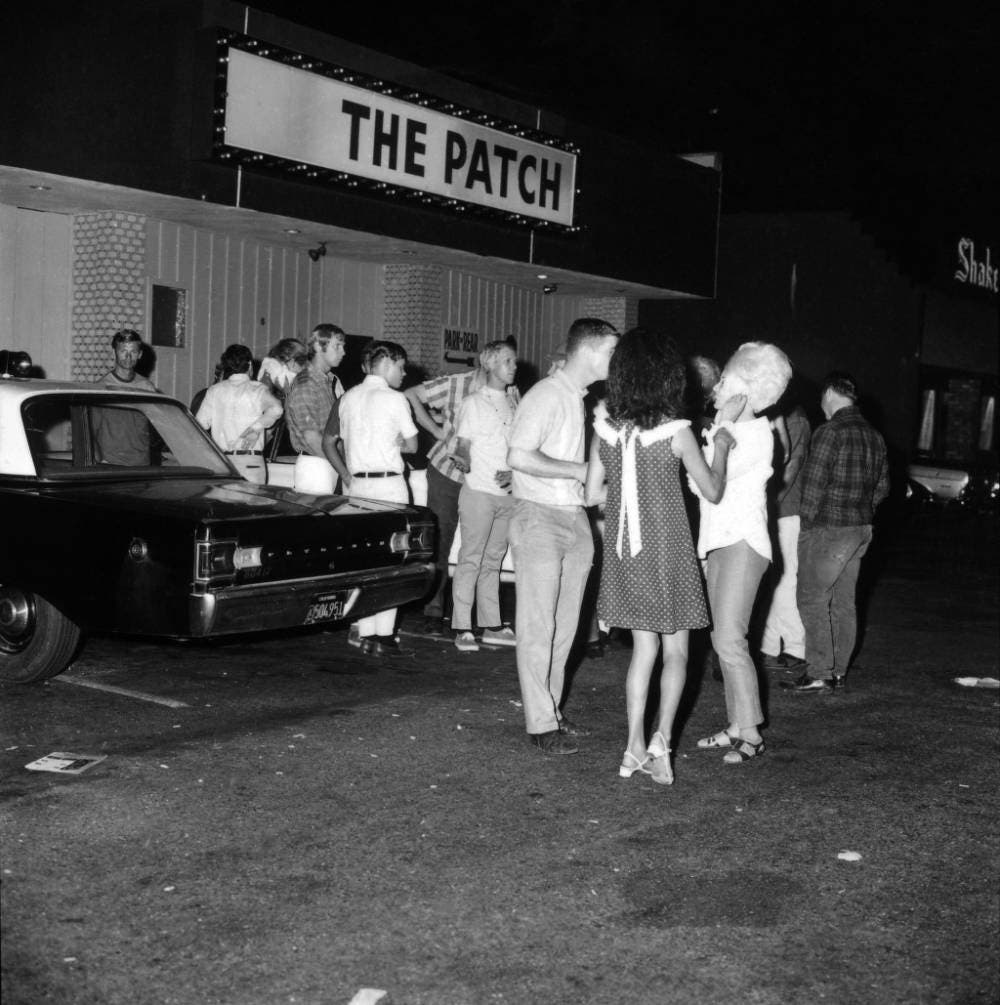
The Patch was an LGBT+ bar in Wilmington owned and managed by Lee Glaze. Glaze, known as “The Blonde Darling,” was a larger than life character with a campy personality, recognisable chuckle, and short blond hair.
Glaze had a secret signal – he would play “God Save the Queen” on the jukebox – to announce that police officers were entering the bar, allowing patrons time to comply with the discriminatory laws. On 17 August 1968, undercover cops left the bar and returned with several uniformed officers for backup, though it’s unclear what prompted this action. They fanned out and began to screen the crowd, looking for IDs that didn’t “match” the holder’s outward appearance.
In the end, police arrested two bar patrons (Tony Valdez and Bill Hasting) for lewd conduct, enraging Glaze who knew the men were innocent. He led a crowd to buy massive quantities of flowers from a nearby shop owned by one of the bar’s customers. The crowd then went to the police station and camped in the waiting room, remaining until bail was posted for the arrested men.
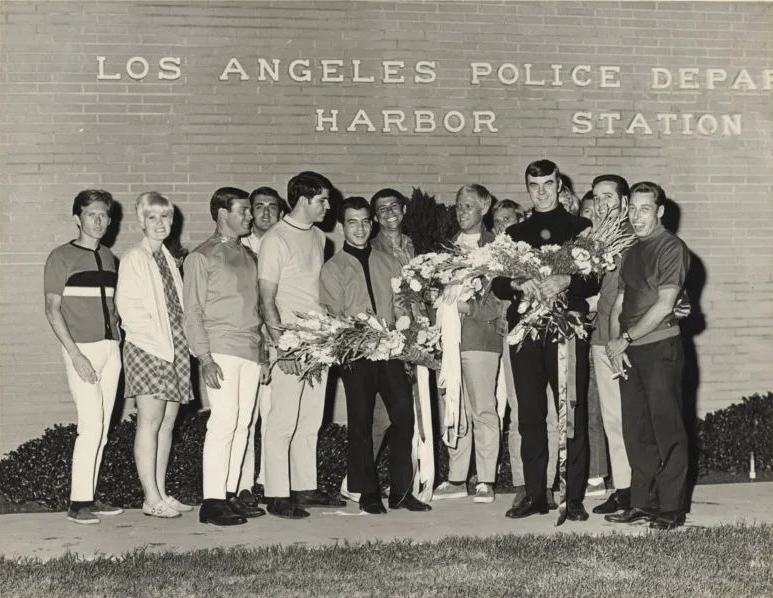
While the demonstrators waited, they staged a “flower power protest,” noting that the police were perplexed and speechless.
They didn’t know what to do with all the gay men waiting in the lobby.
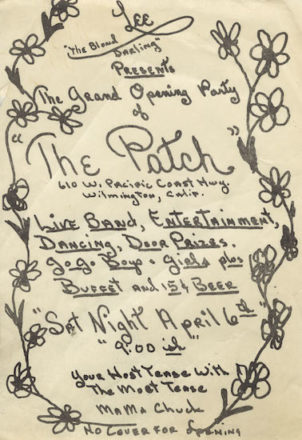
Lee Glaze opened his bar The Patch in Wilmington in 1967 with this flyer announcing the grand opening. Photo: Q Voice News.

Books with Older LGBT+ characters
Interested in reading books starring older LGBT+ characters? Here’s a quick list to get you started:
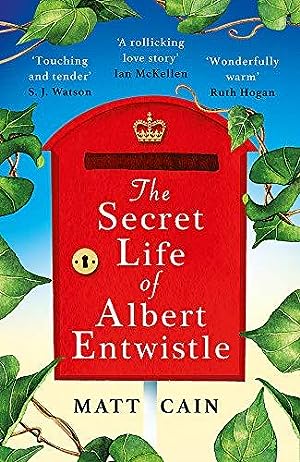
The Secret Life of Albert Entwistle by Matt Cain
Albert Entwistle was a postman. It was one of the few things everyone knew about him. And it was one of the few things he was comfortable with people knowing.
64-year-old Albert Entwistle has been a postie in a quiet town in Northern England for all his life, living alone since the death of his mam 18 years ago. He keeps himself to himself. He always has. But he’s just learned he’ll be forced to retire at his next birthday. With no friends and nothing to look forward to, the lonely future he faces terrifies him. He realises it’s finally time to be honest about who he is. He must learn to ask for what he wants. And he must find the courage to look for the man that, many years ago, he lost – but has never forgotten.
Join Albert as he sets out to find the long-lost love of his life, and has an unforgettable and completely life-affirming adventure on the way. This is a love story the likes of which you have never read before!
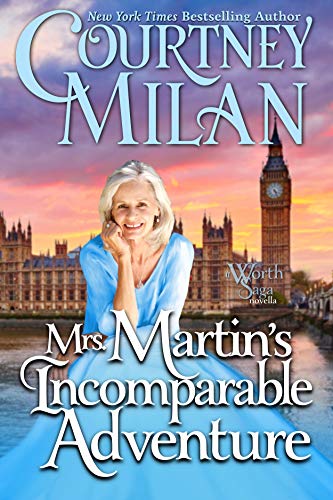
Mrs Martin’s Incomparable Adventure by Courtney Milan
Mrs Bertrice Martin – a widow, some seventy-three years young – has kept her youthful-ish appearance with the most powerful of home remedies: daily doses of spite, regular baths in man-tears and refusing to give so much as a single damn about her Terrible Nephew.
Then proper, correct Miss Violetta Beauchamps, a sprightly young thing of nine and sixty, crashes into her life. The Terrible Nephew is living in her rooming house, and Violetta wants him gone.
Mrs Martin isn’t about to start giving damns, not even for someone as intriguing as Miss Violetta. But she hatches another plan – to make her nephew sorry, to make Miss Violetta smile, and to have the finest adventure of all time.
If she makes Terrible Men angry and wins the hand of a lovely lady in the process? Those are just added bonuses.

The New Town Librarian by Kathy Anderson
Queer middle-aged librarian Nan Nethercott, a wisecracking hypochondriac with a lacklustre career and a nonexistent love life, needs to make a drastic life change before it’s too late. When she lands a job as librarian in a seemingly idyllic small town in southern New Jersey, Nan quickly discovers unforeseen challenges.
Nan’s landlady, Immaculata, launches daily intrusions from below. The library, housed in the former town jail, is overrun by marauding middle-schoolers. A mysterious reader leaves distressing messages in book stacks all over the library. Thomasina, the irresistible butch deli owner, is clearly a delicious affair and not the relationship Nan craves.
There’s no turning back though. Nan must come up with her own wildly unorthodox solutions to what the town and its people throw at her and fight for what she wants until she makes a shiny new life – one with her first true home, surprising friends, a meaningful career, and a promising new love.
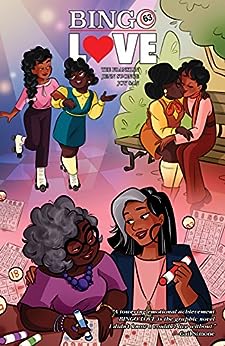
Bingo Love by Tee Franklin
When Hazel Johnson and Mari McCray met at church bingo in 1963, it was love at first sight. Forced apart by their families and society, Hazel and Mari both married young men and had families. Decades later, now in their mid-’60s, Hazel and Mari reunite again at a church bingo hall. Realising their love for each other is still alive, what these grandmothers do next takes absolute strength and courage. Bingo Love is a touching story of love, family and resiliency that spans over 60 years.

A Tale of Two Florists by Brenna Bailey
Minnie Thomas wouldn’t change a thing. The septuagenarian sees her closest friend every day, she owns the most successful (and only) flower shop in Juniper Creek, and she loves her star employee, Kat, like family. But when Kat inexplicably quits and Minnie’s friend goes out of town, Minnie’s stable world tilts off-kilter – especially when Kat’s newly arrived free-spirited grandmother opens a flower shop just down the street.
Eleanor Lennox is determined to embrace life again and get to know Kat better. She promised her late wife she would open a flower shop, but she never counted on resistance from Kat’s infuriating former employer. When the mayor asks the two of them to work together on the upcoming Sunflower Festival, Eleanor tries to smooth things over for Kat’s sake – but the feisty florist only works harder to run her out of town. Well, two can play that game.
After connecting during a road trip to pick up flower barrels for the festival, Minnie and Eleanor form a budding relationship – which shrivels when Minnie’s friend announces she’s moving. Will Minnie cling to the past so tightly that she misses out on the beauty the present has to offer her – love with Eleanor?

Pop in to Manchester Central Library on Thursday, 24 August (11.00am – 2.00pm) to see items from the archives produced by the Pride in Ageing programme at the LGBT Foundation.
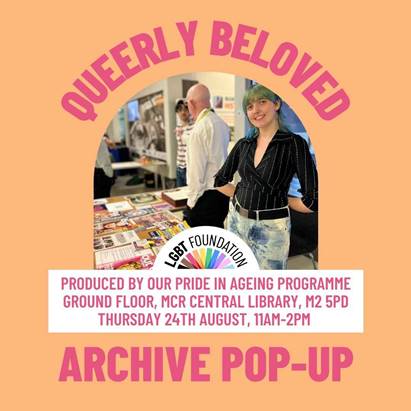
 Out in the City