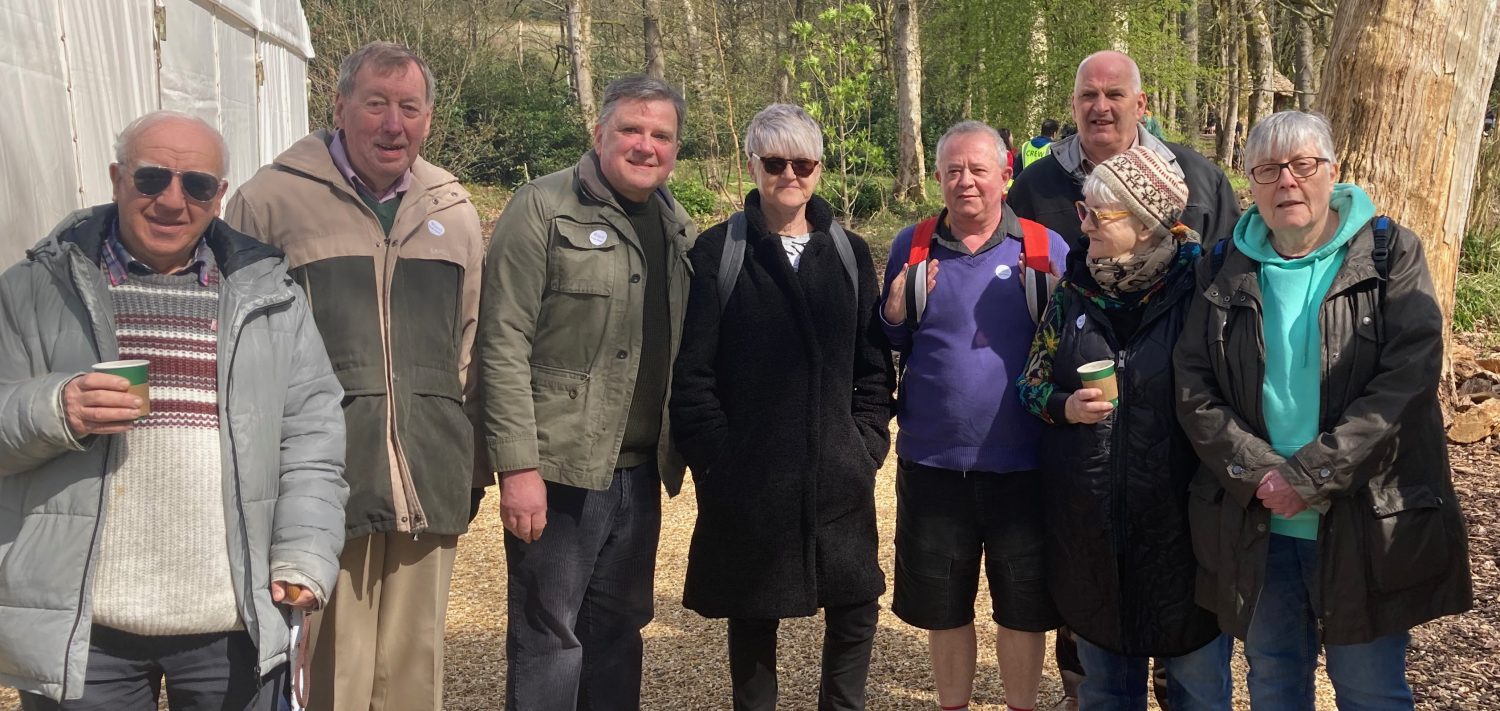
A new start after 60: I’m gay but had done nothing for LGBTQ+ people. So I used my pension to launch a lottery
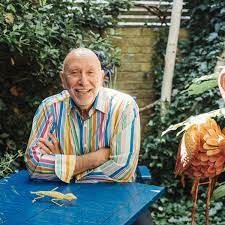
During lockdown, Tom Gattos liked to play the national lottery. “There was nothing else to do,” he says. Checking the winning numbers one Sunday, it occurred to him that he and his partner, David, “really should be playing a lottery that supports the LGBTQ+ community”. They looked around online but couldn’t find one. “We thought: ‘We’ve got this little pension pot saved. Why don’t we invent the Rainbow Lottery?’” In June 2021, Gattos, who was 70, announced the first set of winning numbers.
Two years on, the Rainbow Lottery has amassed more than 1,700 players, signed up 150 good causes to support, and raised more than £100,000 a year for everything from the Terrence Higgins Trust to local Pride groups. But Gattos hopes for more. “We have only just scratched the surface,” he says. “There are supposed to be 4 million LGBTQ+ people in the country.”
The Rainbow Lottery is a not-for-profit organisation, and neither of its founders takes a salary. Gattos is an advertising copywriter and gets up at 4.30 each morning to do consultancy work before spending the rest of the day on the lottery. “Consequently, we are penniless,” he says. In two years, the only new item of clothing he has bought is a rainbow-coloured shirt. So why did he and David put themselves in a place of financial stress at this point in their lives?
“Maybe it’s a primal thing to do something important before you die,” he says. “We don’t have any children. We lived our lives in a bubble. I’m an advertising copywriter; my partner’s an architect. I guess the pandemic brought us that much closer to death. It was like: ‘Oh my God, is this it? Quick, quick! What can we do?’ It was in my mind: what are we good at? We are good at being gay!”
Gattos, who grew up in Detroit, met David in London 43 years ago. “There was a pub on Kings Road that was only gay on Saturday lunchtimes: the Markham Arms. My friend and I used to cruise in there every Saturday, to see who we could see. He claimed he saw David first. All three of us went out to dinner that night and David chose me. We have been together ever since.”
“This is payback time for us,” he continues. “We are gay, but we’ve never done anything for the community.” The lottery has given him a new sense of belonging. “We are card-holding LGBTQ+ members now.”
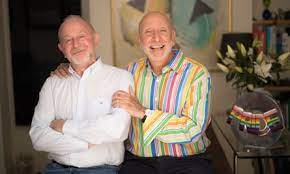
This year, Gattos’s lottery was shortlisted at the Rainbow Honours for the new brand / organisation of the year award. Gattos has pictures of himself with Rylan Clark, Sinitta and Nicola Sturgeon. He had wondered as he got older: “What’s going to keep us active and busy and interested? If you had said to me a few years ago that I’d be meeting celebrities and dining with transgender people, I would have said, ‘What are you thinking?’” Now, he says, a richer “new life” has opened up.
Gattos says he has mostly avoided homophobia, despite living with David in Dubai for 13 years, though he has never felt comfortable “walking down the street holding hands”. But shortly before he had the idea for the lottery, he was walking in south-west London where he lives when the driver of a white van rolled down his window and yelled: “Fucking poof!”
“I thought: ‘Oh my God, London, in the 21st century, really?’ There are still people out there who need to know we are human beings as well.”
Two of Gattos’s brothers died last year, his sister shortly before. He is the last remaining sibling. “Life is about growing and expanding,” he says. “This money was supposed to last us the rest of our lives. We could have gone on spending it until we die. But we wanted to invest it in something solid, that we can do for the world. We don’t regret a single penny.”
If you want to buy a Rainbow Lottery ticket (or two!) and help Out In The City at the same time, please follow this link.

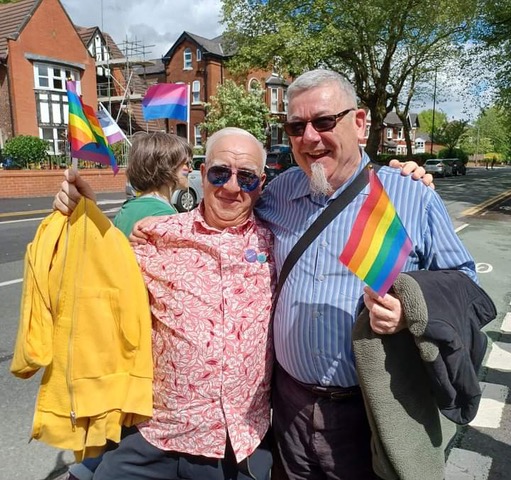
Norman Goodman ‘didn’t know how’ to come out after his late wife passed away, but felt ‘tremendously happy’ once he did and he wants to encourage others to do the same.
He was interviewed by Danielle Kate Wroe, Lifestyle Writer at The Daily Mirror on 29 June 2023:
During Pride Month, one of the main messages from the LGBT+ community is that it’s okay for people to be themselves – no matter their sexuality.
And nobody is prouder of the person they have become today than 73-year-old Norman Goodman.
After “straight acting” for the majority of his life, when his late wife passed away, Norman decided it was time to embrace his bisexuality – but he didn’t know where to start.
Now he’s encouraging other LGBT+ people to embrace themselves, no matter what their age, sharing that ‘Out In The City’ – a group that helps people over the age of 50 to socialise – has been a “lifeline” for him and even introduced him to his partner of 18 months.

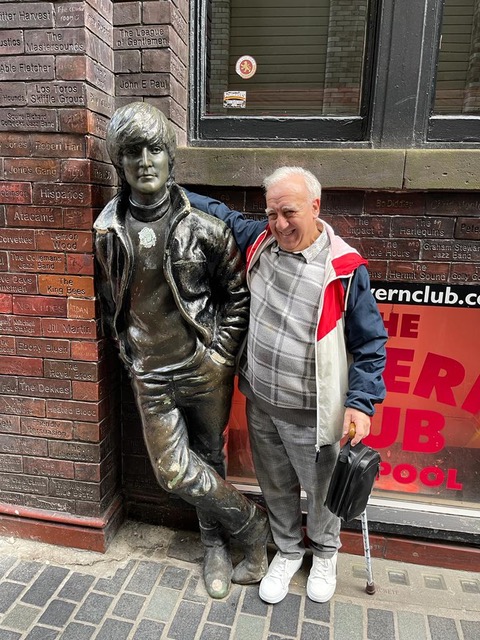
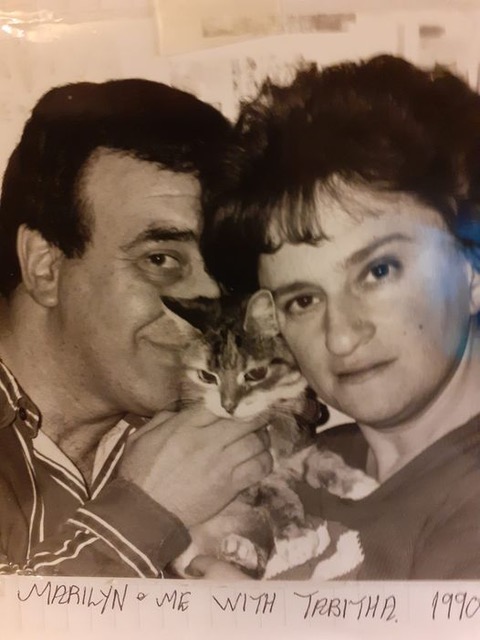
Norman, a Reform Jewish man who lives in North Manchester, came out as bisexual in 2019 after his “lovely wife” Marilyn passed away in 2017.
As a child, he always knew he was “different”, which prevented him from forming relationships with other people.
Between the ages of 11 and 17 he was convinced he was a girl and wanted gender-affirming surgery.
“I was admitted to a psychiatric unit and I was given electroconvulsive therapy when I was about 17”, he shared.
Electroconvulsive therapy is a procedure where small electric currents are passed through the brain, intentionally triggering a brief seizure.
“I had a course of shock treatment, and then I had aversion therapy as they were trying to make me a man.”

Aversion therapy is psychotherapy designed to cause a patient to reduce or avoid an undesirable behaviour pattern by conditioning the person to associate the behaviour with an undesirable stimulus.
“I tried and tried because I wanted to be straight, and when I met my wife I fell in love so I thought ‘I must be straight’. But a few years later I realised that I was still attracted to men too.
“So I kept it all to myself and when I was 44, the tension had built up inside me and I was sick of straight acting so I told my wife.
“She said: ‘Look Norman, I already know. Let’s keep it just between us.’ Then I went to counselling, we stayed together, and two years after she died I decided to come out.
“It hasn’t been easy because I’ve spent my life straight acting, but I feel like I’ve found my true identity. For me now, the world is a nice place.”
He described himself as “absolutely dying to come out”, but he “didn’t know how”, until the LGBT Foundation came to do a talk at the Royal Exchange Theatre in Manchester, where he volunteered.

“At the end of the talk, they were looking for volunteers over 60 to make some cassette tapes so that in years to come, young people listen to the tapes, and they will know what homosexuality was like in the 50s and 60s and how things have progressed”, he said. “And that was how I came out!”
Norman continued: “Then I got told about a group for people over 50 that were LGBT+ called ‘Out In The City’, so I decided to go, and it has given me a new lease of life.
“We have an outing every week and I’ve made a lot of lovely friends and we all have a laugh and a chat. And the coordinator and I have been in a relationship for the last 18 months.”

Norman said that he just wants to help people for as many years as he’s got left
After living almost his whole life without officially acknowledging his true sexuality, he’s described himself as “tremendously happy”, saying being out and proud is “better than winning the lottery.”
Norman wasn’t looking for love when he joined the group three and a half years ago, initially rejecting 68-year-old Tony Openshaw’s advances, but now he describes the pair as “really happy”. The group has also brought him a sense of fulfilment.
“I’ve been to places I never knew existed with the group”, Norman shared. “We go to museums, art galleries, we go on day trips, so it really is a lifeline as many older LGBT+ people are isolated. The oldest member of the group is 94, and there are many in their 50s too, so it’s a good mix.
“Sometimes we even have speakers in to give talks about health, we had somebody in from Mind, the mental health charity, mobility, benefits, so it’s very interesting. There’s always something going on.
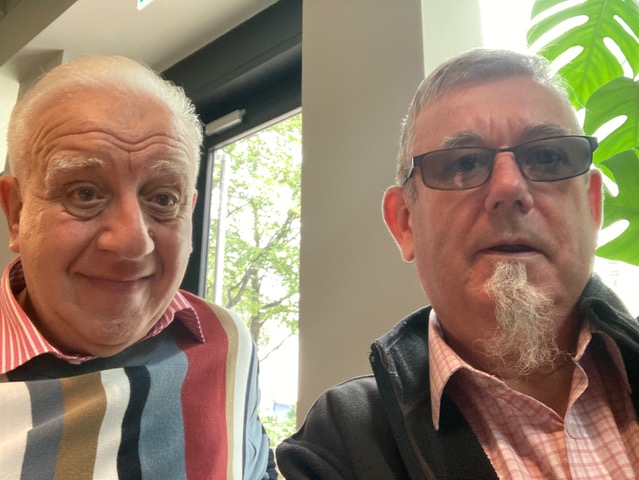
The road hasn’t been easy for Norman, but he’s glad about how far he’s come.
“It’s just a group of LGBT+ people 50 and over and we can talk to each other and confide in each other. My social life has improved tremendously since joining.
“Tony, my partner, has been an activist since he was 19 because when he was that age, his parents kicked him out for being gay, and they were Catholic. So he’s done very well for himself to be running the group.
“I’ve spent my life feeling inferior for being LGBT+ and I’ve spent time trying to protect myself, so it’s nice that we’re all comfortable together. Now, the whole world can know that Norman Goodman is bisexual. And I want to help other people to come out – I want to give encouragement to others. Times have changed now.”
But not everybody has reacted positively to his coming out journey – four of his late wife’s cousins have all fallen out with him over his relationship with Tony.
“It’s because I’m in a same-sex relationship”, Norman shared. “I was a bit upset at first, but I think of it now as their problem, rather than mine.
“My late wife and I loved each other very much, and she would be absolutely disgusted with them.
“But I just want to strive forward for as many years as I’ve got now, I just want to help other people.”
Rwanda plan ruled unlawful
On 29 June the Court of Appeal ruled that Rwanda is not a safe country for people seeking asylum to have their claims processed. This means that for now, nobody seeking asylum in the UK will be removed to Rwanda.
The majority of the judges concluded that there is a real risk that people sent there will not be given a fair hearing and could be returned to their home countries where they are fleeing from, putting their lives in danger all over again.
The Government will make plans for its next steps, with the possibility of taking the case to the Supreme Court.
Meanwhile MPs raise specific concerns about LGBT+ refugees being sent to Rwanda
MPs are “deeply concerned” that relocating LGBT+ refugees seeking asylum to Rwanda could put them at greater risk of harm, according to a new report from the Women and Equalities Committee.
It has called for an “urgent review” of the safeguards in place for vulnerable people in all types of asylum accommodation, including that which currently exists, as well as the Home Office’s proposed use of barges.
“Housing vulnerable asylum seekers, including single women, mothers, children and LGBT people, in crowded hotel and other types of contingency accommodation is unacceptable,” part of the report’s summary said. “While use of hotels and other contingency settings persists, there must be effective policies and practices in place to better protect vulnerable adults and children from harm.”
The Committee, which is chaired by Conservative MP Caroline Nokes, also highlighted “clear risks that the asylum provisions in the Nationality and Borders Act 2022 will have unequal impacts” on certain groups of people, including members of the LGBT+ community with “complex sexual orientation and gender-based claims”.
“People with vulnerabilities arising from Equality Act protected characteristics, including women with histories of gender-based violence and abuse, children, lesbian, gay, bi-sexual and transgender (LGBT) people, and disabled people, experience unnecessary risks under the Home Office’s management of the asylum process,” the summary continued. “Recent and proposed changes to the system are likely to increase those risks. The Home Office must demonstrate it is taking effective steps to mitigate unequal effects.”
If the Illegal Migration Bill becomes law, more people could be detained for longer periods of time – something which has been proven to come with greater risks for LGBT+ people who may experience hate crimes or abuse while in detention.
The report urges the government to set out plans of how it intends to mitigate risks of harm to vulnerable groups in detention, as well as to collect and monitor data on where LGBT+ people are being held and for how long – something which is not currently tracked.
It also calls on it to “set out how it intends to monitor and ensure those removed to Rwanda do not suffer harm or experience discrimination in that country”.
“The inhumane policies towards people seeking asylum in the UK have to stop immediately”
Rwandan law forbids the changing of someone’s legal gender and, although homosexuality is not technically illegal, LGBT+ people often face arrest under laws that exist to uphold “good morals” there.
As such, LGBT+ activists and organisations have been critical of the government ever since it announced its intention to send refugees there.
Leila Zadeh, Executive Director at Rainbow Migration, a charity that helps LGBT+ refugees through the asylum and immigration process, said: “This report, for which Rainbow Migration gave oral and written evidence, is sending a very clear message to this government. The inhumane policies towards people seeking asylum in the UK have to stop immediately.
“This government’s legislation will put LGBTQI+ people seeking protection in dangerous situations, by detaining them in greater numbers and sending them to countries where they could face discrimination and violence.
“Instead, this government needs to focus on creating a compassionate and caring asylum system that treats people with kindness”.
The report can be read in full here.
The Sparkle Weekend: 7 – 9 July 2023
The Sparkle Weekend is the world’s largest free-to-attend celebration of gender diversity, and a safe space for anyone who identifies as gender non-conforming, their families, friends, and allies. In 2019, we welcomed more than 22,000 visitors over the weekend.
The Sparkle Weekend is a festival-style family event, featuring live music and entertainment, talks and workshops, and an opportunity for our corporate sponsors, grassroots charities, and trans-run businesses to engage with our visitors.
We also work with local and national charities who support young trans and gender questioning people and their families so that all age groups feel included.
One of the charity’s core values is that the event remains free-to-attend in order to be accessible to everyone, regardless of gender identity, race, religion or physical ability.
See Sparkle for more information.
 Out in the City
A really interesting newsletter Tony. Many thanks for posting, and thanks to Norman for his openness about his life, and his determination to help others- a lovely man.
LikeLike
Neville and Roy hope to join you at the Castlefield Viaduct on Wednesday 5 July.
LikeLike