Working Class Movement Library
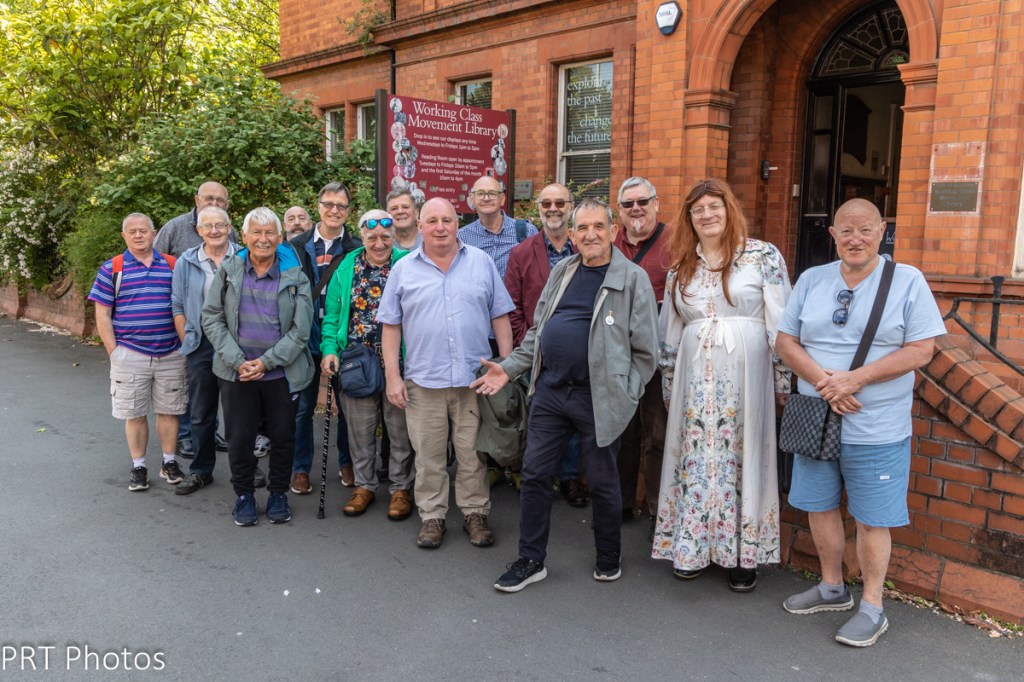
The Working Class Movement Library is a collection of 30,000 books as well as journals, newspapers, periodicals, pamphlets, leaflets, archives and artefacts relating to the development of the political and cultural institutions of the working class.
Eddie & Ruth Frow
Throughout his life, Eddie Frow embodied his own chunk of working class history. He was influential in struggles and strikes for workers’ rights, showing defiance on the streets and in his many workplaces.
He was dedicated to fighting for the rights of working people. In 1931 when the government cut Unemployment Benefit and introduced the Means Test, Eddie played an active role when there was a march by 10,000 demonstrators through the streets of Salford to protest. Eddie suffered a broken nose and was arrested in what became known as the “Battle of Bexley Square”. After defending himself in court, he spent five months in Strangeways prison. Eddie remained a fearless active trade unionist and in the 1950s became an elected officer – and latterly a full time official – of the Amalgamated Engineering Union.
Ruth Engel left school at the beginning of the Second World War, and started to train as a nurse but soon joined Fighter Command as part of the Women’s Royal Air Force during the Battle of Britain. When the war finished she trained as a teacher and taught for the rest of her life, alongside her active roles within the communist party and the trade union and peace movements.
In 1953 Eddie met Ruth at a communist party summer school. The pair discovered that they shared a passion for collecting books on labour history, as well as being actively involved in radical campaigns and socialist activities.

The pair married and set up home at 111 King’s Road, Stretford, a conventional three-bed semi-detached house where the foundations of this remarkable library were laid. The couple played a significant role in the North West Labour History Group, offering their home as a meeting place at a time when the group was struggling financially. By the 1970s, their home had books from floor to ceiling – in the sitting room, dining room, bedrooms and overflowing into the extended garage and outhouse. Trade union emblems and banners hung on the stairs and commemorative china, prints and other memorabilia filled all the remaining spaces.
By the late 1970s, it was clear that the collection must be preserved in its entirety for future generations. Ruth’s criteria was that the collection be kept safe and made available not only for academics but to everyone.
In 1987 Salford City Council generously offered to house the library in Jubilee House, which allowed for further growth and improved accessibility to the collection. Jubilee House near the University of Salford was constructed in 1897 to celebrate Queen Victoria’s diamond jubilee.
Our guide, Nathan, made us feel very welcome and there are lots more photos here.

Mary’s House: Imani Woody is helping the older LGBT+ community thrive
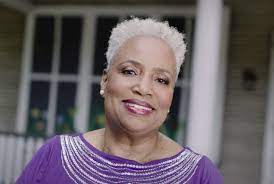
Dr Imani Woody, an advocate for women, people of colour and the LGBT+ community for over 25 years, is the founder of Mary’s House for Older Adults in Washington DC.
She wastes no time getting to the struggles of older people. “The generation that came out is going back in,” insists the 70-year-old, “because it’s hard to be old and gay at the same time.”
Woody, who describes herself as old and gay (“an umbrella term,” she says with a smile), has the research to back up her claim. A new report by the Williams Institute at the UCLA School of Law shows many LGBT+ older adults don’t disclose their sexual orientation and gender identity for fear of stigma, “sometimes stemming from trauma and experiences of ostracisation in medical systems as in the height of the HIV/AIDS epidemic during the late 1980s and early 1990s.” It’s one indication that many older LGBT+ folks don’t feel comfortable sharing their sexual orientation or gender identity because of previous discrimination.
Woody cites the case of Marsha Wetzel, who was forced to enter a retirement home in Illinois after her partner of 30 years died. The couple held a commitment ceremony but never legally married, and Wetzel was evicted from their shared house. Wetzel says she was spat on and called homophobic slurs by fellow residents at the retirement home, whom she says welcomed her until they learned she was a lesbian.
“Well, from there, it went from sugar to not sugar,” says Woody. “She was ostracised, she was harassed, and the staff didn’t do anything about it.”
For decades, the American Association of Retired Persons (AARP) has consistently supported the civil rights of the LGBT+ 50+ community through legal action, advocacy, and opposing discrimination.
In 2021, AARP Foundation Senior Vice President for Litigation William Alvarado Rivera noted that, “Governments have long denied LGBT+ couples the right to marry, despite their long history of loving, committed relationships. In addition, lifelong discrimination has harmed many LGBT+ older adults financially and increased their risk of economic insecurity in older age.”
The Williams report and many others have noted additional disparities within the LGBT+ community. Black and Hispanic LGBT+ people across the age spectrum were less likely to be financially secure, had lower incomes, and had more instability in their access to food and housing.
To answer those issues, Woody has zeroed her attention in on housing insecurity.
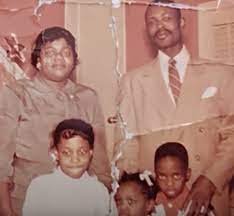
Mary’s House for Older Adults is a 15-unit communal residence to be built on the site of Woody’s childhood home in Washington DC. The residence is focused on low- and moderate-income LGBT+ affirming accommodation and is named after Woody’s mother. It is funded by public and private donations.
“This is our mantra: you can bring your whole self to Mary’s House. Your old self, your short self, your fat self, your White or Black self. And most definitely your same gender-loving self. Mary’s House: Bring Your Whole Self. That’s what we’re doing. That’s what we’re building.”
Mary’s House will join a growing number of LGBT+-affirming residences across the country, including the John C Anderson Apartments in Philadelphia, Town Hall Apartments in Chicago, and Triangle Square in Los Angeles. What sets Mary’s House apart is Woody’s plan for a communal setting, which addresses the social isolation so many older Americans experience.
“It’s about building community,” she explains. “Everyone has their own bathroom and kitchenette with their bedroom, but it’s a home, so there’s a communal kitchen, and there’s a communal dining room. There’s a communal hydrotherapy tub and there’s a communal library and quiet room. It’s not an apartment where you can close up and no one sees you. There’s someone there every day to say, ‘Hi, Mister Greg, what’s happening today?’ Right? So, I’m gonna look you in the eyes, as my grandmother would say, and see how well you are.”

Instead of gardening and housework, Mary’s House focuses on addressing basic needs through “friendly caller” outreach. “Our niche is that it would have to be a friend of yours, or someone you knew,” says Woody. With a state agency, “You say, ‘Oh yeah, I’m fine,’ but to your friend, you’ll say, ‘You know what? I need to get to the store, I think,’ or ‘I wasn’t able to pick up my prescription,’ or ‘You know, I need some gas or food,’ or whatever the deal is.”

“It’s about building relationships, building family, family of choice, logical and biological family,” she points out. “We’ve tried to build — we are building — family communities, one person, one phone call at a time, right? And to try to make the world a better place, so that you don’t have to go back into the closet.”

England cricketers become first lesbian couple to read CBeebies bedtime story
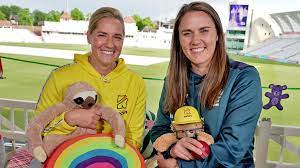
England cricketers Nat and Katherine Sciver-Brunt will become the first lesbian couple to feature on CBeebies Bedtime Stories, as part of Pride month.
The couple, who married last year, will read Emily Coxhead’s “Find Your Happy”, about a sloth learning to navigate their emotions.
The story is being filmed from Trent Bridge Cricket Ground.
The Sciver-Brunts both played for England and have held the title of women’s cricketer of the year.
Nat captained England in September 2022. Katherine, who announced her retirement from Test cricket in June last year, added they were delighted to be part of it “especially as a couple and representing the cricket family”.
The Sciver-Brunts’ story is broadcast on Friday 9 June at 6:50 pm and is also available on BBC iPlayer.
Heard Live for Pride

Heard Live is a true storytelling event that harnesses the power of people’s lived experience to create positive change.
The event is on Thursday, 29 June from 6.30pm – 9.00pm at Feel Good Club, 26-28 Hilton Street, Manchester M1 2EH
Get tickets here (Free – £9.38).
Join us for an inclusive event of true spoken storytelling this Pride, on the 29 June – the day after the Stonewall riots began. The evening will give a platform to captivating true stories on the lived experiences of people from the LGBTQIA+ community.
As well as enjoying a curated line up of storytellers, there will be a couple of spaces open for budding storytellers. If you decide to tell a story, the amazing audience will make you feel right at home. Show up with an idea for a story or just sit back to listen – there is no pressure to get behind the mic. These events are as much about the joy of hearing the voices of others, of finding there’s a story in each person, and coming to connect and learn.
We’re looking forward to meeting you soon, sharing our love of true stories and discovering what tales you have! This event is raising money for the LGBT Foundation – delivering advice, support and information services to lesbian, gay, bisexual and trans communities.
Pride Activities
Please see “Next Outings” on our website for future Out In The City trips, but here are a few additional activities (you will need to check the internet for more details):
Saturday, 17 June, 1.00pm – 8.00pm – Salford Pink Picnic at Peel Park, The Crescent, Salford M5 4WU
Sunday, 18 June, 2.00pm – 4.00pm – Queer Jewish Collective meeting at Manchester Jewish Museum, Cheetham Hill Road, Manchester M8 8LW
Tuesday, 20 June, 6.00pm – 8.00pm – Manchester Pride Community Session: Celebrating Trans and Queer Joy! at the Proud Place, 49-51 Sidney Street, Manchester M1 7HB
Thursday, 22 June, 2.00pm – 4.00pm – Out In The City Party with Wolf, buffet and raffle at Cross Street Chapel, 29 Cross Street, Manchester M2 1NL
Saturday, 24 June – Pride in Wythenshawe
Sunday, 25 June, 7.00pm – 10.00pm – “My Gay Best Friend” at The King’s Arms, 11 Bloom Street, Salford M3 6AN
Thursday, 29 June, 6.30pm – 9.00pm – Heard Live for Pride, Feel Good Club, 26-28 Hilton Street, Manchester M1 2EH
Thursday, 29 June – Sunday 2 July – (4 performances) – “The Faggots and their Friends Between Revolutions” at HOME Theatre, 2 Tony Wilson Place, Manchester M15 4FN

 Out in the City